



When a garden shop carries both familiar bulbs and less familiar perennials, its family story can help explain the shape of the catalogue. For UK gardeners encountering DutchGrown™ for the first time, the name sits on a business with a long bulb-trading history and a much broader online range.
The family says its trade began in the Netherlands in 1882, and its present-day site brings that heritage into an online shop serving UK customers. We looked at the brand’s own history pages, UK store and product listings to understand what a first visit can tell you, and where the catalogue asks you to do a little planning of your own.
Rather than treat the heritage as proof that every product suits every plot, it is more useful to read it as context: this is a specialist flower business organised around planting seasons, plant types and growing details. That framing helps a newcomer decide where to start.
Some links in this article are affiliate links: if you make a purchase through them, we may receive a small commission.
Before you read on: DutchGrown™ is a family flower-bulb business with roots reaching back to 1882 and a UK catalogue that now extends from autumn-planted bulbs to spring-planted plants. Its history and range make it worth considering for gardeners who want variety and plant-specific information, while seasonal timing and site suitability still need checking before choosing.
What does the family story explain about DutchGrown™?
On its UK DutchGrown™ story page, the company traces its beginnings to a family farm in the Netherlands. It says its great-grandfather began selling bulbs to growers in Germany before taking the family’s trade across the Atlantic. The story is presented as a business history, not simply a decorative origin tale: the family connects its past to export, grower relationships and the practical knowledge that sits behind a specialist catalogue.

The current generation is described as four generations into that history, a history rooted in bulbs. The site introduces brothers Ben and Pete as the people behind the business, with Ben focused on bulb expertise and grower relationships and Pete on the technology and online operation. The division matters to a shopper because the store combines horticultural categories with the infrastructure of a direct ecommerce shop.
That is a useful way to read the brand’s identity. Heritage is part of its positioning, but the useful evidence for a gardener is still in the product information: plant type, flowering season, height, planting guidance and whether an item is a bulb or bare-root perennial. The UK store also presents its operation as family-run and notes dispatch from London, a practical detail for local shoppers to consider alongside the range.
Its about page says the company exhibits at Keukenhof and that much of the imagery on the site comes from the gardens there. That connects the brand to a recognisable horticultural setting, but photographs are inspiration rather than a promise. Soil, aspect, weather and timing shape the result.
How does the UK range move beyond spring bulbs?
A first-time visitor might expect tulips and daffodils to dominate a bulb specialist’s catalogue. They are certainly there: the UK shop groups autumn-planted bulbs into collections such as tulips, daffodils and narcissus, alliums, crocus and hyacinths. But its navigation also separates out new bulbs, bulb collections and spring-planted bulbs and plants, opening up a different kind of planning.
That split is helpful because it reflects the way gardeners make decisions. Autumn-planted bulbs are often chosen for a spring display, while spring-planted plants can extend interest into summer. A shop that labels those groups clearly can help shoppers think beyond colour alone and ask when the planting goes in, when it flowers and what space it will occupy.
- Autumn planting: browse tulips, daffodils, crocus and alliums for a spring sequence.
- Spring planting: look at bare-root perennials and summer-flowering options for established borders.
- Collections: consider mixed or themed groupings when a coordinated display matters more than selecting every variety separately.
- Plant-specific pages: check the stated height, flowering period and planting notes before deciding where a plant belongs.
- For spring: start with bulb groups and the flowering sequence you want.
- For summer: compare perennials by height, soil and flowering window.
Range breadth is a strength for someone planning a garden across seasons. It can also make the store feel substantial on a first visit, so a clear starting question helps: are you filling a spring gap, adding summer structure, or building a wider planting scheme? The UK catalogue is easiest to navigate when the season and garden role come first.
For bulb shoppers, that distinction keeps the offer legible. For gardeners open to perennials, it shows how the family bulb trade has broadened. Bare-root stock has different handling and planting needs from a dry bulb, so category labels deserve attention.
Which plants show the character of the catalogue?
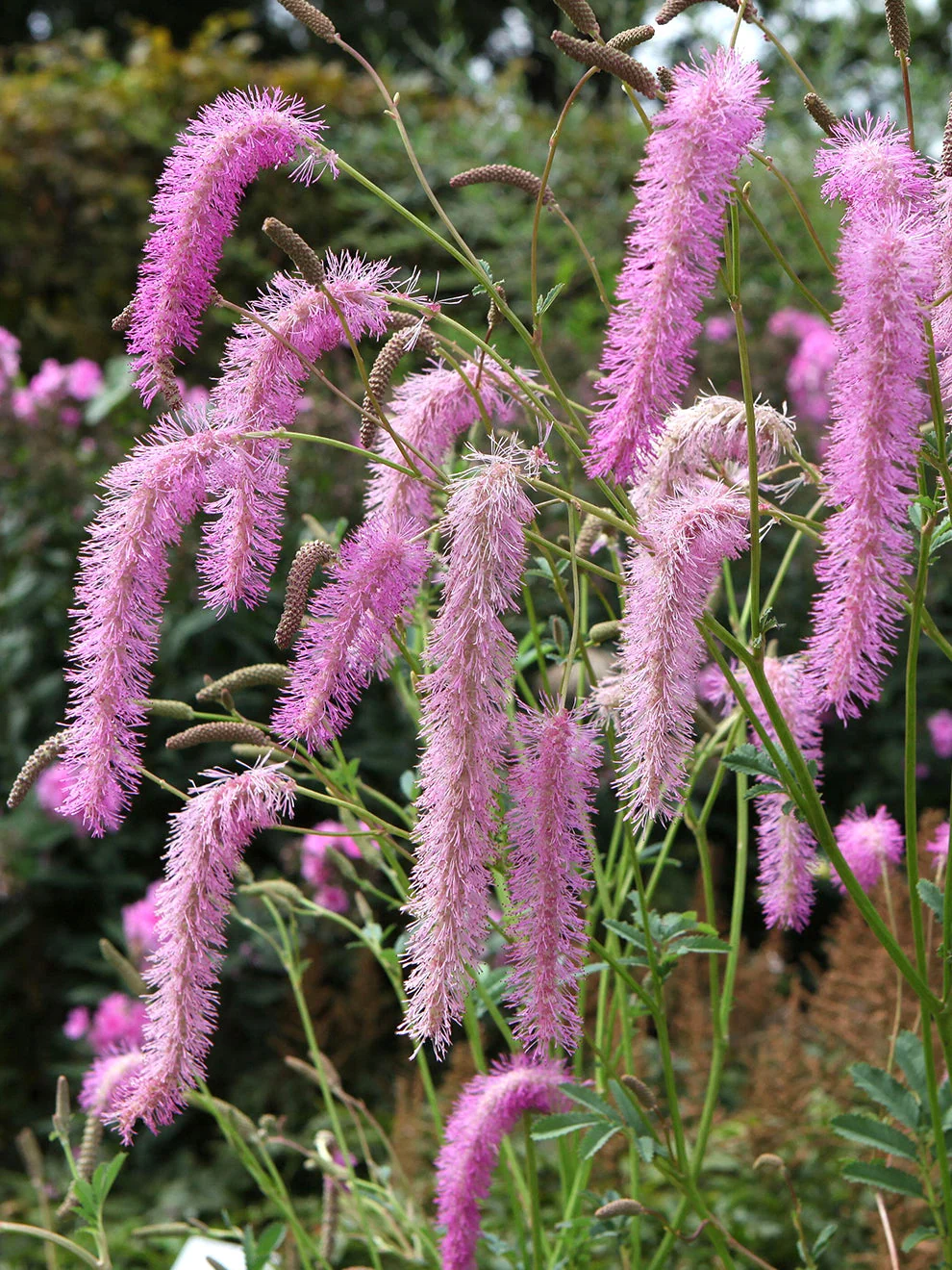
Sanguisorba Lilac Squirrel (Burnet) is a useful example of the more naturalistic end of the range. The UK listing describes soft lilac-pink, bottlebrush-like flower spikes on upright stems, flowering from July to September and reaching roughly 115 cm. It is positioned for informal or prairie-style planting, with moist, well-drained soil and full sun noted as its preferred setting. That is practical detail for someone looking for movement and height in a summer border, rather than a compact edging plant.
Another Sanguisorba, Chocolate Tip, shows how a related plant can offer a distinct mood. The UK listing describes deep burgundy, almost chocolate-brown flowerheads, upright stems and a more compact height range than taller burnets. Those traits make it a possible middle-of-border choice where dark colour and movement are wanted. The value here is not that one variety is universally better; it is that the Chocolate Tip listing helps translate a name into a planting role.
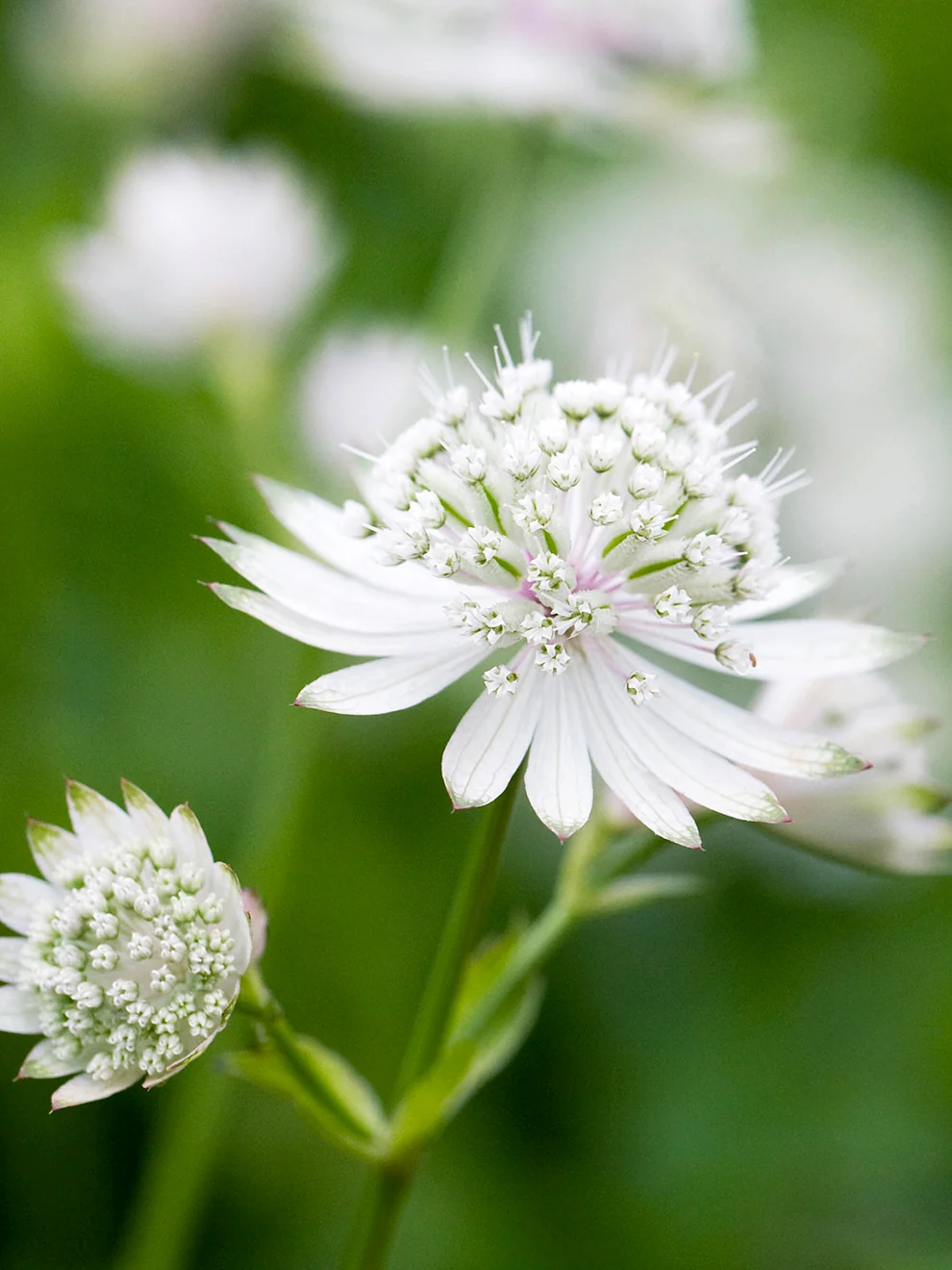
Astrantia White Button represents a softer, lower-key option. The store lists it as a bare-root masterwort, flowering from late spring into midsummer and reaching up to 60 cm. Its white pincushion-like flowers and clump-forming foliage give White Button a different scale from tall Sanguisorba. The page also links to a growing guide, which is helpful for shoppers who want cultivation context before adding a perennial.
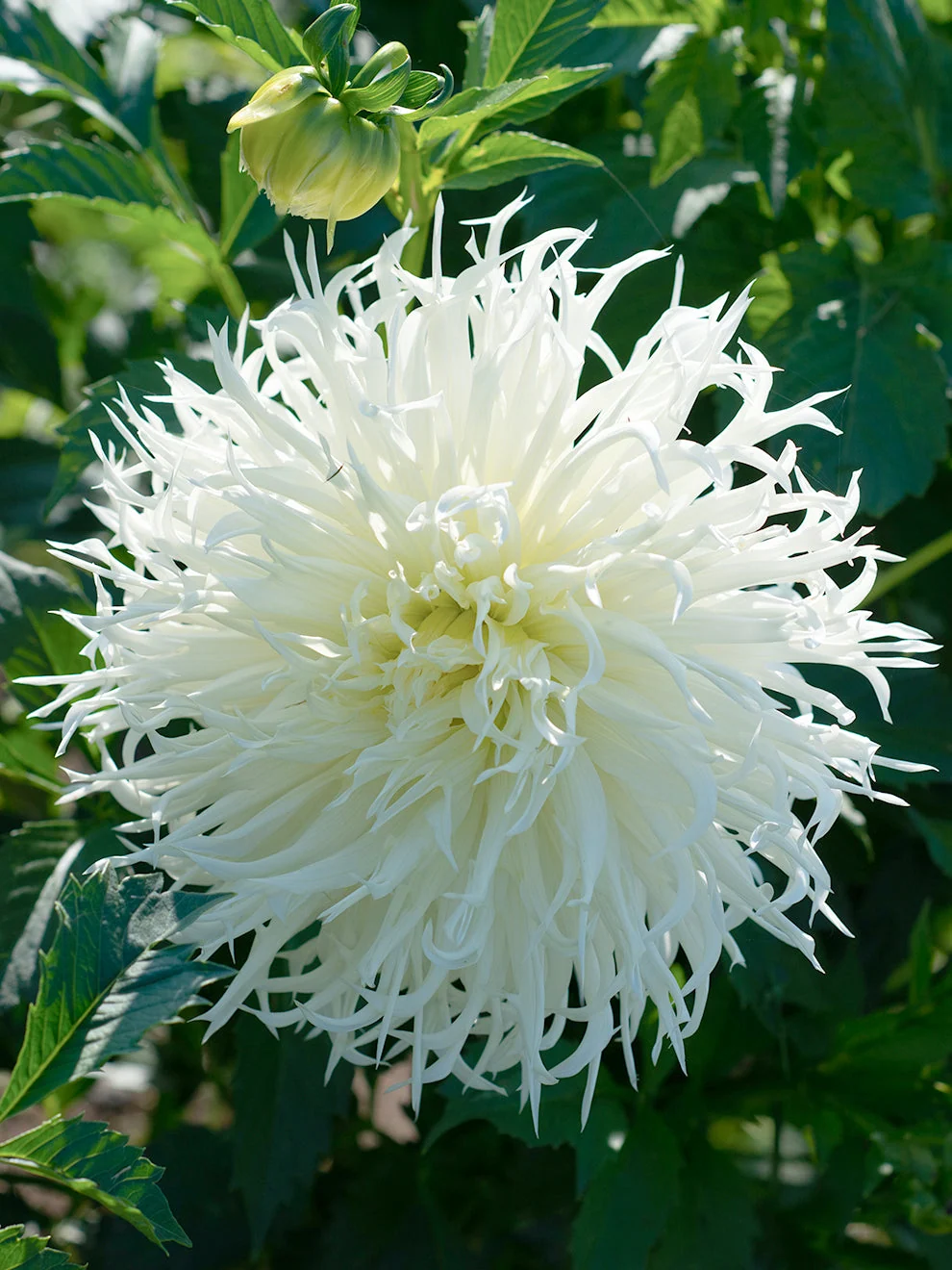
For a quite different flower form, Dahlia Tsuki-Yori-No-Shisha is described as a spider dahlia, with long, slender petals that spread outward rather than forming a dense decorative ball. The product information calls out a tall upright habit and a large white flower. That makes it a distinctive summer choice for gardeners drawn to an open, sculptural shape. The name may be unfamiliar, but the descriptive Dahlia listing makes its character easier to picture.
These examples span flowering periods, heights and plant types. A broad assortment is useful when a shopper can match a listing to their site. Compare stated needs with light, soil, drainage and available space.
What can a first-time shopper learn from the product pages?
The most helpful pattern is the site’s plant-level detail. The White Button listing provides a common name, height, flowering time, origin, plant type and planting notes. The Lilac Squirrel page gives a more expansive description of colour, flowering window, border style and preferred growing conditions. Taken together, the pages let a reader move from a picture to a more grounded choice.
That detail is valuable because many garden purchases are about fit more than novelty. Before choosing, it is worth asking:
- Does the plant’s flowering period fill a gap in the garden calendar?
- Will its stated height suit the front, middle or back of the border?
- Does the listed soil and light preference match the site?
- Is the item a bulb, tuber or bare-root plant, and when does the store schedule its dispatch?
Seasonal dispatch deserves attention. The site’s shipping schedule and plant pages are the right places to check the current window, since living stock is tied to growing cycles. Availability can also change as the season moves on. A good catalogue page narrows the options, but it cannot know whether your garden stays wet through winter or catches afternoon shade.
The store’s heritage may suggest experience with flower bulbs, and the family explicitly highlights grower connections and quality. Still, a first order should be guided by the particular variety and its growing notes, not by brand history alone. In that respect, specific growing information is the strongest reason to keep reading on the product page.
Which DutchGrown™ products make a useful first shortlist?
These four listings give a newcomer a quick sense of the breadth, from perennial texture to a more architectural dahlia. The table is a starting shortlist, not a ranking: match each plant to its own growing conditions and check the UK listing for current stock information.
| Product | Best for | |
|---|---|---|
| Sanguisorba Lilac Squirrel | Airy height in a summer border | View Lilac Squirrel details |
| Sanguisorba Chocolate Tip | Dark flowerheads and movement | View Chocolate Tip details |
| Astrantia White Button | A lighter detail in a mixed perennial bed | View White Button details |
| Dahlia Tsuki-Yori-No-Shisha | An open, sculptural summer flower | View Tsuki-Yori-No-Shisha details |
There is a practical limitation to the shortlist: the plants do not share one planting season or one garden role. Lilac Squirrel is a tall, summer-flowering perennial; White Button is a shorter bare-root masterwort; the dahlia asks for a different seasonal plan. That diversity illustrates the range but makes it important to check each page separately rather than treating the list like a ready-made border recipe.
Where should a newcomer keep expectations measured?
- Confirm the plant type and its season before ordering.
- Use site measurements as well as photographs when judging scale.
- Recheck the UK dispatch schedule for living stock.
Brand storytelling has a natural limit: it tells you why the family cares about the trade, but it cannot establish whether an individual product will thrive in your conditions. The site itself offers growing information, yet gardeners still need to weigh drainage, sunlight, planting depth and local weather. Those details have more bearing on the result than a long history.
Images are useful but imperfect guides. They help distinguish, for example, a loose bottlebrush flower from a rounded bloom, but photographs do not communicate scale reliably on their own. The measurements and flowering notes on a product page are better tools for comparing plants, and even those should be interpreted against the space you have.
Finally, a broad range can make a specialist feel like a one-stop destination, but it also means availability and dispatch differ across product groups. The store’s shipping schedule and individual listings should take precedence over assumptions based on the season in which you happen to browse. We recommend using the family story as context, then making the decision from the actual plant details.
Ready to explore the range?
DutchGrown™ is worth a closer look for gardeners who value a specialist flower catalogue, clearly separated planting seasons and a family business with a documented history in bulbs. The breadth is its main appeal: a shopper can move from spring bulbs to summer perennials, with specific plant pages offering more useful context than the brand story alone.
Our caveat is simple: heritage cannot replace checking suitability and seasonal availability. Start with growing details, compare them with your site, and use the store listings to decide what fits. The story makes the catalogue legible; plant pages should make the final call.




Leave a Comment