



A border can be short of spring height, summer colour or flowers for cutting, and those are different jobs. Which DutchGrown™ option makes sense depends on when you want the display and how much care your patch can take.
We compared product information on the UK DutchGrown™ store for a spring bulb, a summer dahlia and two hardy perennials. Their listings describe markedly different seasons and conditions, so the useful comparison is about fit rather than a single overall best plant.
These are catalogue-based recommendations, not results from a garden trial. Use the store’s current listing for availability, planting instructions and current price, since stock and product details can change.
Some links in this article are affiliate links: if you make a purchase through them, we may receive a small commission.Before you read on: Choose Allium Globemaster for a tall spring focal point, Dahlia Wizard of Lightning for summer cutting, Sanguisorba Korean Snow for airy late-season texture, or Trollius Golden Queen for reliably damp ground. The perennials offer repeat structure, while the allium and dahlia ask for more seasonal planning.
- Match a plant to the season you want to extend.
- Check moisture and light before comparing flower colour.
- Count winter care as part of the choice.
Which plant solves the gap in your border?
Think first about the empty moment in the garden calendar. Allium Globemaster is listed for late spring into early summer, a period when its purple globe can rise above lower planting. At around 90 cm tall, the product page positions it as a substantial accent, and its flowers can remain attractive after blooming. It is a bulb, though, so it will not provide the same summer-long presence as an established perennial.
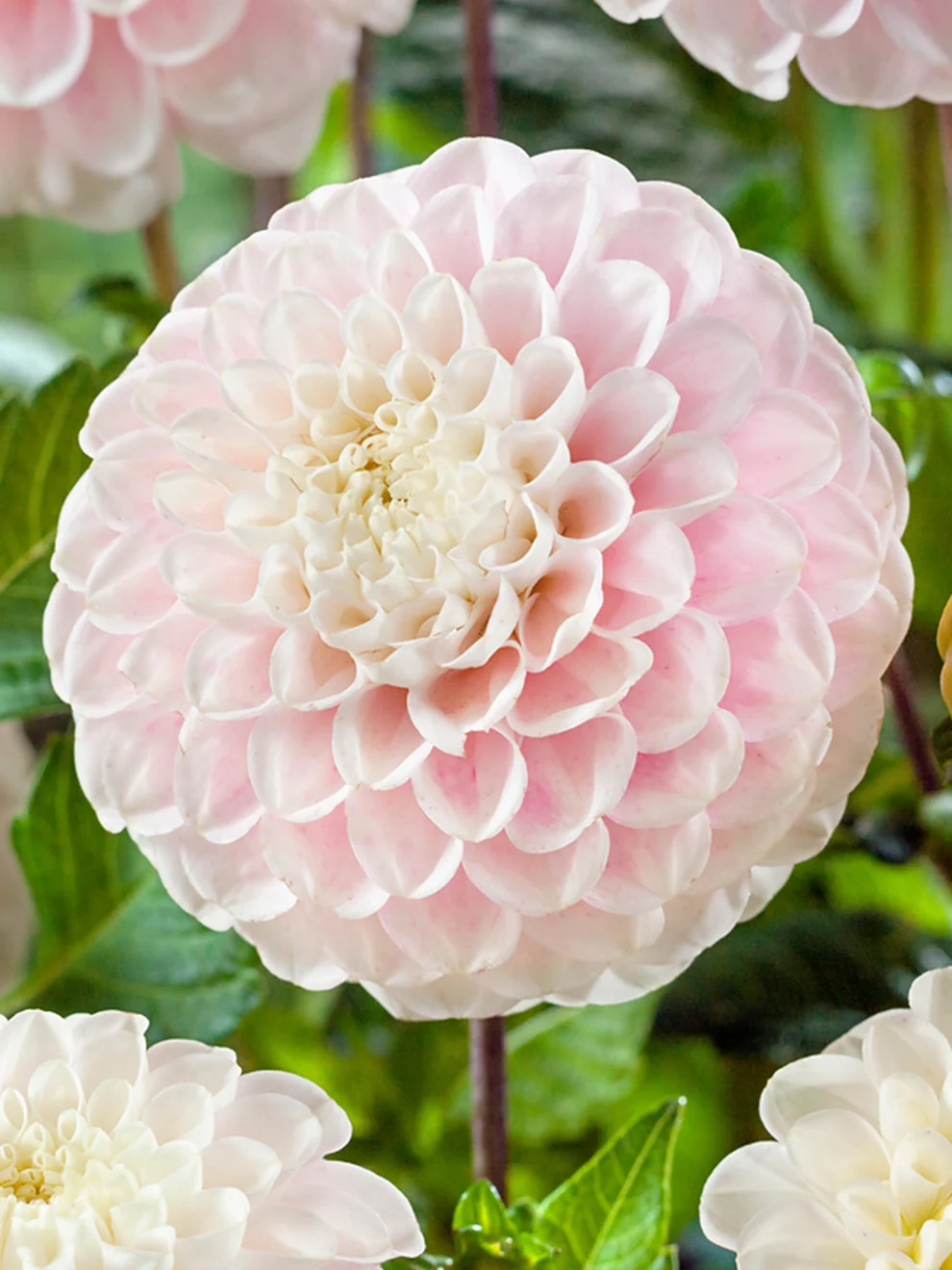
For summer and autumn impact, the product page for Dahlia Wizard of Lightning describes creamy pink ball-shaped blooms, strong stems and flowers from July. The listed height reaches 140 cm, with flower sizes around 5 to 10 cm. This makes it the clearest cut-flower choice in this group, but the dahlia is tender compared with the hardy perennials and needs winter storage in colder conditions.
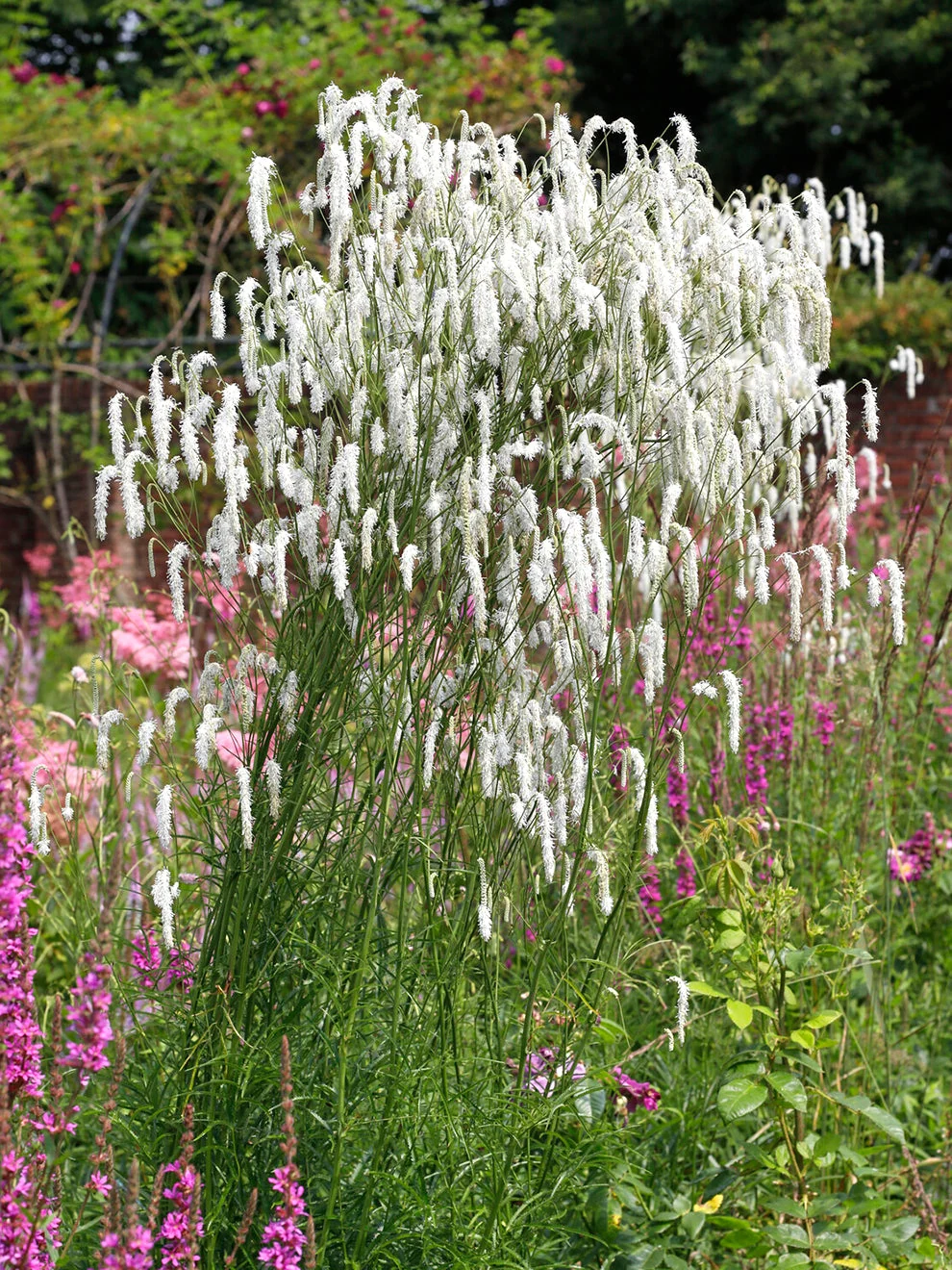
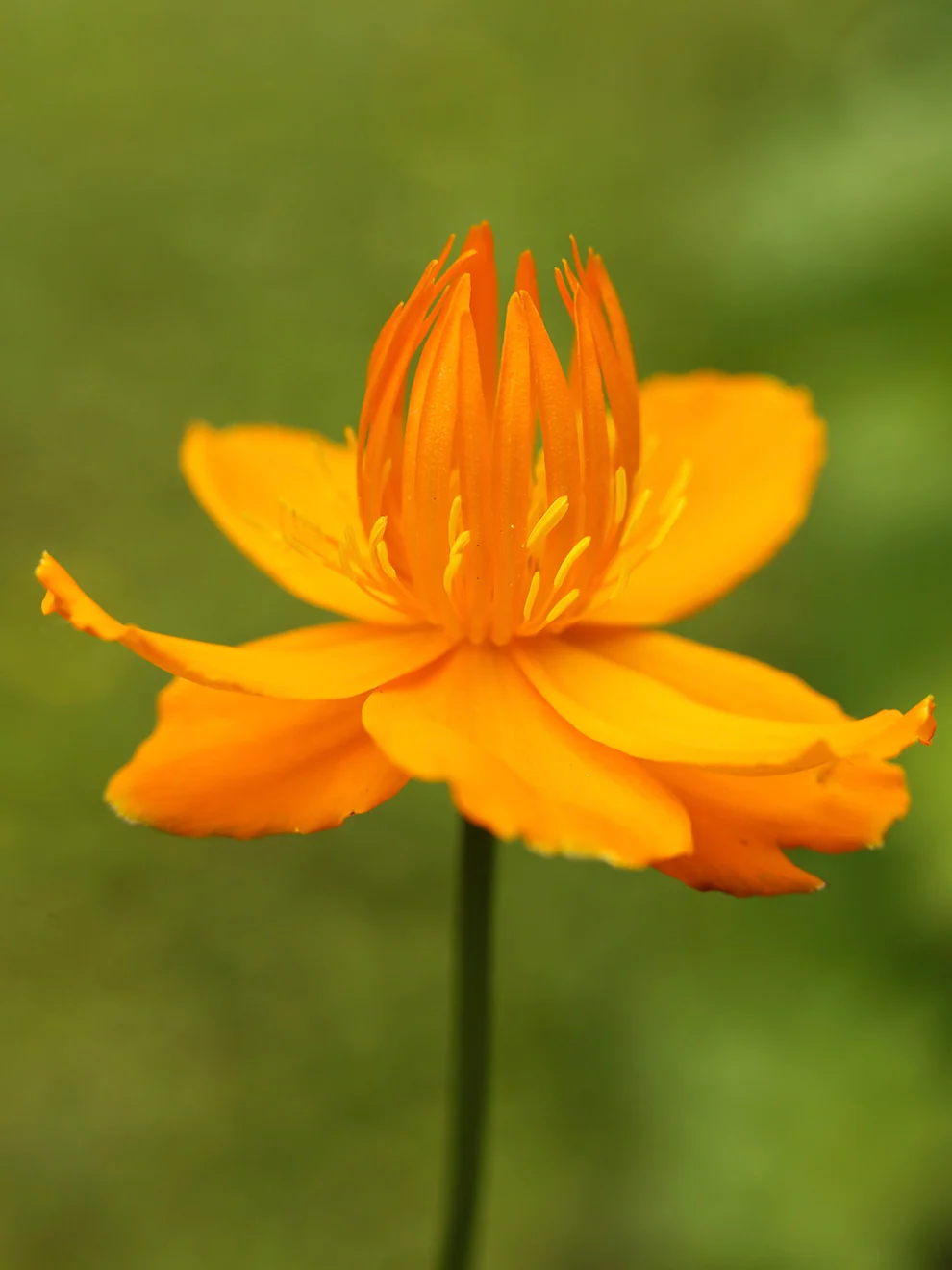
The two perennial options solve more persistent border problems. Sanguisorba Korean Snow brings fine white spikes from June to September and listed height of about 150 cm, creating height without a broad footprint. Trollius Golden Queen is shorter, at 60 to 90 cm, and flowers from late spring to midsummer, but specifically prefers consistently moist to wet soil.
- For a spring focal point: choose Allium Globemaster.
- For cutting stems: choose Dahlia Wizard of Lightning.
- For tall, airy summer texture: choose Sanguisorba Korean Snow.
- For a damp border: choose Trollius Golden Queen.
How do the four options compare on upkeep?
Seasonality is only half the decision. Soil moisture, winter care and how long a plant stays in place affect whether an option is practical for your garden. Here is the short version based on the UK listings.
| Product | Best for | Keep in mind | |
|---|---|---|---|
| Allium Globemaster | Spring height and pollinators | Bulb; spring window | See price |
| Dahlia Wizard of Lightning | Summer cutting and tall colour | Tuber; lift and store in cold areas | See price |
| Sanguisorba Korean Snow | Airy, long-season border height | Moist soil; support if exposed | See price |
| Trollius Golden Queen | Damp or clay-soil planting | Must not dry out | See price |
The easiest choice is not necessarily the lowest-maintenance one for every site. Allium Globemaster is described as easy to grow and naturalising, which can make it a relatively low-intervention spring accent once conditions suit it. The trade-off is the limited flowering period: for months of colour, combine it with other plants rather than expecting one bulb to carry the border.
Dahlia Wizard of Lightning asks for more seasonal attention. The listing describes the plant as a tuber and notes winter storage in colder climates. In return, it offers a long window from July and strong stems useful for cutting. Gardeners who do not want to lift and store tubers should treat that as a meaningful drawback, not a footnote.
The perennial comparison comes down to moisture and form. Sanguisorba Korean Snow tolerates full sun or partial shade, provided the soil stays moist and well drained; exposed stems may need support. Its narrow spread and long flowering window are an advantage where the border needs height without a bulky mound. By contrast, Trollius Golden Queen is purpose-built for conditions many plants dislike, including damp borders and heavier clay. That advantage disappears if the ground dries out in summer.
- Check whether the planting spot dries quickly or stays damp.
- Decide whether lifting and storing a tuber is realistic each year.
- Measure the mature height against fences, paths and neighbouring plants.
- Read the product page for planting format and dispatch guidance before ordering.
Which plants have the strongest alternatives?
Buyers often compare these choices with familiar alternatives: a mixed bulb collection, a summer annual, or a generic hardy perennial from a local nursery. Each can be sensible. The difference is how much detail and control you want at selection time.
- Choose a named plant when a specific height or flower form matters.
- Consider a mix when covering a wider area is the priority.
- Look at local nursery stock if seeing plant size in person matters most.
A mixed bulb collection can cover a larger patch quickly and may be less work to plan than assembling several named bulbs. A single named Allium Globemaster, however, gives a more predictable focal form and a clear height target. If you want a broad naturalised drift, compare the pack contents of a collection with the number of bulbs needed; if you want one architectural punctuation mark, the named variety is easier to place.
For summer flowers, annuals can bring fast colour without storing tubers, but they need replacing after the season and will not necessarily provide the same strong stem or large ball-form flower described for Wizard of Lightning. A dahlia is the stronger option when you value repeat growth and cut stems enough to manage winter storage. An annual is more practical when seasonal replanting is acceptable and winter care is not.
A further point of comparison is how narrowly each plant is matched to a site. Trollius Golden Queen earns its place where soil remains moist, including a pond edge or a heavy border that would frustrate many other choices. It is less flexible if you garden in a dry, sunny bed and cannot water regularly. Sanguisorba Korean Snow accepts sun or partial shade but still relies on moisture, so it should not be treated as drought-proof just because it is hardy.
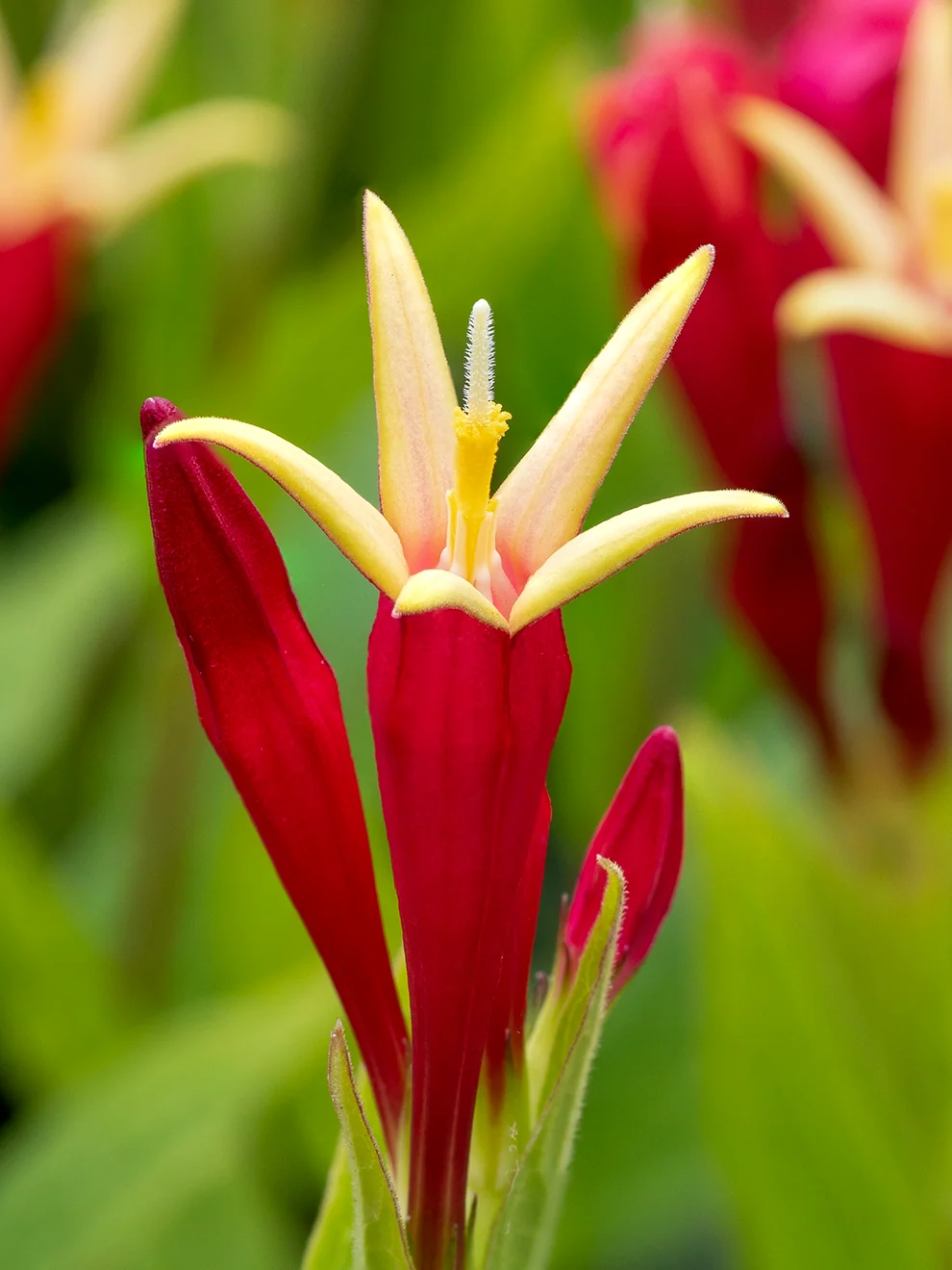
For shade, the wider DutchGrown catalogue also includes plants with different colour and scale. For example, its Spigelia Little Redhead listing describes a neat clump for partial shade, with scarlet tubular flowers tipped in yellow. This is a useful alternative when the priority is a more compact, vivid accent rather than the height of Korean Snow. It demonstrates why checking the actual position guidance matters as much as comparing bloom photos.
Generic perennials may be easy to source nearby, making it simpler to inspect plant size and ask a local grower about conditions. DutchGrown’s named pages are useful when you want a particular flower shape, colour or growing profile before choosing. The trade-off is that a listing cannot assess your soil in person, and photographed blooms do not guarantee identical results across gardens.
Before settling on a product, use the listing to compare the practical details that are easy to overlook in a flower image:
- Plant format: bulb, tuber or bare-root plant determines when and how it is established.
- Flowering window: match the gap you want to fill, rather than buying only for colour.
- Position and soil: compare sun exposure, moisture needs and drainage with the actual site.
- Future care: note support, lifting, storage and watering requirements.
- Scale: use mature height and spread to avoid hiding smaller border plants.
Which DutchGrown choice wins by use case?
For a spring focal point above low planting, Allium Globemaster is the clearest pick. The large spherical bloom and listed height give it a distinct role, although it is a seasonal accent rather than a full-season border plant.
For cut flowers, the winner is Dahlia Wizard of Lightning, provided you are comfortable with tuber care. For a reliably damp site, Trollius Golden Queen is the better match. For the most versatile perennial border structure in this shortlist, choose Sanguisorba Korean Snow, as long as you can keep moisture consistent and support it in exposed positions.
Ready to choose plants for your border?
Our overall recommendation is to choose by site first, then season: Golden Queen for damp ground, Korean Snow for a moist but well-drained border, Globemaster for spring height, and Wizard of Lightning when summer cutting justifies annual tuber care. The limitation is that catalogue details cannot account for local drainage, exposure or winter conditions, so confirm the UK store’s latest growing guidance and current price for your chosen plant.
Compare the product pages against the space you have and the amount of maintenance you want to take on. That gives a more reliable shortlist than choosing from flower colour alone.

Leave a Comment