


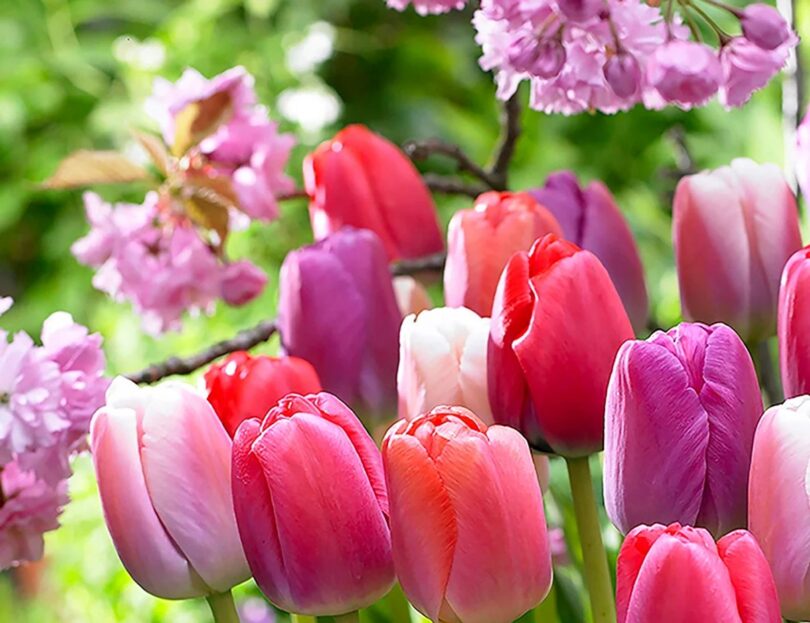
Autumn is when a spring tulip display starts to take shape: the bed may look quiet now, but bulb choices made before winter decide its colour and character.
For UK gardeners browsing DutchGrown™, the useful question is not simply which tulip looks prettiest in a product photo. It is whether you want a coordinated collection, a calmer block of one colour, or unusual flower shapes that become the focus of a smaller planting.
We reviewed the UK store’s product information to build this seasonal shortlist. The pages give a starting point for comparing named varieties, while availability, planting guidance and current prices should be checked on each listing before ordering.
Some links in this article are affiliate links: if you make a purchase through them, we may receive a small commission.Before you read on: Choose a collection if you want colour variation without assembling a palette yourself; choose a named variety when consistency matters more. Pride and Joy, Pink Impression, Black Parrot and Cabanna Parrot each suit a different spring effect, so compare flower form and colour with your planting space.
What should autumn planting achieve in your garden?
Tulips are generally planted in autumn for spring flowering. That seasonal gap makes planning more useful than impulse selection: decide where the flowers will be seen from, what they should sit beside, and whether the display needs to look uniform or mixed. The UK store’s specific instructions should guide depth and timing for each bulb, since planting conditions vary with soil and weather.
Start with three practical choices:
- Colour: repeat one shade for a composed bed or mix shades for a looser look.
- Form: classic cup shapes read cleanly in groups; fringed or parrot forms draw the eye.
- Scale: a collection can cover a broad area, while a single variety can anchor a pot or border section.
This is also a good point to check exposure, drainage and the space available. A product photo shows the flower, but it cannot tell you whether a damp corner, crowded container or shaded border suits your conditions. Treat the catalogue as a shortlist, then use the product page’s growing details to confirm fit.

Which DutchGrown™ option suits your colour plan?
The Pride and Joy Collection is the most straightforward route if you want more than one tone in a coordinated purchase. A mixed collection can create variation across a bed, though the exact balance and display depend on the supplied bulbs and how densely you plant. It suits gardeners who prefer a ready-made starting palette over choosing every variety individually.
For a more deliberate, restrained scheme, the Pink Impression page is a named-variety option. Its pink colouring is easy to picture alongside white spring flowers, pale foliage or deeper burgundy accents. Repeating one variety can make a border feel intentional, but a single-colour planting gives you less variation if the display is your main seasonal feature.
Consider the difference between colour consistency and colour variety before adding quantities to a basket. A consistent variety is easier to coordinate with an existing garden plan; a mix has a more relaxed effect and can be useful where the bed needs visual movement. Neither is automatically better. The right choice depends on how much space you have and whether the tulips will be the main event or one layer among perennials.
- Choose a collection when you want several colours with less planning.
- Choose one named variety when you want a repeated colour block.
- Use a parrot tulip as an accent where its shape can be seen clearly.
Are parrot tulips right for a smaller display?
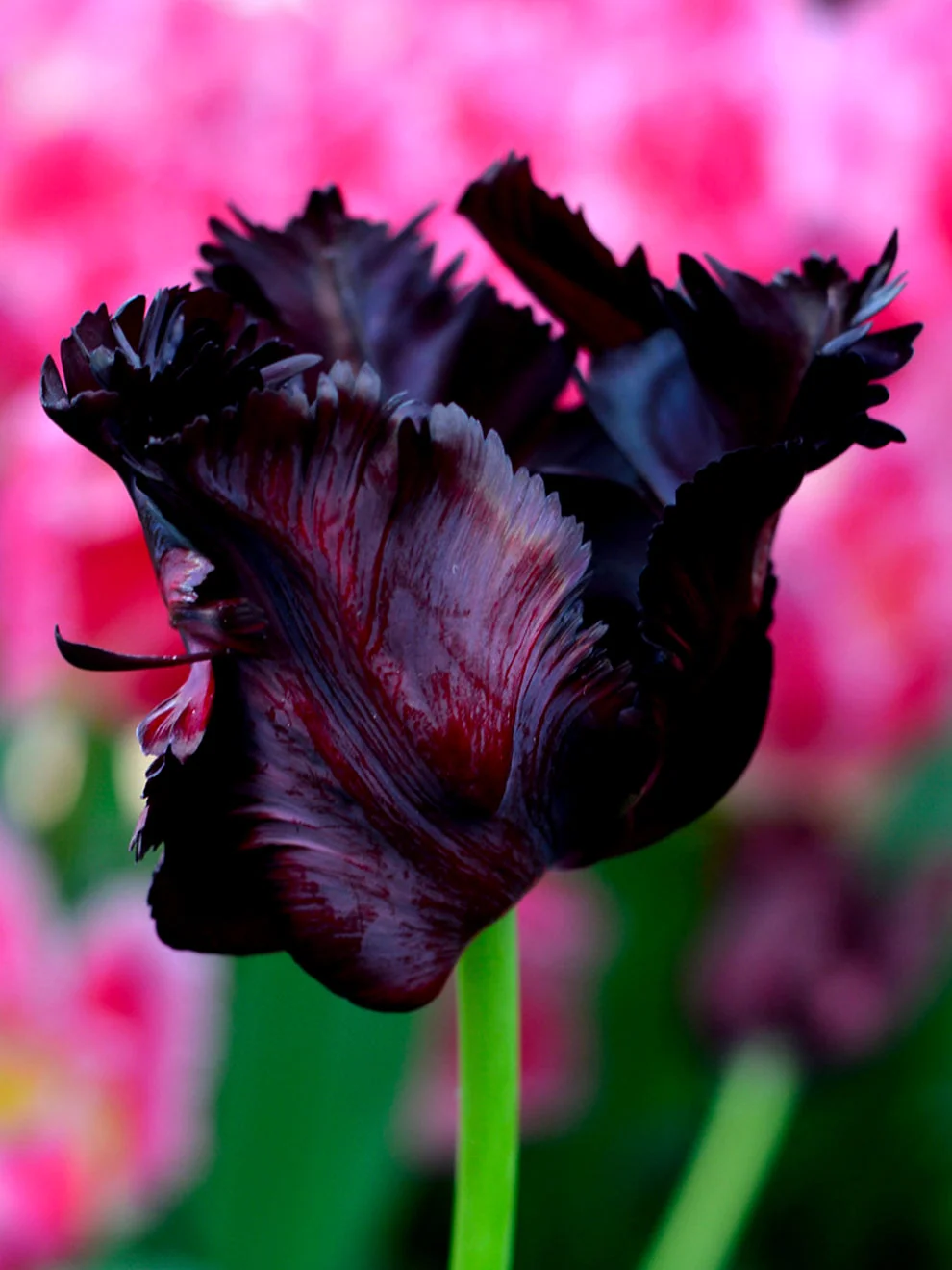
Parrot tulips bring conspicuous petal shapes into the decision. Black Parrot is listed as a dark, ruffled variety, so it can work as a focal point among simpler flowers or in a pot placed where its silhouette is visible. Dark blooms often read differently depending on light and neighbouring colours, so use the store image as a guide rather than a guarantee of the exact garden effect.
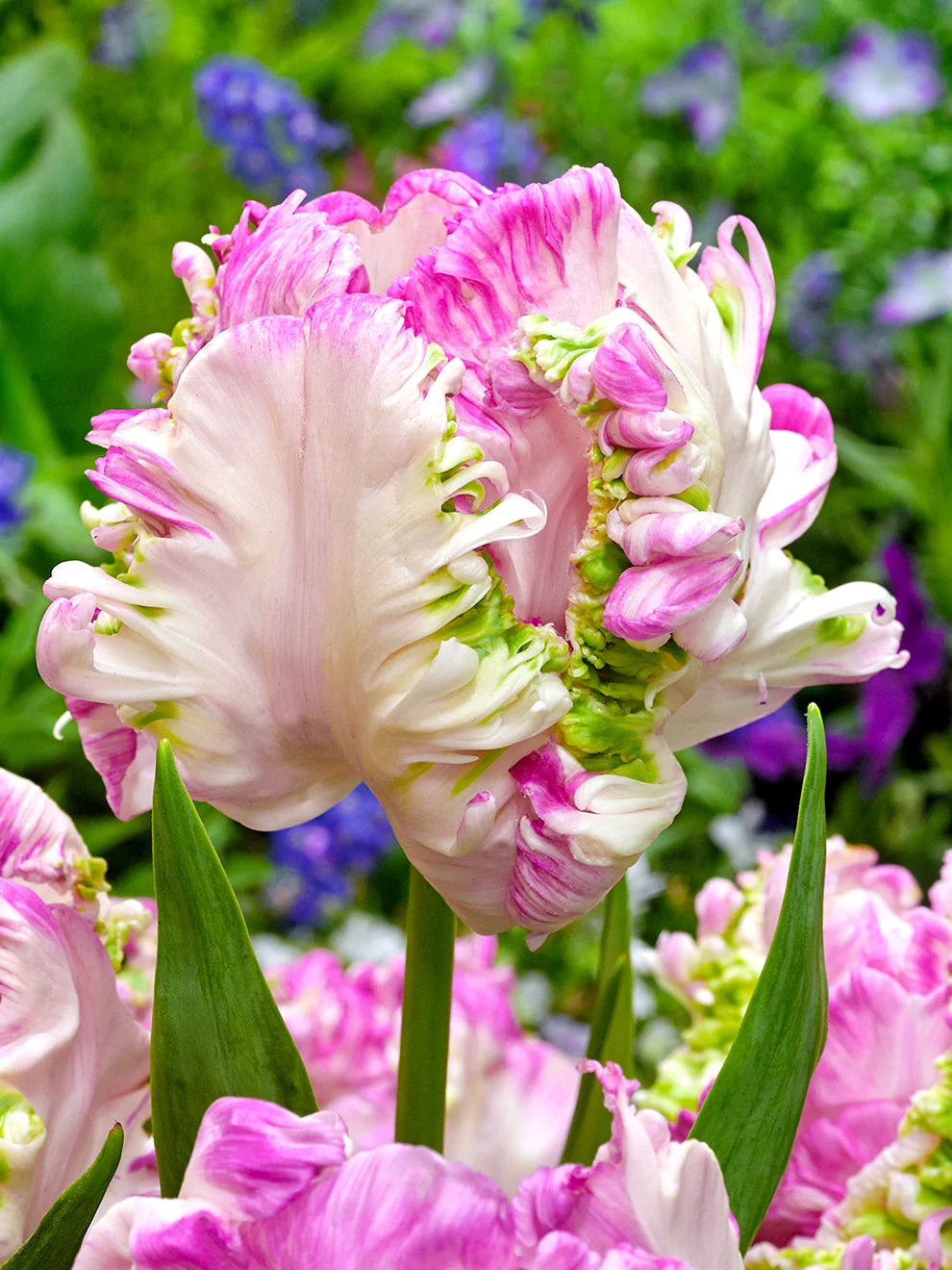
The Cabanna Parrot is another distinctive option, with pink and white fringed petals. It may suit a gardener who wants a softer palette while still introducing a less conventional flower form. When contrasting varieties, keep the surrounding planting relatively calm; several highly detailed flowers packed together can compete for attention rather than create a clear focal point.
Parrot types are best chosen for the flower’s shape as much as its colour. They can add character to a small number of containers or a front-of-border grouping, but a large area of a single dramatic variety may not be the easiest scheme to blend with an existing garden. Consider the view from indoors too: the most useful placement is often the one you can enjoy from the house.
How do the options compare for beds, pots and borders?
This compact comparison is a practical shortlist rather than a ranking: each option serves a different design preference. The product pages are the place to verify bulb details, planting notes and current price before making a final decision.
| Product | Best for | |
|---|---|---|
| Pride and Joy Collection | A varied, coordinated display | See price |
| Pink Impression | A repeated pink colour block | See price |
| Black Parrot | A dramatic focal flower | See price |
| Cabanna Parrot | Fringed pink and white detail | See price |
Collection pricing can reflect the number and mix of bulbs, while a single variety is easier to compare by pack size. We are avoiding fixed figures because listings can change; check the UK store for the current price and what each pack contains. If you are filling a bed, use the product’s spacing guidance rather than assuming a pack will cover a particular area.
How can you make a display feel considered?
A useful spring plan usually has a simple visual idea behind it. Think about whether the tulips should echo an existing colour, introduce contrast, or carry the whole display while the rest of the border is still waking up. The Pride and Joy Collection is a natural shortlist item for variety, while Pink Impression gives a defined colour direction. Compare both with the rest of your planting rather than choosing in isolation.
For small spaces, avoid buying by the photograph alone. A cluster of Black Parrot can have more impact than scattering bulbs across several corners, while Cabanna Parrot can work as a contrasting note against simpler forms. The chosen varieties should still fit the site conditions and the growing advice on their pages.
In a larger bed, repeat planting can help the display read as one scheme. You might use a collection for the main sweep and reserve one named variety for a border edge or container, but check the pack contents first so the intended balance is realistic. A listing may specify a number of bulbs or a particular pack size; use that information with the planting distances rather than estimating coverage from a thumbnail.
It is sensible to compare flower forms at the same time as colours. Daytona is a white fringed tulip in the catalogue, whereas Golden Parade offers a bright yellow direction. These named pages broaden the shortlist if neither a pink scheme nor a dark focal flower matches your garden. Check the store descriptions for the exact characteristics and growing details rather than assuming varieties share identical timing or height.
- Sketch the space and mark where the spring colour should appear.
- Pick a palette before comparing pack sizes.
- Group stronger shapes where they can be seen at a glance.
- Use the product pages to confirm the variety and bulb quantity.
Finally, leave room for the rest of the garden. Tulips are seasonal, so their strongest role may be to bridge the gap before later perennials take over. A carefully chosen mix can soften that transition; a repeated single variety can make a sharper visual statement. In either case, realistic expectations matter: flowering depends on local conditions and how the bulbs establish.
What should you check before ordering bulbs?
A little checking now helps avoid a mismatch between the catalogue image and the job you need the bulbs to do. On each UK product page, look for:
- Pack contents and size: compare like with like when considering a collection against a single variety.
- Planting guidance: use the listing’s depth, spacing and timing information, then adapt to local soil conditions.
- Flower details: confirm the described colour, form and any height or flowering information provided.
- Availability: autumn stock can vary, so check whether the selected option is currently offered for delivery.
- Delivery and care: read the store’s terms and instructions for receiving and storing bulbs.
Bulbs are a living product and results depend on conditions after planting. Drainage, weather, planting depth and local wildlife all play a part; a product page cannot promise an identical display in every garden. If the ground is heavy or tends to stay wet, prioritise the store’s guidance and consider a container where you can control the growing medium more easily.
For a container, plan the planting in layers only if the individual varieties’ depth and timing requirements allow it. Otherwise, a single well-chosen type is simpler to manage and easier to judge when spring arrives. The Daytona listing, for example, offers another white fringed tulip to compare with the more colourful parrot options; check the UK page to see its current product details before treating it as a substitute.
Golden Parade is another single-colour option to consider if you want a brighter point of contrast in the border.

Ready to plan an autumn tulip order?
For a broad bed that needs variation, start with Pride and Joy; for a calm, repeatable scheme, shortlist Pink Impression. Choose Black Parrot or Cabanna Parrot when the flower shape itself should bring the interest. The main limitation is that catalogue descriptions cannot account for your exact soil, exposure or garden conditions, so treat growing advice on the UK listing as essential.
Compare the named options on the UK store, confirm availability and pack details, then use the listed planting instructions to shape the spring display you have room to grow.

Leave a Comment