


Choosing dahlias is easy until every flower form and colour starts to look like a different kind of commitment. We reviewed the DutchGrown™ catalogue for UK gardeners to see which summer varieties offer a clear role in a real garden, and where the listing leaves practical questions unanswered.
This is a catalogue-based review, not a growing trial. The range has plenty of visual personality, from compact pompons to open, bee-accessible single flowers, but gardeners still need to match a variety to their space and seasonal routine.
Our strongest picks are Dahlia Zippity Do Da for rounded, repeat colour, Dahlia Zahra for a more composed flower shape, and Dahlia Waltzing Mathilda for contrast and an open centre. Their differences are more useful than a single blanket ranking.
Some links in this article are affiliate links: if you make a purchase through them, we may receive a small commission.
Before you read on: DutchGrown™ is worth considering if you want named dahlia varieties with clear differences in form and colour. The catalogue is strongest for visual choice; it is less conclusive on the details a cautious gardener may want about local conditions, support and keeping tubers over winter.
What does the UK dahlia range do well?
The brand’s UK store presents DutchGrown™ as a family business with four generations of experience, a large flower-bulb and plant assortment, and UK dispatch from a London warehouse. It also says it supplies top-size bulbs. Those are brand statements rather than independently measured quality findings, so we treat them as context, not proof that every plant will thrive in every garden.
For a dahlia buyer, the clearer strength is breadth. Product pages distinguish varieties by flower structure, colour, height and intended garden effect. That makes it possible to choose by planting role rather than by a pretty thumbnail alone. The range includes more sculptural double blooms as well as simpler, open-centred flowers.
- Distinct flower forms: pompon, anemone and single-flowered choices are easy to tell apart.
- Useful visual detail: several listings describe colour shifts, foliage and bloom size.
- UK-specific service: the UK site describes domestic dispatch and seasonal shipping windows.
- Seasonal range: the catalogue spans spring-flowering bulbs and summer-planted plants, not dahlias alone.
The limitation is that impressive catalogue detail is not the same as a complete cultivation plan. For example, a listed height helps with border placement, but it does not by itself tell a novice whether the site of their garden is sunny enough, how exposed stems will behave, or exactly when local conditions call for lifting and storing tubers.
Which flower shapes make the clearest case?
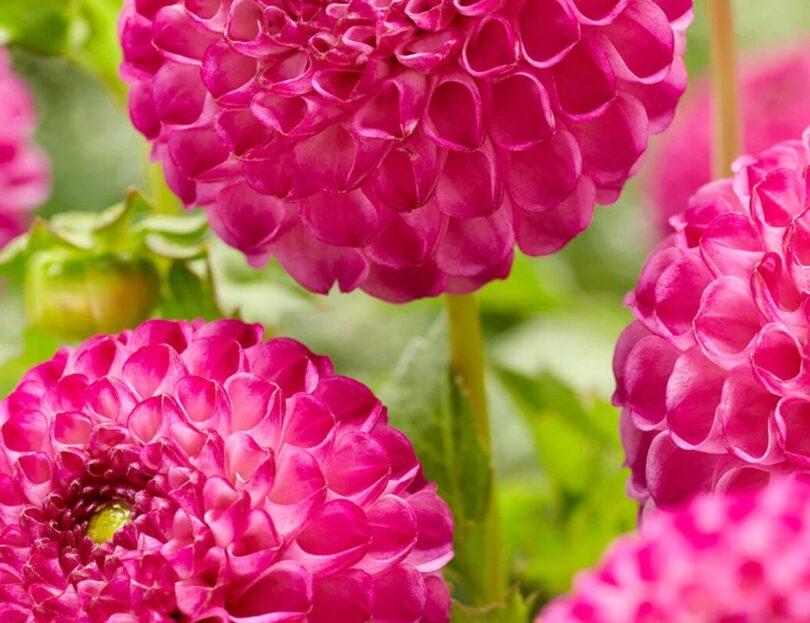
Dahlia Zippity Do Da is the most immediately legible choice for a gardener who likes neat, repeated shapes. DutchGrown™ describes it as a pompon dahlia, with small, fully double spherical flowers and plants around 90 to 100 centimetres tall. That combination suggests a mid-border role where a succession of compact blooms can add rhythm without relying on one oversized flower. Compare the current listing for Dahlia Zippity Do Da with Dahlia Zahra and Dahlia Waltzing Mathilda to see how the store describes each form.
There is a trade-off: the tightly packed form is less open to pollinators than a single flower with an exposed centre. Its tidy appearance is the attraction, but gardeners prioritising visible access for bees may prefer a more open variety. The product page gives useful shape and height information; check the current listing for planting and seasonal availability before deciding.
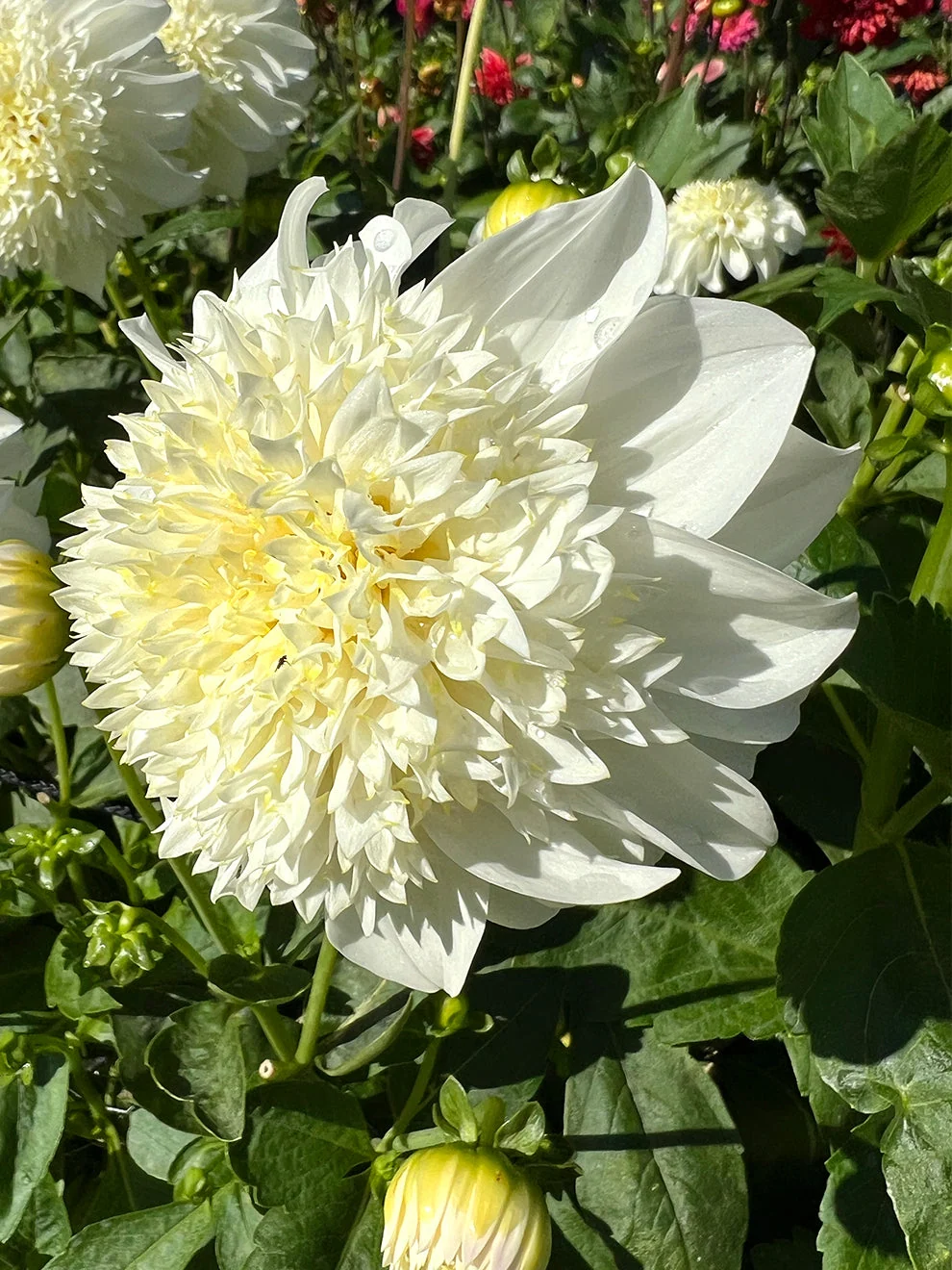
Dahlia Zahra makes a softer, more architectural impression. Its anemone form combines ivory outer petals with a raised cushion of tubular florets in cream to buttery yellow. The page describes blooms around 11 to 13 centimetres across. That layered centre gives the flower a focal point without the dense, formal look of a fully double dahlia. The pages for Dahlia Zahra, Dahlia Zippity Do Da and Dahlia Waltzing Mathilda make those distinctions visible.
For a restrained palette, Zahra is the most versatile pick of these three. Pale flowers can sit comfortably among stronger summer colours, though their subtlety may disappear in a busy border or from a distance. It is a design-led option, not an obvious answer for someone who wants saturated colour to carry the bed.
Does an open flower suit a wildlife-minded border?
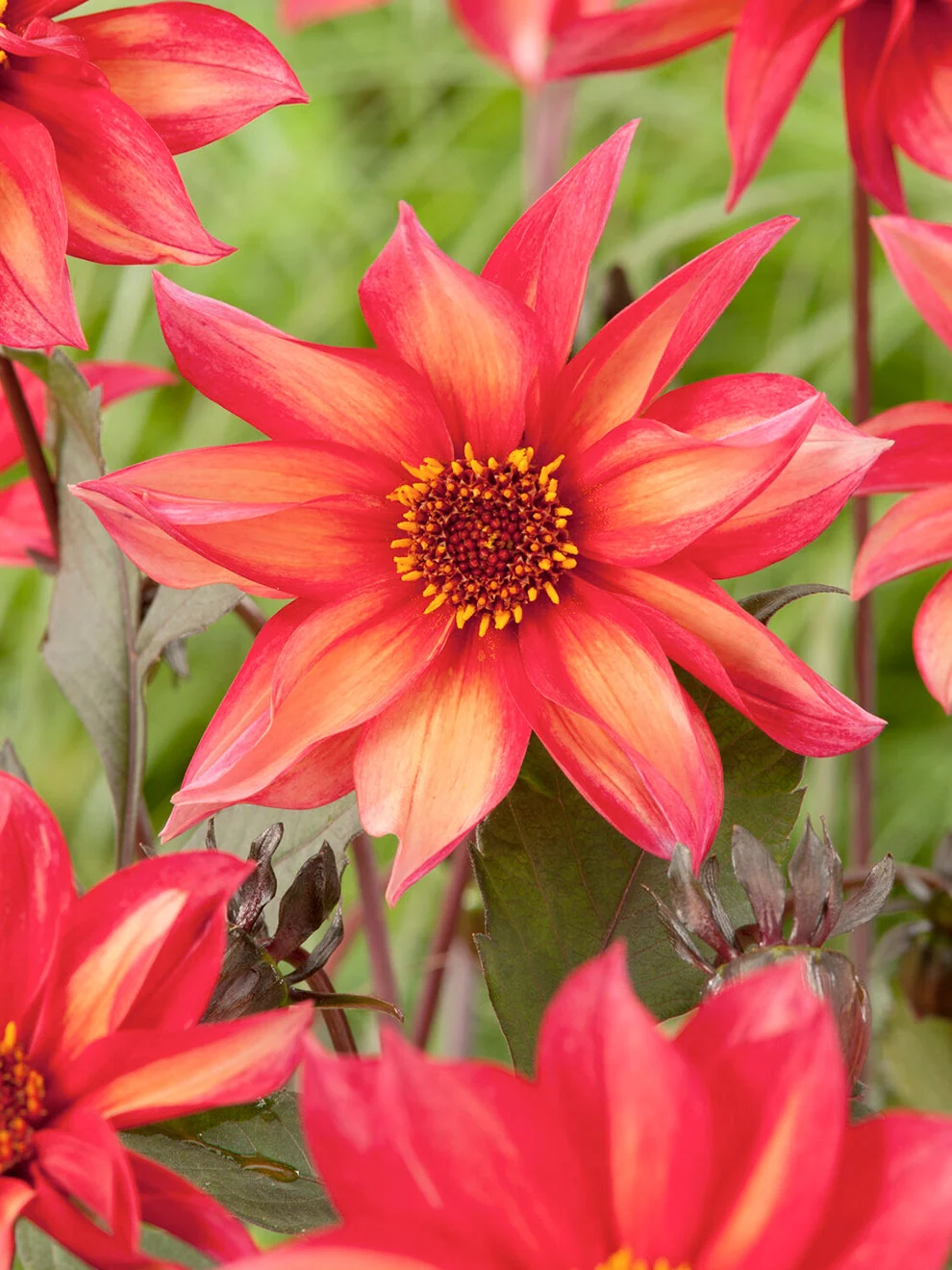
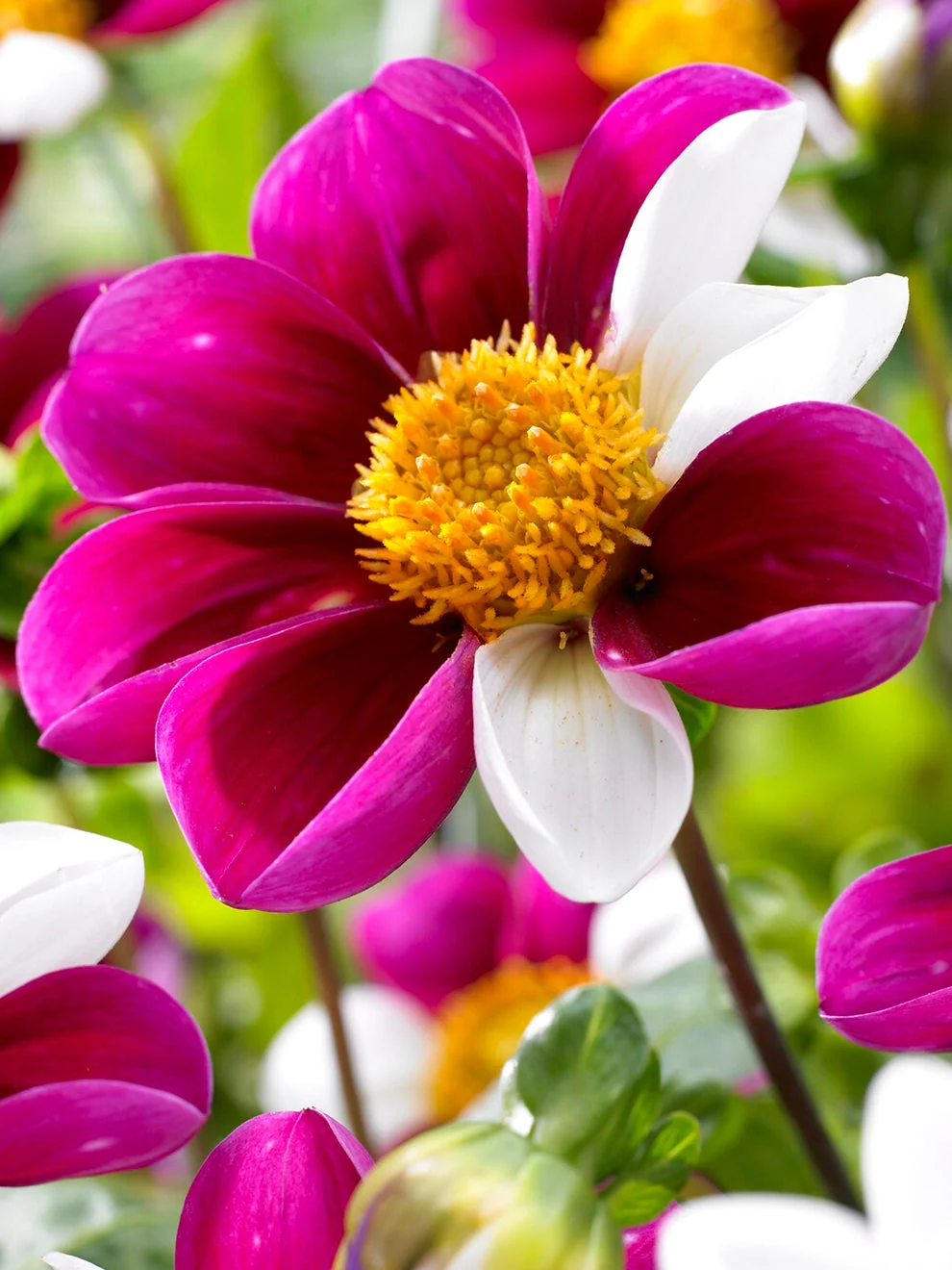
Dahlia Waltzing Mathilda is the most distinctive of the three for foliage and pollinator access. The listing describes single flowers with an open golden centre, warm peach, coral and apricot tones, and dark bronze to deep purple foliage. An open centre gives pollinators more accessible landing and feeding space than a densely packed double flower, although that garden observation is not a promise about visits to any particular plot.
The dark foliage is part of the appeal: it creates contrast even when blooms are between flushes. That makes Waltzing Mathilda the character choice for a mixed border with room for colour variation. Check the product details for Dahlia Waltzing Mathilda, then compare it with Dahlia Zahra or Dahlia Zippity Do Da. Its sunset palette can be less predictable than a single-tone variety, so readers planning a tightly controlled colour scheme should inspect the product photographs and description carefully.
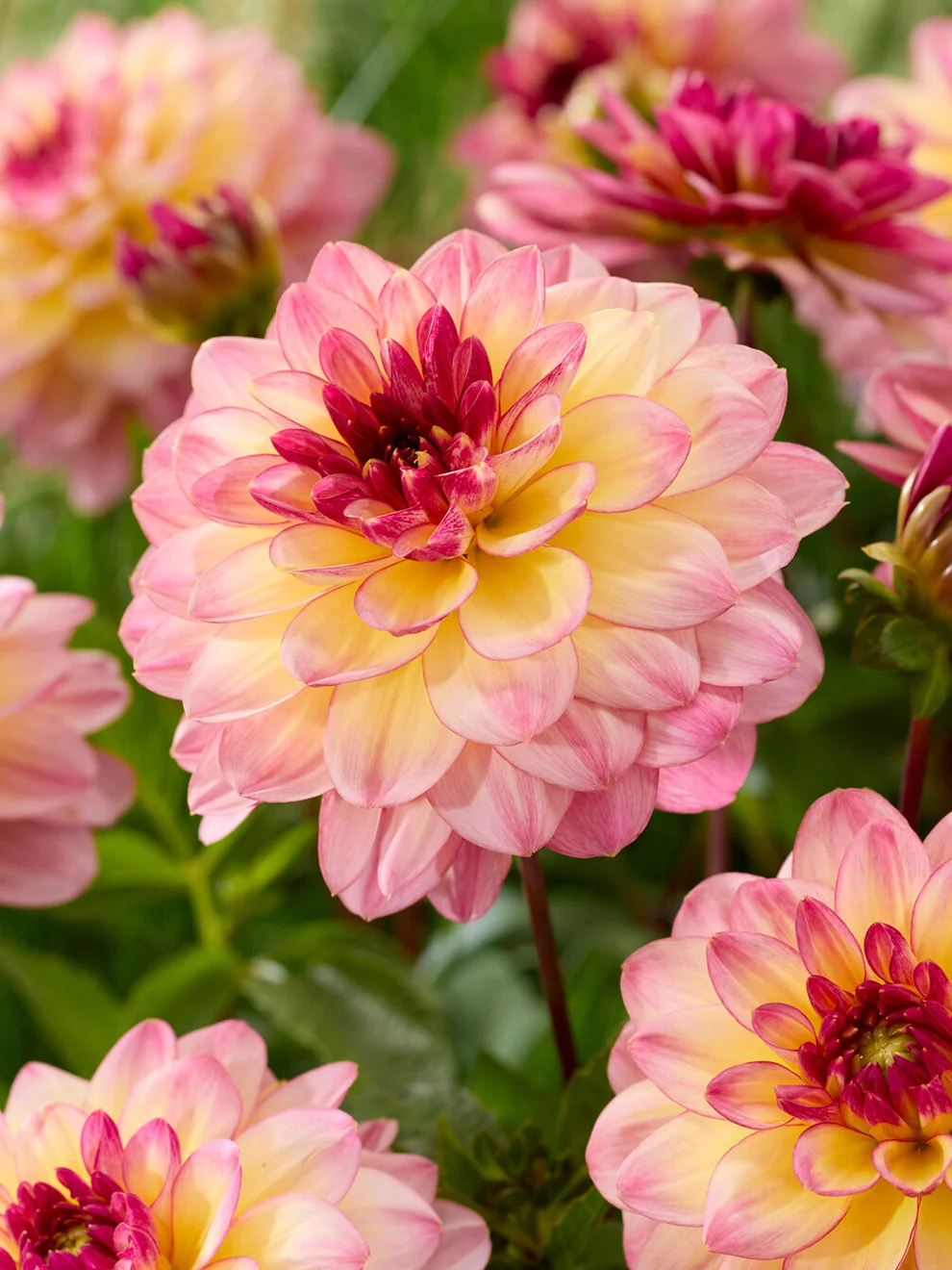
For comparison, Dahlia Twyning’s Smartie is another open single form on the UK site. Its product description highlights flowers that can vary from white through pink to deep purple-red, sometimes with streaks or stripes. That variability may be lively in a relaxed planting, but is a genuine drawback if matching every plant to a fixed palette matters.
- Choose Zippity Do Da for orderly pompon shapes and a repeated visual beat.
- Choose Zahra for a pale, layered flower that reads as a focal detail.
- Choose Waltzing Mathilda for open centres, warm colour and dark foliage.
- Consider Twyning’s Smartie if you welcome unpredictable colour rather than uniformity.
What should gardeners check beyond the photographs?
A product page can help shortlist a plant, but the practical fit depends on your site and plans. Dahlias are generally grown for summer flowering and are not a set-and-forget choice in every UK garden. Before adding one to the basket, review the variety page and compare its current guidance with your own conditions.
- Light and position: check the variety’s stated requirements and compare them with the hours of direct sun your planting spot receives.
- Height and support: use listed height to position taller plants behind shorter neighbours, and plan support where stems may be exposed.
- Water and soil: confirm the store’s current planting advice, then consider drainage and how reliably you can water during dry spells.
- Seasonal care: check the recommended planting window and the store’s advice on lifting or protecting tubers in your local conditions.
- Availability: seasonal stock and dispatch timing can change; confirm the live UK product page before making a planting plan.
The store FAQ says autumn-planted bulbs generally dispatch in autumn and spring-planted bulbs and plants in spring into early summer. That broad schedule is useful for planning, but it does not guarantee a specific dahlia will be available or shipped on a particular date. Check the live product page for its current status.
How do the strongest options compare?
This short comparison is about garden role, not a claim that one variety grows better in every setting. Each linked product page is the place to confirm current availability and the full description.
| Product | Best for | |
|---|---|---|
| Dahlia Zippity Do Da | Compact pompon form and repeated colour | See price |
| Dahlia Zahra | Pale, layered flowers with anemone form | See price |
| Dahlia Waltzing Mathilda | Open flowers, warm tones and dark foliage | See price |
| Dahlia Twyning’s Smartie | Variable colour and pollinator-accessible form | See price |
The comparison also shows the range’s main strength: product identity is not just a change in colour. Shape, foliage and openness each shift the way a plant might work in a border. DutchGrown™ gives enough description to create a sensible shortlist, then gardeners need to apply their own conditions and preferences.
Where does the catalogue leave questions open?
The brand’s family history, top-size bulb claim and UK dispatch are relevant service context, but they do not answer every buying concern. The pages we reviewed provide useful visual and variety-level information; they offer less basis for judging long-term performance in a specific microclimate or comparing outcomes across suppliers. We would not read catalogue copy as an independent guarantee of flowering results.
There is also a seasonal commitment to factor in. Dahlias can reward the gardener who has space, sun and a plan for end-of-season care. They are a less obvious match for someone seeking a perennial that can be planted once and largely forgotten. Container growers should check mature size and watering needs rather than assume a named variety will remain manageable in a small pot.
- Good fit: gardeners who value named varieties and want to shape a summer border around flower form.
- Also suited to: people who enjoy cutting flowers and can provide suitable growing conditions.
- Less suited to: low-maintenance plans, shaded sites, or readers who need fixed, uniform colour from every plant.
Ready to choose a DutchGrown™ dahlia?
Our recommendation is to shortlist by flower structure first. Zippity Do Da is the clearest choice for a neat, repeating pompon effect; Zahra gives a calmer focal flower; and Waltzing Mathilda offers the most character through open blooms and dark foliage. DutchGrown™ earns a place on the shortlist for the breadth and specificity of its UK catalogue.
The honest limitation is that product descriptions cannot settle whether a dahlia will suit your soil, exposure or care routine, and seasonal stock can change. Check the live UK listing and growing guidance before ordering. If you are happy to plan for seasonal care, the variety pages make it straightforward to compare options on their actual garden role.


Leave a Comment