



I have always thought a ferry holiday begins before the sea appears. It begins with the useful decision to take your own car, pack without airline gymnastics and let the crossing become part of the trip. I spent time comparing the current Irish Ferries UK offer, its ships, fare options and route information to see whether the experience matches the easy-going promise. My short answer is that Irish Ferries UK is a strong choice for flexible, car-friendly travel, but the best value depends heavily on your route, cabin needs and sailing date.
This is an independent review based on the details available on the brand’s UK site. Irish Ferries runs routes between Ireland, Britain and France, with online booking, vehicle travel, family facilities, pet-friendly arrangements and Sail & Rail combinations. The attractive part is the breadth. The less attractive part is that prices are often generated inside the booking journey rather than displayed as a simple product price, so you need to compare a real itinerary before calling anything a bargain. You can check current Irish Ferries availability while reading, but I would treat the result as a live quote rather than a fixed price promise.
What can Irish Ferries UK make easier?
The strongest case for Irish Ferries is practical rather than flashy. A crossing can carry you, your luggage and your vehicle in one booking, which makes road trips through Ireland or onward into France feel much less restrictive. On routes to France, the Dublin to Cherbourg connection is especially relevant for travellers who want to start in Ireland and avoid routing through Britain.
- Car-friendly travel makes touring with sports gear, children or a dog simpler.
- Multiple route families cover Ireland-Britain, Ireland-France and Dover-Calais journeys.
- Cabins and Club Class give longer overnight crossings a more restful shape.
- Flexi options help when plans may move, subject to the fare terms.
- Sail & Rail can connect ferry travel with onward train journeys.
There are also small details that matter in real use. The site highlights onboard dining, cinema areas, children’s spaces, outdoor decks and pet facilities across relevant ships. Free Wi-Fi is available on some sailings with terms attached, and the brand gives clear attention to accessibility and cabin types. Those are not glamorous headline features, but they reduce the number of awkward decisions you have to make after booking.
Which Irish Ferries UK ships should you compare?
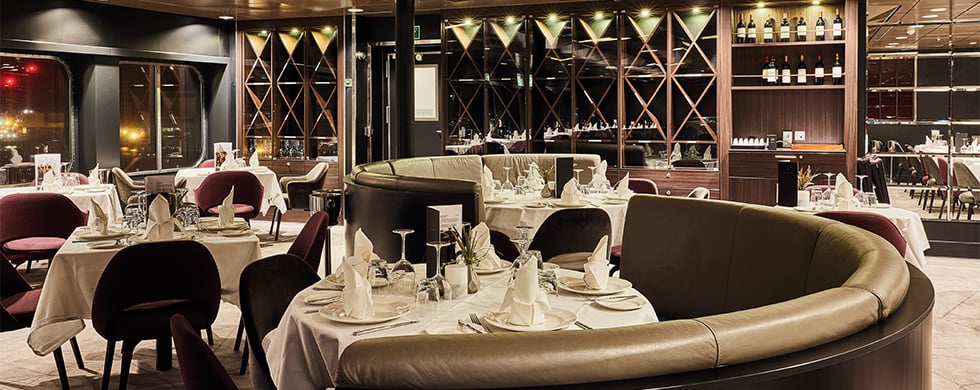
W.B. Yeats is the most convincing all-rounder in the range. The ship has capacity for 1,885 passengers and crew, space for up to 1,200 cars and 440 cabins, including suites with private balconies. That is meaningful if you are taking an overnight Ireland-France sailing and want the crossing to feel like part of the holiday rather than a long interruption.
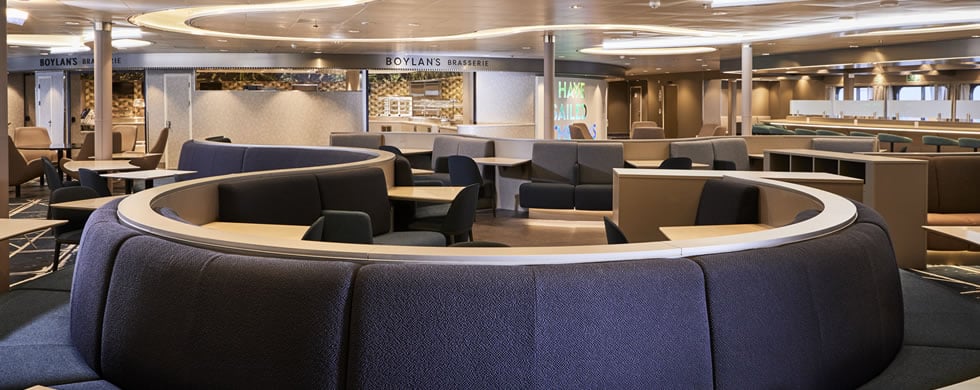
On board, the W.B. Yeats facilities include Boylan’s Brasserie, Café Lafayette, the Maud Gonne Bar, an a la carte restaurant, a cinema, a children’s play area and the Innisfree Club Class Lounge. The standard cabin selection is broad too, from four-bed inside and window cabins to accessible cabins, family options and premium suites. The downside is predictable: the more you add, the more the quote moves away from a basic crossing, and not every restaurant or facility is open in every season.
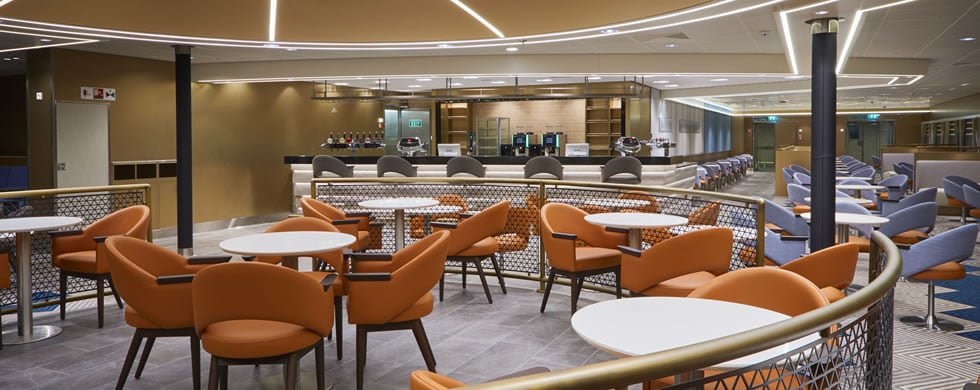
Oscar Wilde is worth comparing for travellers who prioritise space and family-friendly facilities. The ship carries more than 2,000 passengers and has room for 1,059 cars or 180 freight vehicles. The product page lists restaurants, shopping, a children’s play area, Club Class, a Pet Deck and outdoor deck space. That makes it an appealing option for families who want several places to spread out during the crossing.
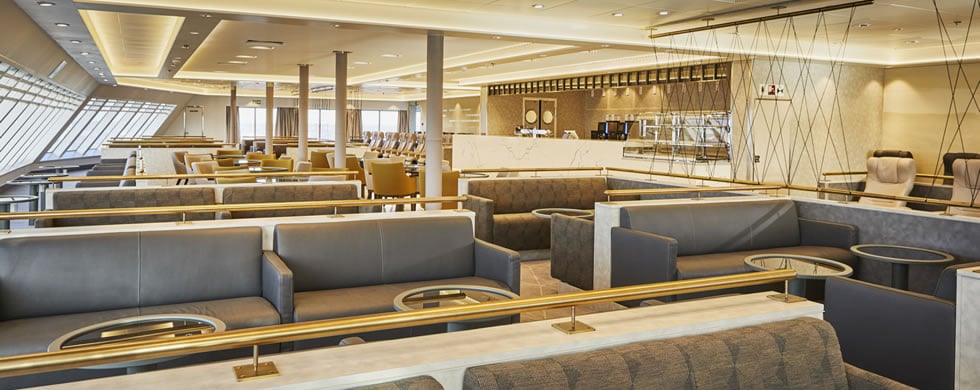
For a more classic Irish Sea option, Isle of Inishmore balances panoramic views, bars and cafés, Club Class, Wi-Fi and Boylan’s Brasserie. It is less about suite-style polish and more about a comfortable, well-equipped ferry day. I would compare it when the sailing time and fare are the priority, especially if you do not need a premium cabin or a large choice of restaurants.
- W.B. Yeats: best for overnight comfort, cabin choice and a fuller onboard experience.
- Oscar Wilde: best for families, vehicle capacity and pet-friendly facilities.
- Isle of Inishmore: best for a straightforward Irish Sea crossing with useful basics.
- Sail & Rail: best when the ferry is one part of a longer train journey.
How does Irish Ferries UK pricing work?
The booking flow is designed around a live itinerary rather than a fixed product catalogue. You select your route, dates, passengers, vehicle and extras, then see the fare. That is sensible for ferry travel, because a family car booking and a foot passenger on a quiet weekday are not comparable products. It also means the advertised price can be less useful than it first appears. My advice is to build the exact trip before judging value.
- Start with the route and sailing time, not the headline offer.
- Add the vehicle, passengers and cabin type you would genuinely use.
- Compare Economy, Flexi and Flexi+ terms before paying.
- Check passport, pet and vehicle requirements for your destination.
- Save the booking details and monitor sailing updates before departure.
The Flexi fare information is potentially valuable for travellers who know their plans may change, while standard Economy fares make more sense when your dates are firm. The trade-off is simple: flexibility costs more, but a cheaper ticket can be false economy if changing it later creates fees. Read the fare terms at checkout, particularly around amendments, refunds and seasonal restrictions.
Pet travel is another genuine strength, though it requires preparation rather than casual add-on thinking. The site gives guidance on pet cabins and travel documents, and some ships have dedicated pet areas. Check the destination rules early, because the ferry company can provide the crossing while your passport, microchip and health documentation still determine whether the whole trip works.
Could Irish Ferries UK Sail & Rail suit your journey?
The most concrete offer I found in the research was on the Sail & Rail to Britain offer. That starting offer is not a universal trip price, and the page notes that onward local bus, Tube and underground travel is not included. Even with that caveat, it is a useful option for anyone who would rather connect a ferry with mainline rail than drive the full route.
I like this product because it solves a real planning problem. You can combine the sea crossing with a train journey and avoid arranging separate tickets from scratch. The limitation is that ferry and rail services are not treated as connecting services by train operators, so you need to allow time for delays. That is a meaningful con, particularly if you are travelling for an appointment or a timed event.
- Use it for mainline rail travel, not local city transport.
- Allow a generous buffer between train and ferry connections.
- Compare the full journey cost with driving before booking.
- Keep your booking references and check each operator’s conditions.
What should you weigh before choosing Irish Ferries UK?
After comparing the route pages, ship details, onboard facilities and fare information, my verdict is positive with two important qualifications: do not assume the lowest headline fare is your final cost, and do not choose a ship without checking the sailing route. Strongest for flexible car travel. It is less compelling if you are simply chasing the absolute cheapest point-to-point journey.
- Pros: extensive route choice, car travel, cabins, family spaces, pet options and Sail & Rail combinations.
- Pros: W.B. Yeats offers a particularly complete overnight experience.
- Pros: Flexi fares and clear practical guidance can reduce booking stress.
- Cons: live pricing makes direct comparisons harder until you enter a full itinerary.
- Cons: facilities and restaurant opening times vary by ship and season.
- Cons: Sail & Rail requires careful timing because connections are not guaranteed.
For a family road trip, I would start with Oscar Wilde or W.B. Yeats, depending on route and sailing date. For a quieter, simpler crossing, Isle of Inishmore looks sensible. If the ferry is only one leg of a rail itinerary, I would check Sail & Rail before buying separate tickets. Those are practical recommendations, not a claim that one ship is universally best.
| Product | Best for | |
|---|---|---|
| W.B. Yeats | Overnight comfort and cabin choice | See price |
| Oscar Wilde | Families, vehicles and pet facilities | See price |
| Isle of Inishmore | A practical Irish Sea crossing | See price |
| Sail & Rail to Britain | Ferry plus mainline rail travel | See price |
Final verdict: Irish Ferries UK earns a recommendation for travellers who want the freedom of a car, a proper cabin on longer routes or a joined-up Ireland, Britain and France itinerary. Build your real trip, compare the fare types and check the small-print details before you pay. If the quote still works once you have added the things you actually need, the range of ships and routes makes this a convincing ferry option.


Leave a Comment