



Planning spring colour in autumn can feel like a guess: which bulbs suit the space, and how do you avoid ending up with a patchwork that flowers all at once?
We have put together a practical buying route through DutchGrown™‘s UK bulb range. The useful decisions are straightforward: choose a flowering window, settle on a palette, measure the planting area and check pack quantities before you order. Product pages describe named tulips and collections, so a shortlist can be based on more than a thumbnail.
This guide focuses on three tulip options with different planning uses: Spring Romance for pink and white mixed forms, Blueberry Snow for cooler colours, and Jumbo Darwin Mix for a more varied planting. We also cover the practical checks that matter whatever variety you choose.
Some links in this article are affiliate links: if you make a purchase through them, we may receive a small commission.
Before you read on: Start with the space and the look you want, then compare bulb quantities and planting guidance on the UK store. Choose Spring Romance for pink and white variation, Blueberry Snow for purple and lilac tones, or Jumbo Darwin Mix when you want a broader mixed display. Prices and availability can change with pack size and season, so check each current listing before deciding.
What should you decide before choosing bulbs?
A good bulb order begins with a simple sketch, not a basket. Note the length and width of the bed or the number and size of containers, then decide whether you want one concentrated drift or repeated groups. This helps you compare a named collection with individual varieties on the DutchGrown™ UK store without overestimating how much ground a pack will cover.
- Measure the planting area and note any existing shrubs or perennials.
- Choose a main colour and decide whether contrast or a blended look suits the setting.
- Check mature height and expected flowering period against neighbouring plants.
- Set aside space for bulbs to naturalise or for annual replanting, depending on your plan.
Next, consider how much variation you actually want. Collections are convenient when the shop has grouped varieties for a colour story, while single named varieties provide firmer control over the look. If you need one consistent shade across a formal line, a collection may be less predictable than buying one cultivar. If a relaxed mixed bed is the aim, a collection can save time comparing separate products. The store’s tulip collection listings make that distinction easier to assess.
Which tulip suits your colour plan?
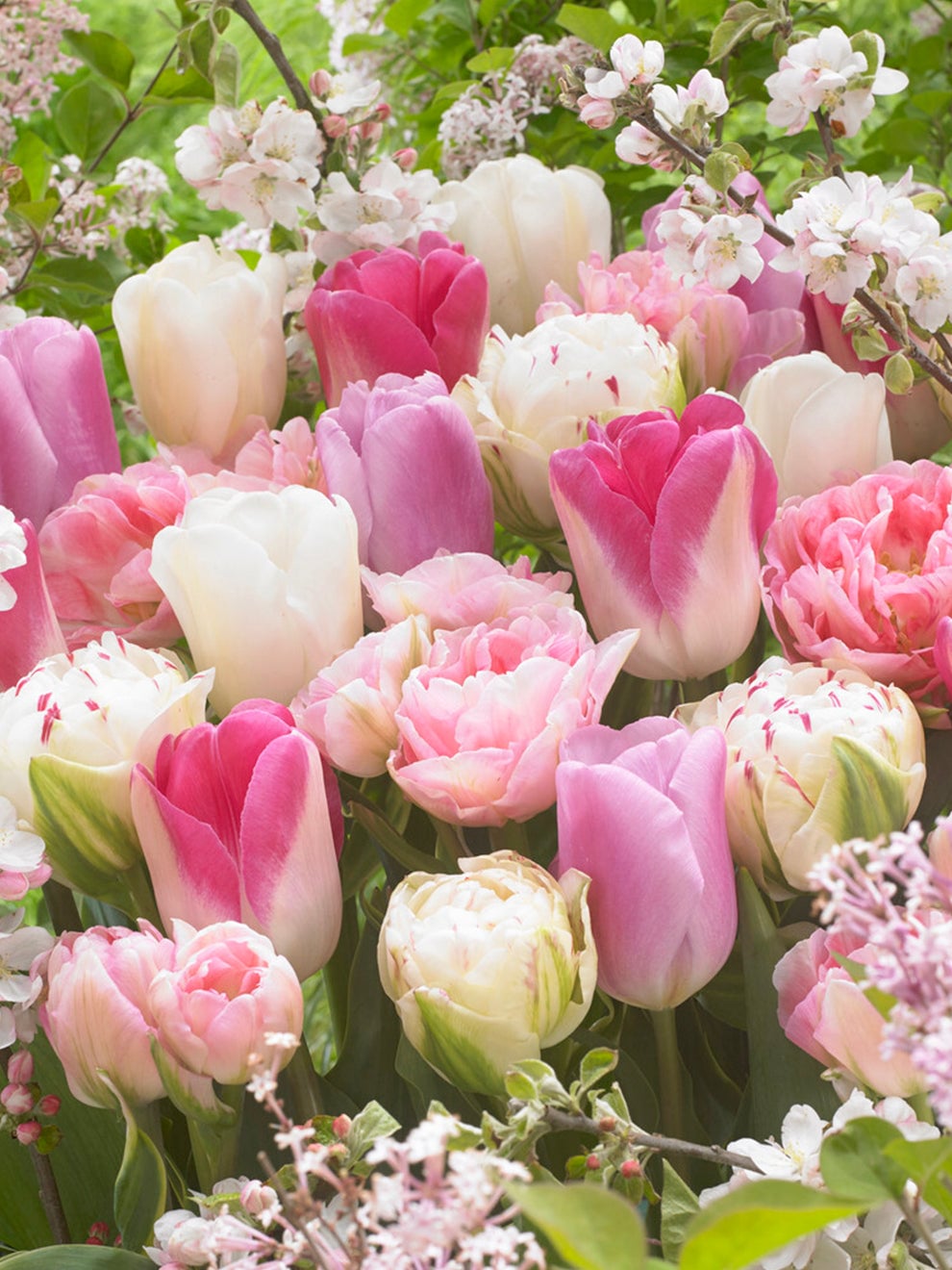
For a softer combination, the Tulip Spring Romance Collection is described by DutchGrown™ as a pink and white mix of single and double flowers. That makes it a practical starting point if you like some variation in petal shape without building a palette from separate cultivars. Check the Spring Romance product page for the current pack formats and planting details, then estimate coverage from the quantity offered rather than assuming one pack fills a bed.
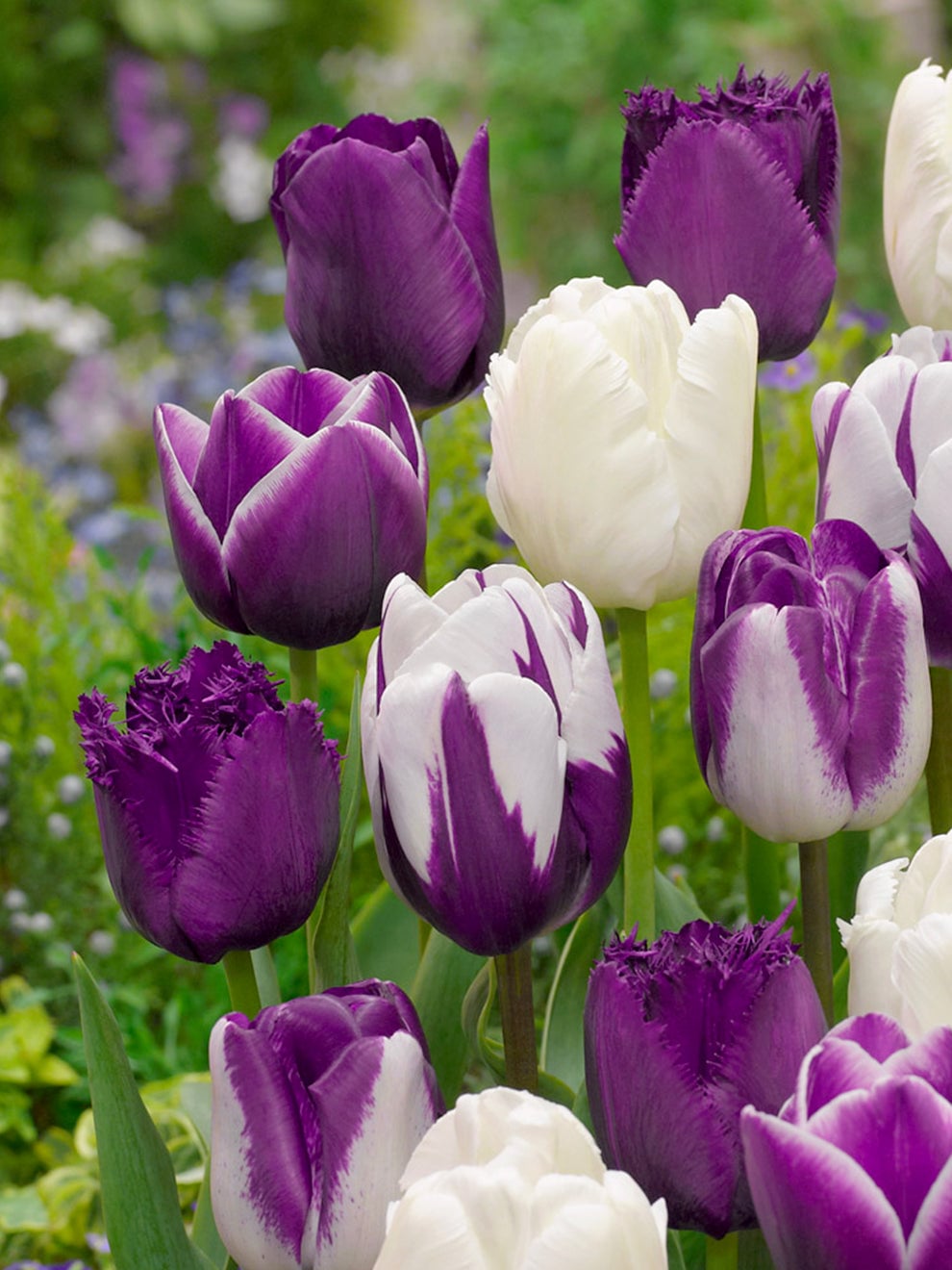
A cooler palette points towards the Tulip Blueberry Snow Collection, which is described in purple, lilac and white tones. The named collection can help tie together a border with cool-coloured perennials or containers near a doorway. As with any mix, the trade-off is less certainty about the exact balance of each colour in the finished display. Browse the Blueberry Snow listing and use its product photographs as a guide to the overall palette, not a guarantee of a precise colour ratio.
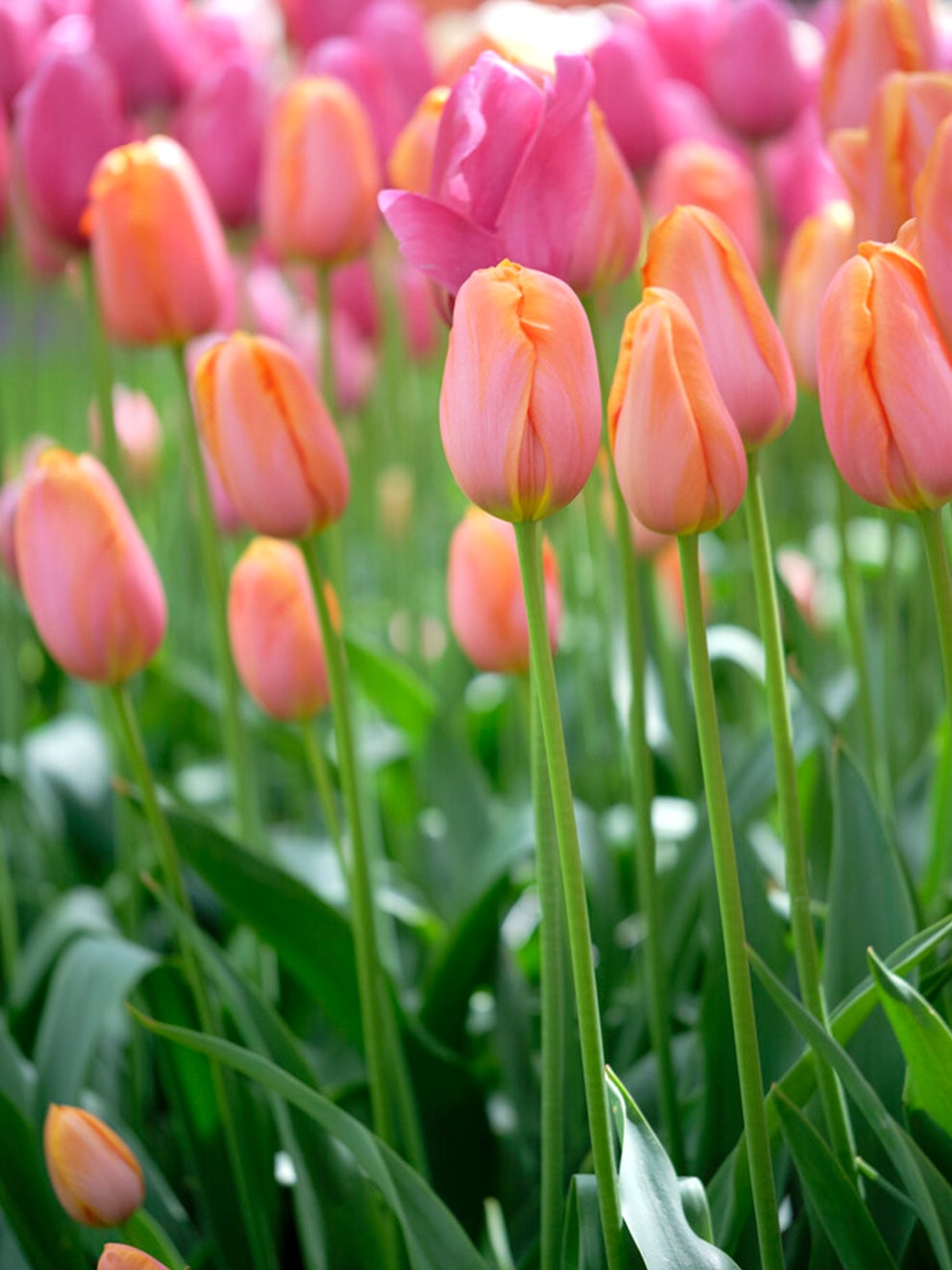
If you prefer the idea of several colours rather than a restrained two-tone scheme, compare the Tulip Jumbo Darwin Mix. Its name signals a mixed Darwin tulip offer, making it a candidate for broader beds where variation is welcome. A mixed colour pack can look lively, but it is harder to place each shade exactly. Review the Jumbo Darwin Mix product page for its current contents and pack sizes before using it in a layout that depends on a particular colour.
How should flowering time affect the shortlist?
Colour is only one part of the decision. Think about what a flower will sit beside and whether the view is mainly from indoors, a path or a seating area. A low pot can be read at close range, while a border seen from a window benefits from repeating groups and contrasts that remain visible at a distance. The product photographs help with tone, but the planting context is yours to judge.
Spring displays are more useful when they have a sequence rather than one brief peak. The DutchGrown™ product pages give variety-level descriptions, but local weather, aspect and soil conditions affect when flowers open. Treat catalogue timings as planning guidance. To spread interest, check whether the bulbs you are considering flower at different points in spring and combine them with existing plants that take over later.
- Use the listed flowering period to compare varieties, then allow for local variation.
- Look for a mix of early, mid-season and later interest if a longer display matters.
- Avoid placing every bulb in one compact patch if you want colour to travel through the garden.
Tulips are usually planted in autumn for spring flowers. Before ordering, confirm the current planting instructions and suitability for your site. If the ground is heavy or prone to standing water, drainage deserves attention; pots need drainage holes and enough depth for the bulbs. Product-level advice should take priority over generic rules, especially when a named variety has specific requirements.
How do the three options compare?
These choices serve different design priorities, rather than forming a single ranking. Compare the photos and descriptions with your plan, then check the live listing for quantity, availability and price. We have avoided fixed price figures because pack formats and seasonal stock can change; bulb quantity is a key cost driver.
| Product | Best for | |
|---|---|---|
| Tulip Spring Romance Collection | Pink and white mixed flower forms | See price |
| Tulip Blueberry Snow Collection | A cooler purple and white palette | See price |
| Tulip Jumbo Darwin Mix | Varied colour in a broad planting | See price |
How much should you order?
Also decide how much maintenance you are comfortable with after flowering. Tulip displays may be treated as seasonal colour or managed with a longer-term planting approach, depending on variety and conditions. If you plan to lift or replace bulbs, keep that work in mind when choosing the bed. For a lower-effort scheme, check which product notes describe naturalising and whether that behaviour suits the space. Avoid promising yourself a permanent display when the listing only guarantees the bulb supplied.
Pack quantity is only useful when it is translated into a planting pattern. Decide first whether bulbs will form a dense group, a repeating drift or a line. Then follow the spacing guidance on the relevant product page and scale your order to the area. A modest, repeated scheme can look more intentional than scattering a small number of bulbs over a large bed.
- Sketch the bed and mark where each group will sit.
- Use the product page quantity and spacing advice to estimate coverage.
- Allow extra room around perennials that will expand before spring.
- For containers, check depth, drainage and the number of bulbs that fit comfortably.
If you are choosing between a named variety and a mix, price the pack size that matches your planting area. A low total quantity may suit a pot or small border, while a broad drift needs more bulbs and consistent spacing. Check whether listings offer multiple quantities and compare the resulting cost per planned area. Do not assume a larger pack is better value if it leaves bulbs without a suitable place to grow.

What should you check on the UK store before ordering?
Finally, keep an eye on the difference between a collection image and the contents of the selected pack. A display photograph communicates the general look, but availability can shift and product variants may differ. Verify the name in the cart and the quantity selected before confirming. That small pause is especially useful when comparing similar colour schemes across several DutchGrown™ listings.
The product page is the last planning step, not merely the checkout route. Confirm that the selected bulb is available for the intended planting season and that the listed quantity matches your sketch. Review delivery information as well, since dispatch timing and terms can change. DutchGrown™ product descriptions provide a starting point, but live availability is the source to rely on when you place an order.
- Confirm the exact product name and selected pack quantity.
- Read planting depth, spacing, light and soil notes for that variety.
- Check dispatch timing, delivery coverage and any current terms.
- Save the order confirmation so you can match delivered bulbs to the plan.
If your first choice is unavailable, go back to the criteria rather than replacing it with the nearest photograph. A substitute should match the colour direction, flowering period and height you need. On the store, compare another named tulip or a suitable collection, and reassess its pack quantities before changing the planting sketch. This keeps the plan coherent while allowing for seasonal stock changes.
Ready to plan your spring bulb order?
For a pink and white mixed display, we would begin with Tulip Spring Romance Collection. Choose Blueberry Snow if a cooler palette is more useful, or compare Jumbo Darwin Mix when you want varied colour across a larger area. DutchGrown™ is a natural place to shortlist these because its UK store presents named varieties and collections alongside product-level planting details.
The honest limitation is that collections give less control over each flower’s exact colour balance, and no catalogue can promise precise flowering dates in every garden. Measure first, check the current listing and buy a quantity that you can plant well. That simple sequence makes the eventual display easier to manage.





Leave a Comment