



Choosing backup power is less about finding the biggest battery and more about matching a system to the outage, trip or appliance you actually need to cover.
BLUETTI has a wide Canadian range, from compact portable stations to expandable home backup and a dedicated refrigerator battery. That breadth is useful, but it also makes a quick catalogue browse a poor way to decide.
We reviewed BLUETTI Canada’s current product information and feature claims to see where the range is persuasive, where the trade-offs begin, and which readers are most likely to benefit. This is a review of published product details, not a hands-on test; runtime depends on connected loads and conditions.
Some links in this article are affiliate links: if you make a purchase through them, we may receive a small commission.
Before you read on: BLUETTI is worth considering if you need portable or expandable battery backup and are prepared to size a system around specific appliances. The Apex 200 and Elite 300 suit broader power needs, while FridgePower focuses on keeping a refrigerator running. Its main limitation is complexity: capacity, output, expansion and charging options all need to match your use.
Where does BLUETTI stand out in the Canadian range?
The strongest case for BLUETTI is range coverage. Its Canadian store groups portable power stations, solar generator kits, expansion batteries and home backup products, with options for RV travel, camping, off-grid use and household outages. A buyer can begin with one portable unit and, on compatible models, consider a larger battery arrangement rather than treating every use case as a separate category.
The breadth is most useful when needs overlap. A station might support devices during an outage and travel with an owner later, while a larger system can be planned around more demanding loads. The store also lists panel bundles and accessories alongside standalone equipment, giving shoppers a path to compare a basic unit with a more complete setup. Browse the Apex 200 range and Elite 300 options to see how product pages describe those distinctions.
- Several scales: compact units sit alongside higher-capacity stations and expandable systems.
- Multiple charging routes: selected models support solar input as well as conventional charging.
- Purpose-built options: FridgePower targets refrigerator backup instead of general portable use.
- Accessory ecosystem: panels, expansion batteries and bundles can change what a complete setup includes.
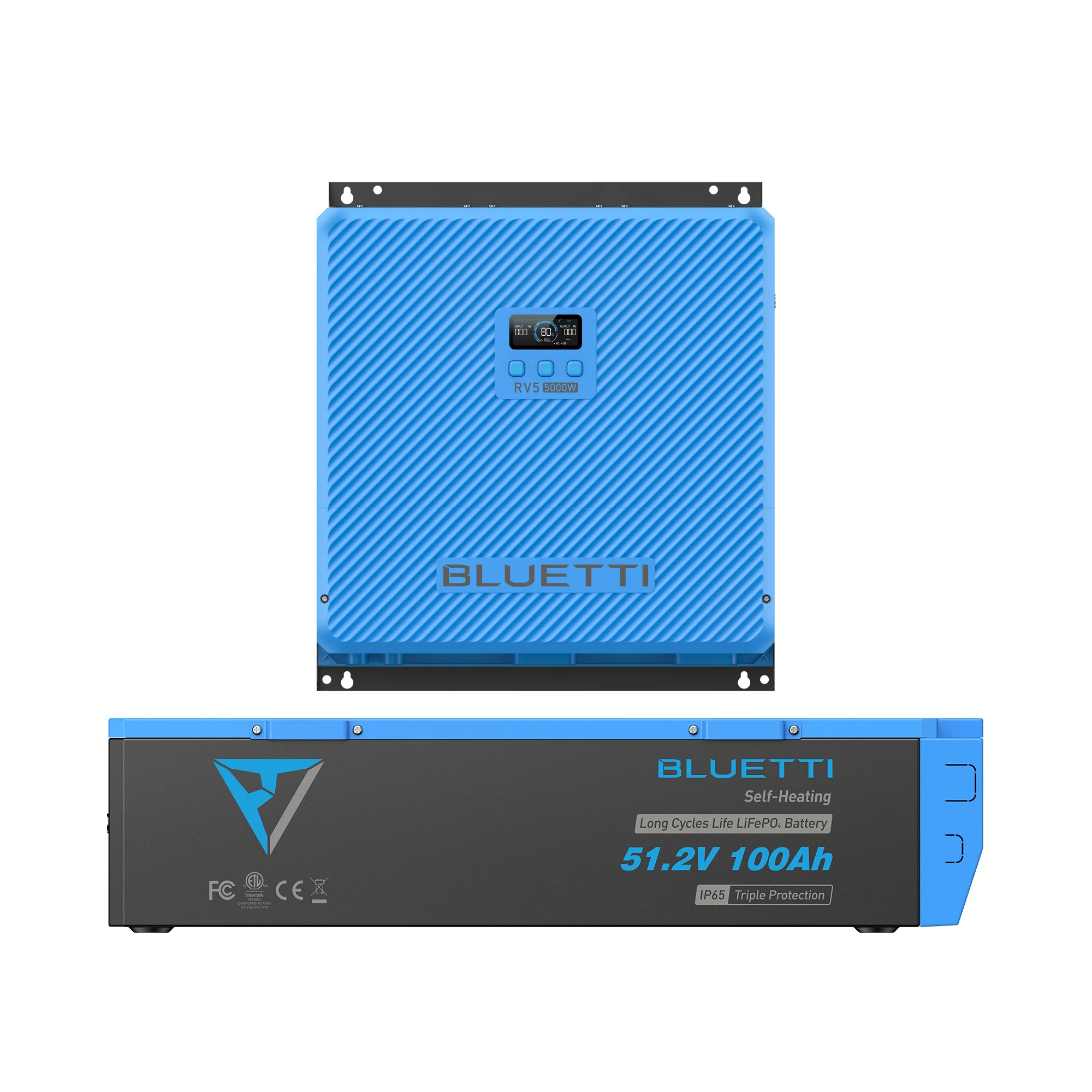
That last point matters: comparing only the base station can understate the planning involved. Use the BLUETTI accessories information to check compatibility. A compatible panel, expansion battery or connection accessory may be central to the intended setup, but compatibility is model-specific. Read the product page and its included-items section before assuming two BLUETTI components work together.
What does the Apex 200 offer, and what does it ask of the buyer?
The Apex 200 Versatile Power Station is positioned as a larger portable unit with room to grow. BLUETTI lists a 2,560Wh capacity, up to 3,600W output, solar input up to 3,000W and expansion up to 33kWh. Those headline figures are relevant for someone planning for more than phones and lights, and the store describes it for backup and off-grid living. Product details are available on the Apex 200 product page.
Its strength is flexibility: the listed expansion ceiling leaves a route to a much larger setup, while the AC output rating broadens the range of appliances a buyer may evaluate. BLUETTI also presents the unit as movable, which is useful if backup needs change between home and a vehicle. The Apex 200 listing is a sensible place to start for readers who want one system to bridge portable and more substantial backup roles.
The compromise is that a large capacity does not guarantee a particular runtime. Energy use varies substantially by appliance, operating cycle, temperature and conversion losses. Buyers should list the devices they need to support, check their wattage and startup needs, then compare that load with the station’s continuous and surge specifications. Expansion also adds equipment, space and setup considerations; maximum capacity is an option, not necessarily the best-value configuration.
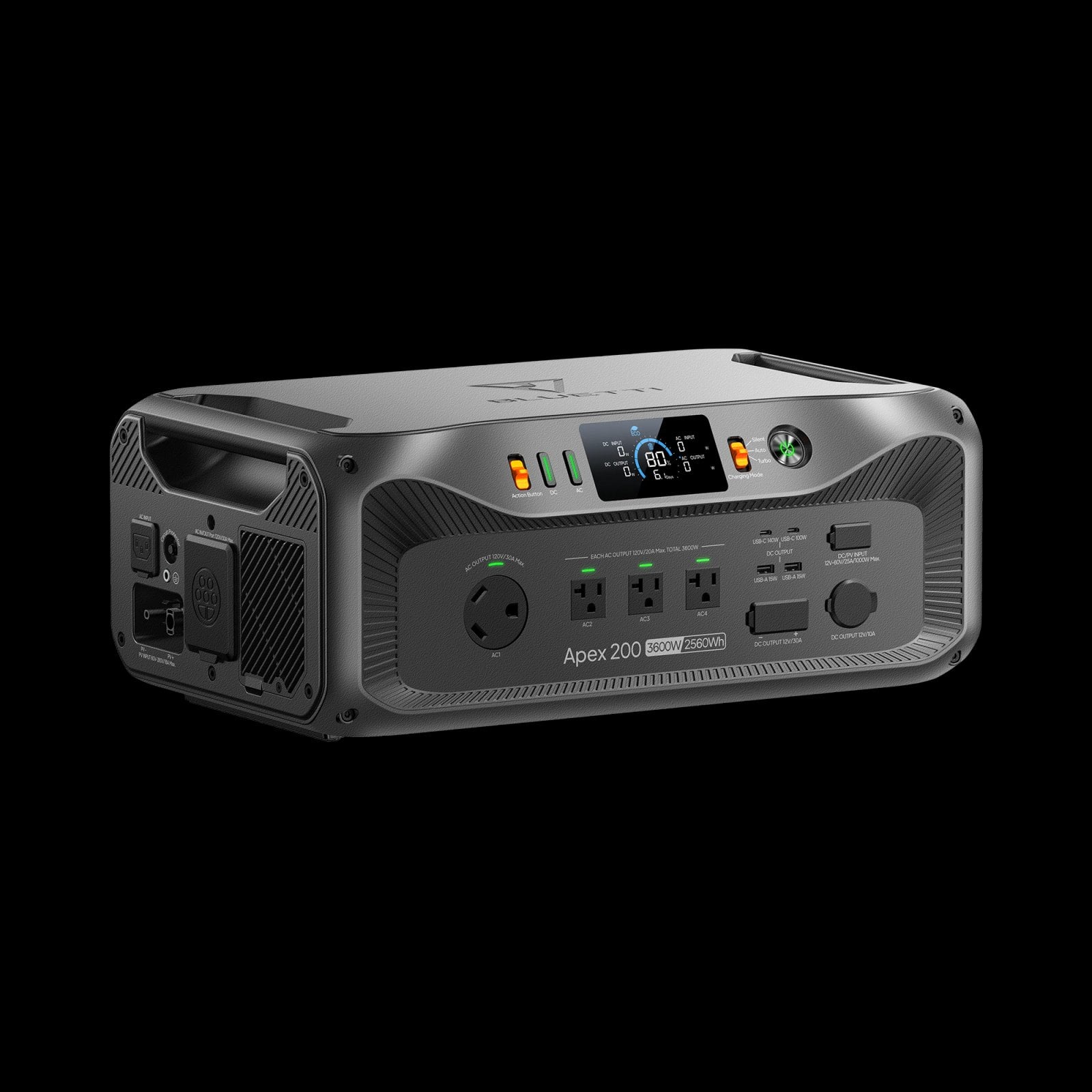
For a smaller or more occasional need, the Apex 200 may be more system than necessary. If the main goal is a single appliance or a few small devices, a lighter model or the dedicated refrigerator system may be easier to justify. Check the Canadian Apex 200 page for its current configuration, charging details and compatible expansion products.
Is the Elite 300 a more balanced choice for mobile power?
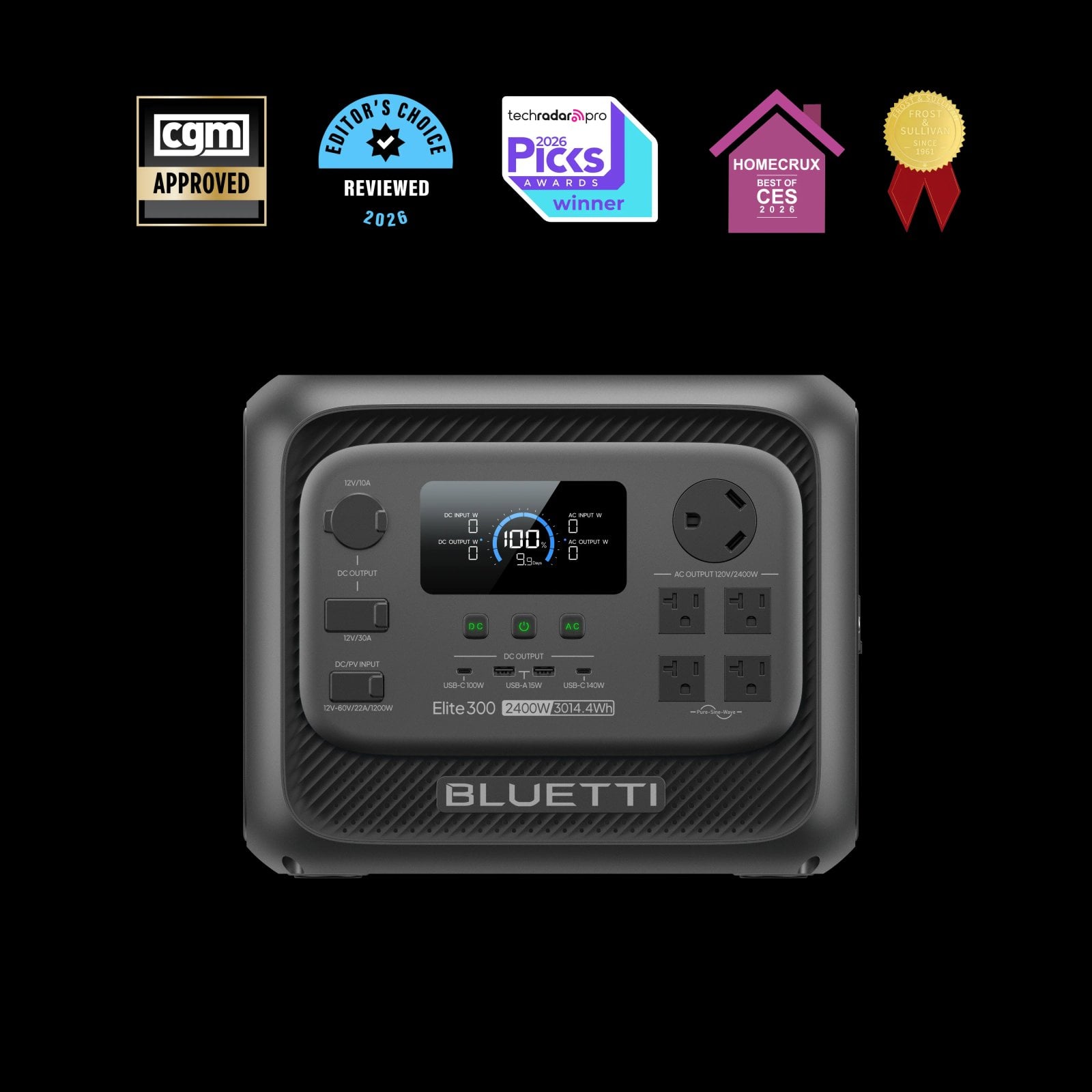
The Elite 300 Portable Power Station is listed at 3,014.4Wh and 2,400W output, with BLUETTI describing it for RV use and home backup. That gives it substantial capacity while keeping it within the Elite portable range. Its Canadian product listing presents a defined alternative to building around the Apex 200’s expansion potential.
For RV owners or households wanting one station for a meaningful set of loads, the Elite 300 looks like a practical middle ground on paper. The listed AC output, solar input and multi-port layout give shoppers several ways to think through what they could connect. Its Elite 300 details should be read alongside the appliance list, especially if a refrigerator, cooking device or other motor-driven load is involved.
The limits are familiar to portable power: size and weight affect how often an owner will move it, and a capacity number is not a promise of a fixed number of hours. The Elite 300 listing is where to confirm those physical details. BLUETTI’s product page lists the unit’s key specifications, but the buyer still needs to translate those into expected runtime. For occasional camping and modest electronics, the station could be unnecessarily large; for longer trips or broader backup, its capacity may be more relevant.
- List essential devices and their rated power before comparing stations.
- Separate continuous loads from appliances with a high startup draw.
- Decide whether solar charging or later battery expansion is genuinely needed.
- Check dimensions, weight, ports and included accessories against your setup.
That checklist avoids a common category mistake: choosing on capacity alone. The Elite 300 page and the Apex 200 page should be compared against the same real load list, not just each model’s largest specification.
Does FridgePower make sense when the refrigerator is the priority?
FridgePower is the most focused product in this shortlist. The Canadian listing describes an ultra-slim 75mm design, fast UPS switching, smart alerts and up to four days of power. Its purpose is narrower than a general power station: keep a refrigerator supported when grid power fails. See the FridgePower product page for the current system details.
That dedicated purpose is its appeal. The FridgePower details help clarify what is included. Rather than selecting a large portable station and figuring out where it fits, a shopper can evaluate a product designed around refrigerator continuity. The page’s claimed switching behavior and alert features are relevant to people who want backup to start without a manual changeover. It is a direct fit for a household that values food preservation during an outage and does not need one battery to cover many different devices.
Its limit is equally clear: the stated runtime is conditional, and refrigerator energy use varies by model, settings, room temperature and how often the door opens. “Up to” language describes a best-case claim, not a guarantee for a particular kitchen. FridgePower is also less versatile than a conventional station. If the goal includes charging electronics, running lights or supporting RV equipment, compare its outputs and system scope with a broader portable model before choosing. Review the FridgePower specifications and your fridge’s own electrical label together.
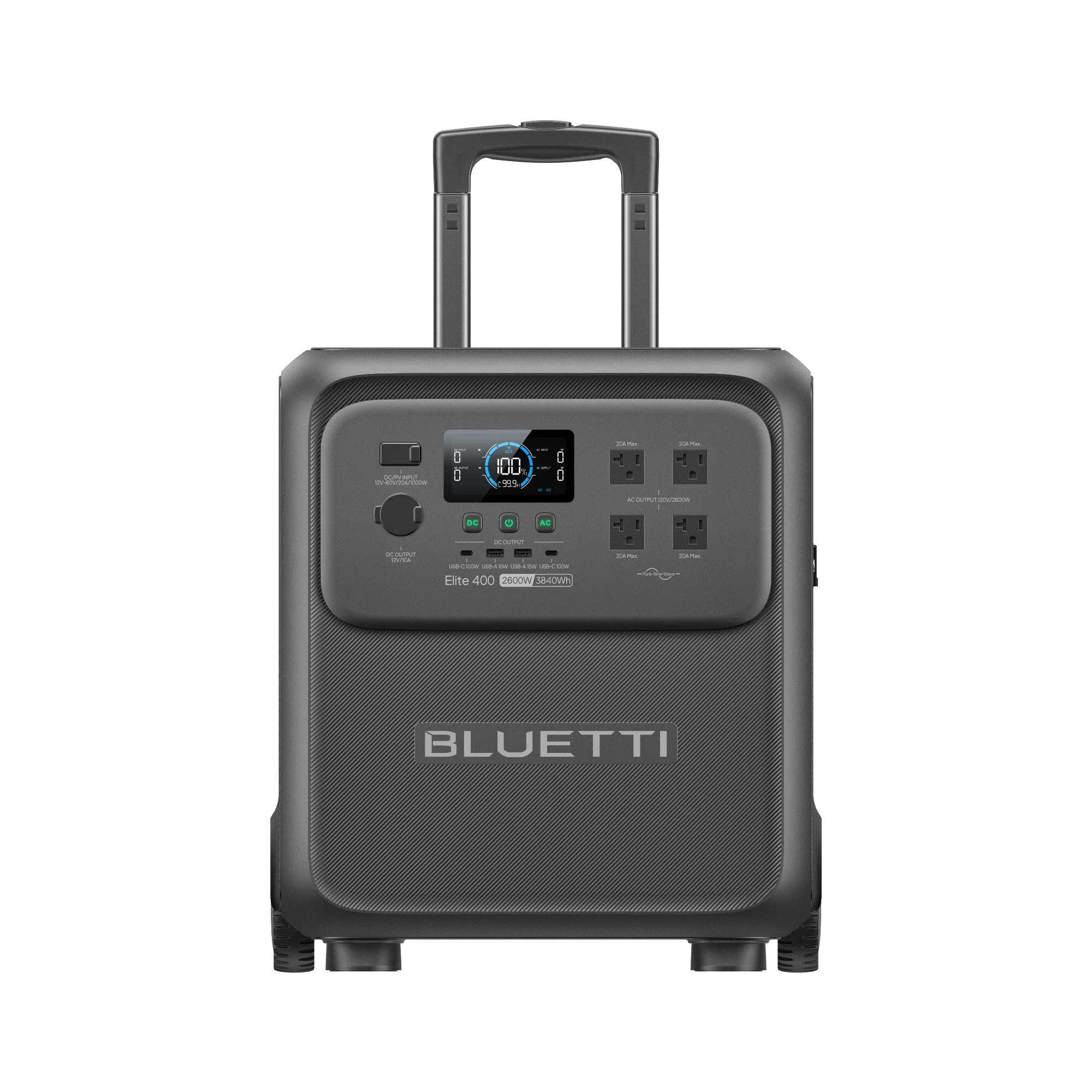
BLUETTI also lists the Elite 400 Portable Power Station with 3,840Wh capacity and 2,600W output, and describes it for essential home backup. It may suit someone whose planned load pushes beyond a smaller unit, but its larger capacity also reinforces the need to check dimensions, weight, charging and actual runtime. The Elite 400 product page provides a useful reference when capacity is the deciding factor.
What are the main limitations to weigh before buying?
BLUETTI’s range is technically detailed, but translating specifications into an everyday plan takes work. The store emphasizes capacity, output, charging input and expansion. Those details matter, yet they do not answer every practical question by themselves. Buyers should confirm the actual wattage of their devices, whether a load has a startup surge, how long it needs to run, and which charging method will be available during an outage.
There is also a difference between product flexibility and simplicity. Compare BLUETTI’s bundle listings for configuration specifics. A configurable system may support more scenarios, but every added battery, panel or connection introduces compatibility and placement questions. The initial package contents and available accessories can differ by listing. Compare the exact bundle on the Canadian store rather than assuming a pictured panel or expansion battery is included.
- Runtime: estimate it from the real load rather than headline capacity alone.
- Output: verify both running and startup demands for appliances.
- Portability: consider how often the unit will move and where it will be stored.
- System scope: decide whether solar, expansion or a dedicated backup product is needed.
- Ownership details: review warranty, shipping, return terms and support for the exact model.
These checks are especially important for higher-output products such as the Apex 200 and Elite 300. Neither a high capacity nor an expansion ceiling should be read as a promise that the system will power an entire home. Whole-home backup depends on the loads, wiring and equipment involved, so homeowners should get qualified advice where fixed circuits are part of the plan.
Which BLUETTI model suits which reader?
The Canadian lineup makes the most sense when each model is judged against its intended job. The Canadian store’s portable station range shows the broader category. We would narrow the shortlist this way:
- Apex 200: for readers who want a portable station with substantial output and a stated path to expansion.
- Elite 300: for RV users or households seeking a high-capacity portable unit without starting from an expandable home system.
- FridgePower: for a focused refrigerator backup need where slim placement and automatic switching matter.
- Elite 400: for buyers evaluating a larger portable capacity for essential home backup.
For a quick product-page comparison, these are the clearest starting points:
| Product | Listed specification | Best for | |
|---|---|---|---|
| Apex 200 | 2,560Wh; expandable to 33kWh | Portable backup with room to grow | Check Apex 200 pricing |
| Elite 300 | 3,014.4Wh; 2,400W output | RV and broader portable use | Check Elite 300 pricing |
| FridgePower | 75mm slim design; UPS switching | Dedicated refrigerator backup | Check FridgePower pricing |
| Elite 400 | 3,840Wh; 2,600W output | Higher-capacity essential backup | Check Elite 400 pricing |
The table is a starting filter, not a performance ranking. Check each linked product listing for its current configuration. Check the live Canadian pages for current specifications, package contents, product availability and current pricing. Match the desired runtime to a real appliance list before deciding that a bigger model is automatically the better one.
Ready to choose a BLUETTI power station?
Our recommendation is to shortlist BLUETTI when portability, solar charging or expansion are central to the job. Start with the Canadian range that matches that priority. The brand has useful breadth, and the Apex 200 and Elite 300 provide distinct routes into general backup while FridgePower is a more targeted answer for refrigerators.
The honest limitation is that BLUETTI’s specifications do not remove the sizing work. Check the individual model page alongside your load list. Buyers still need to check load, runtime, compatibility, package contents and the product’s weight. For a clearly defined backup need, that research is manageable; for a simple promise across an entire home, the product pages alone are not enough to establish fit. Review the Canadian store’s current details for the model that matches your plan.

Leave a Comment