


A spring bulb order can create a quick burst of colour, a measured sequence of flowers, or a tall focal point. The right choice depends on the space and the effect you want, rather than which photograph looks prettiest.
We compared four options listed by DutchGrown™ on its UK store: an early crocus mix, two tulip choices and an architectural allium. Product details below come from the store’s product pages, which describe flowering windows, height and colour. They are useful planning clues, though weather and garden conditions affect the display.
Some links in this article are affiliate links: if you make a purchase through them, we may receive a small commission.
Before you read on: choose Crocus Botanical Mixed for the earliest low-growing colour, Tulip Philly Pastel Mix for a softer mid-spring bed, Tulip Jumbo Darwin Mix for taller, bolder tulips, and Allium Gladiator for height and structure. A staggered display can combine them, but it needs more space and a planting plan.
How do the four choices differ at a glance?
The biggest distinction is the role each one plays. Crocuses sit close to the ground and arrive early; both tulip mixes flower later and fill the middle of a border; the allium rises above neighbouring plants. They are not direct substitutes in a design, even though they all contribute spring colour.
The quick comparison below is based on the UK store’s stated product details. Where a page gives a range rather than a fixed date, treat that as a guide and check the current listing for the variety you are considering.
| Product | Main difference | |
|---|---|---|
| Crocus Botanical Mixed | Earlier, low-growing colour; mixed shades | See current option |
| Tulip Philly Pastel Mix | Mid-spring; pastel shades; about 40-50 cm | See current option |
| Tulip Jumbo Darwin Mix | Mid-April to mid-May; about 50-70 cm | See current option |
| Allium Gladiator | About 100-120 cm; long flowering period | See current option |
For a single compact area, one variety is simpler to position and repeat. A mixed display can offer a longer run of interest, but it does not automatically flower continuously: different varieties overlap and vary with conditions. For a broad seasonal sweep, the store also lists named collections such as Eight Weeks of Daffodils; check its sequence and contents before treating it as a substitute for choosing varieties individually.
- Earliest and lowest: Crocus Botanical Mixed.
- Gentle colour: Tulip Philly Pastel Mix.
- Taller tulips: Tulip Jumbo Darwin Mix.
- Strong vertical accent: Allium Gladiator.
Is Crocus Botanical Mixed the best pick for early colour?
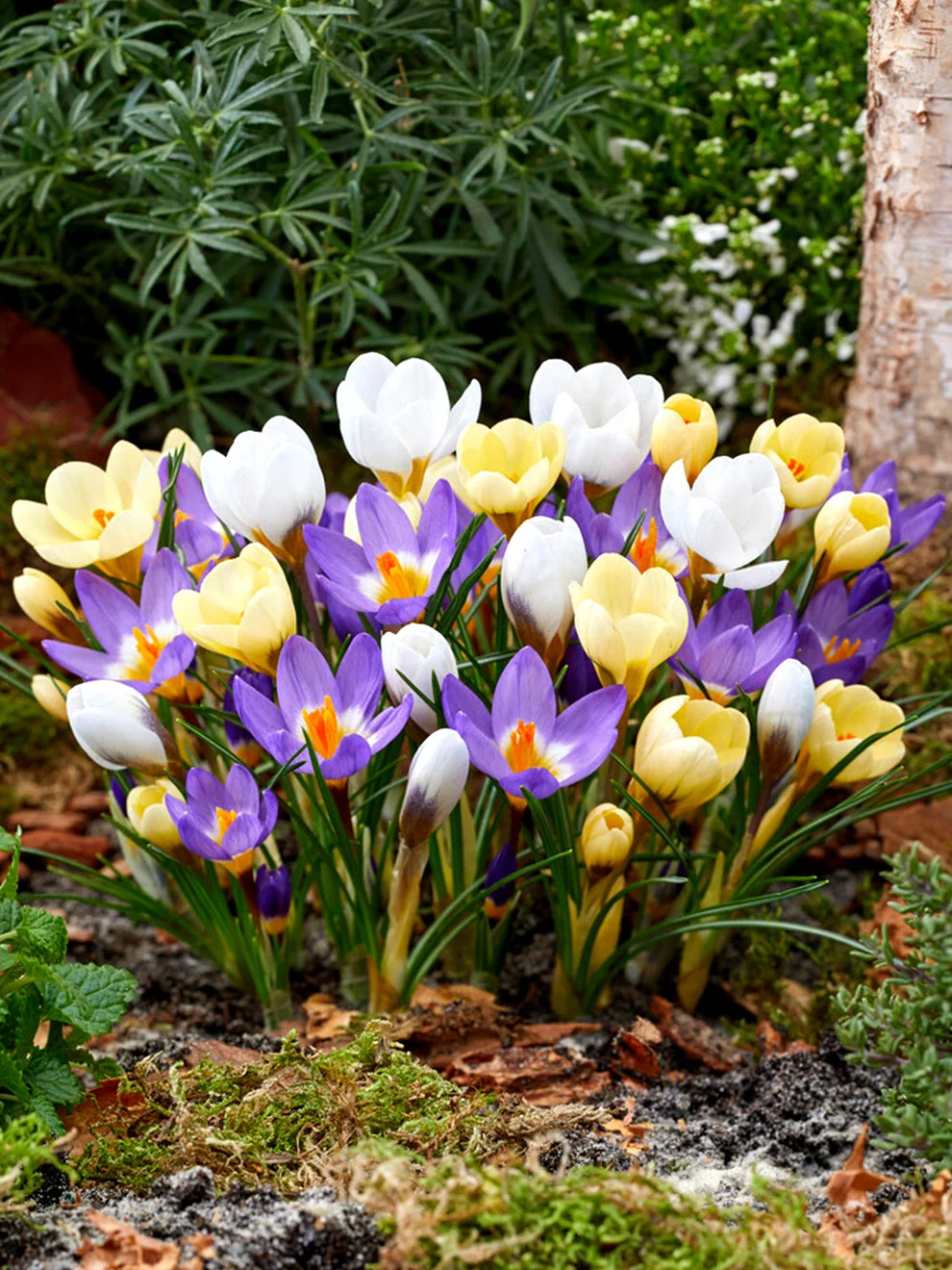
It is the clearest choice when the priority is seeing flowers before the tulips. Crocus Botanical Mixed contains blues, yellows, purples, white and striped blooms, according to its product listing. The store says botanical species crocuses flower earlier than regular crocuses, making this a useful option beneath deciduous shrubs, along a path edge or in a generous lawn group.
Scale matters: these are small flowers, so scattering a few through a large bed can look tentative. The product page recommends planting in large groups. Compared with a single-colour planting, the mixed palette gives more variation, while one colour can make a cleaner, more formal drift. This is a design choice, not a claim that one mix establishes better.
Before choosing it, consider:
- Will a large group fit the space you want to fill?
- Can you leave the planting undisturbed while the foliage completes its cycle?
- Would a mixed palette suit the rest of the garden, or would a single colour be easier to repeat?
Which tulip suits a softer bed, and which gives more height?
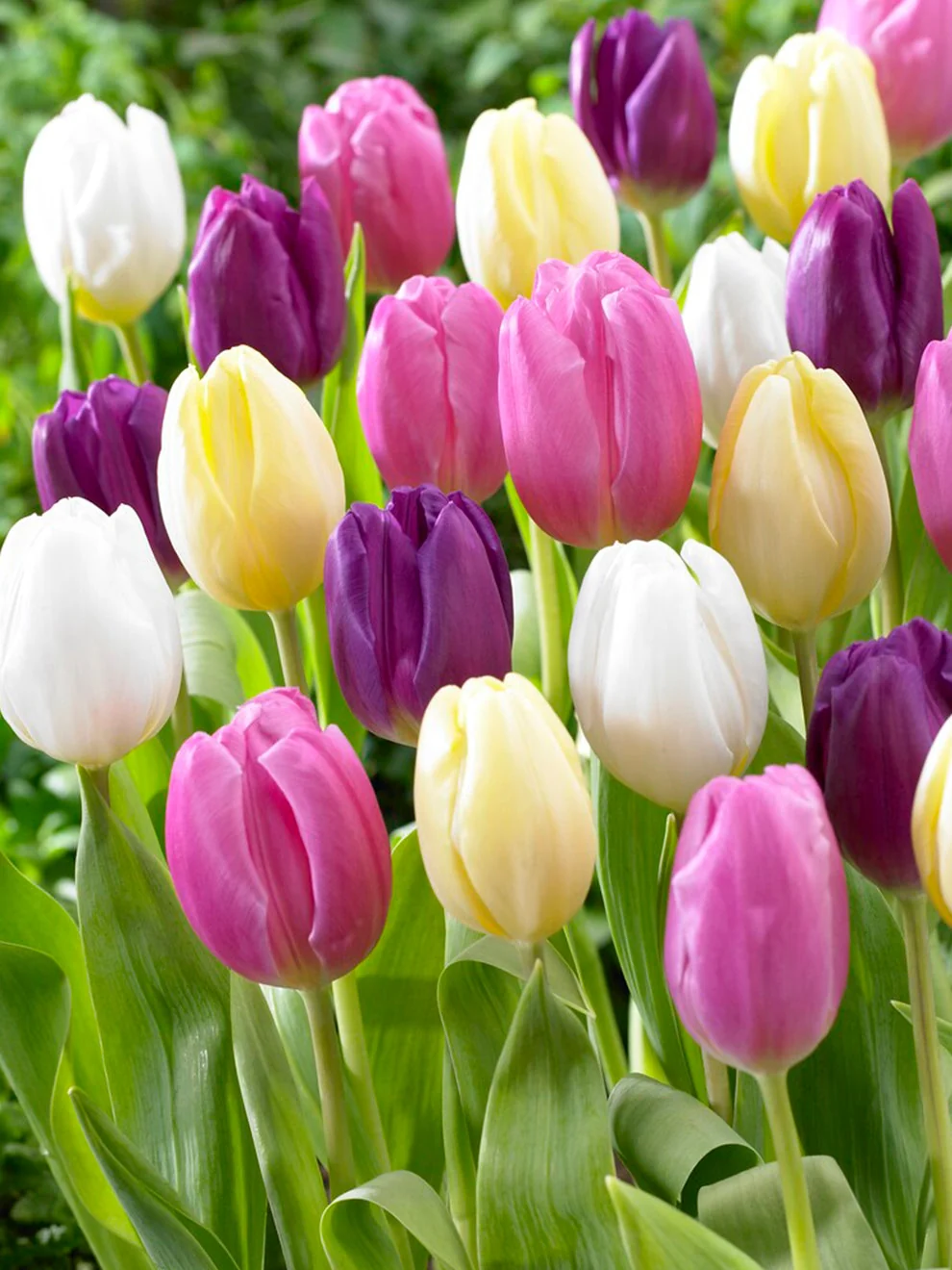
The two tulips answer different design questions. Tulip Philly Pastel Mix is a collection of Triumph tulips in three pastel shades. The store lists sturdy stems averaging around 40-50 cm and flowering in mid-spring, around late April. That gives it a composed, medium-height role for a border or container where pink and cream tones will sit comfortably with other spring planting.
Tulip Jumbo Darwin Mix is the bolder, taller option. DutchGrown lists an average height of about 50-70 cm and a flowering period from mid-April to mid-May. It describes the blooms as suitable for gardens, landscapes and cut-flower arrangements, and says they can return in later years if cared for correctly. The stated height and use make it a stronger choice when the display needs to read from across a lawn or provide stems for a vase.
Both mixes save the work of selecting several compatible varieties. A single-colour planting gives more control over coordination, while these mixes provide a preset palette. The compromise is less control: a mixed pack determines the palette for you. Single-colour tulips are easier to coordinate precisely, while Philly Pastel and Darwin Mix provide an already grouped colour effect. The product pages do not establish that either is more reliable than comparable tulips elsewhere, so compare the actual variety, size grading and growing notes rather than assuming a brand name guarantees a better result.
Choose Philly Pastel if softness and moderate height matter most. Choose Jumbo Darwin if scale and stronger colour matter more. Both are autumn-planted bulbs for spring display; the store advises planting the Darwin mix in autumn and notes that its listed flowering period can span several weeks. Neither removes the usual uncertainty of local weather.

- Measure the bed or container and note what sits behind the planting.
- Pick the colour direction before adding a second tulip mix.
- Use the store’s listed heights to avoid placing taller blooms in front of low edging.
- Check the current product listing for planting and dispatch information before ordering.
Does Allium Gladiator justify the extra height?
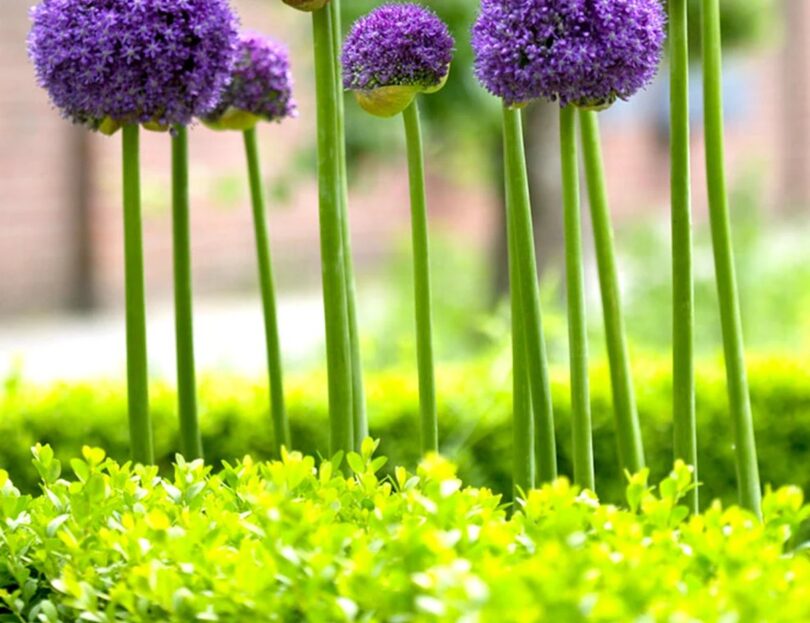
Choose Allium Gladiator when the design needs a vertical accent rather than a carpet of colour. Its UK product page describes a plant around 100-120 cm tall, with lavender-blue clusters about 15 cm across and a long flowering period. The listing calls it one of the taller architectural alliums, while noting that Globemaster and Ambassador have larger heads. That qualification is useful: Gladiator offers height, but it is not the largest allium in the range.
Its scale makes it work well among lower perennials or behind smaller bulbs, where the flower heads can rise above the surrounding foliage. It is less suitable as the only spring choice in a narrow or low planting scheme. Compared with a typical compact spring bulb mix, it takes a more deliberate position and can look sparse when planted as a solitary stem. Repeating a small group generally creates a more intentional focal point.
Allium Gladiator is the pick here for height and structure; it loses if the brief is a low, dense carpet or a flower for cutting in quantity. A gardener who wants a very large spherical head might compare it with the store’s Globemaster listing, whose product page should be checked for current details. The honest advantage is not that Gladiator beats every allium, but that its listed size and lavender-blue clusters offer a clear architectural role.
How do these bulbs compare with buying a ready-made mix?
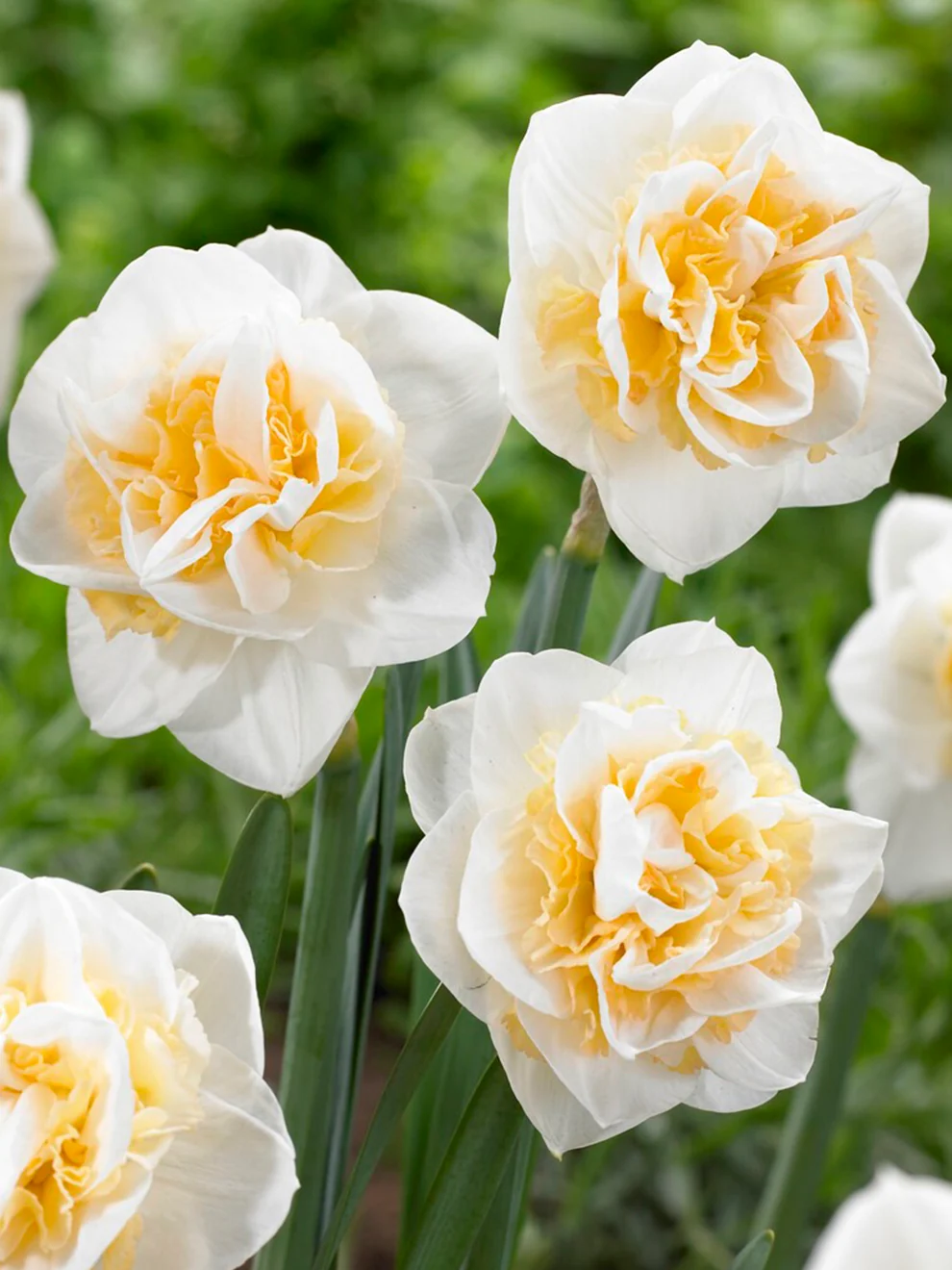
Ready-made collections and individual varieties solve different planning problems. A collection can simplify ordering and may combine a set palette or flowering sequence, as with DutchGrown’s Eight Weeks of Daffodils. Separate varieties offer more control over colour, height and placement. For any mixed pack, check the label, bulb grading and stated contents before comparing it with individual varieties.
Use this comparison to decide how much control you need:
- One clear effect: buy a single variety such as Philly Pastel or Gladiator and repeat it in groups.
- A layered border: combine early crocus, tulips and alliums, allowing for their different heights.
- Less selection work: consider a named seasonal collection, then check which varieties and timing it actually includes.
- Immediate flowers: ready-grown pots are more direct, but restrict the choice to what is in bloom and available locally.
A collection is not automatically a better deal, and an individual variety is not automatically easier. Size of the area, quantity supplied, planting depth and the mix’s contents all shape the total effort and cost. DutchGrown’s UK product pages list details for each bulb, while its store also provides guidance on bulb sizes and planting. We would compare those specifics with another UK supplier only after checking like-for-like varieties, grade and delivery terms.
What should UK shoppers check before choosing?
Before committing, confirm that the product fits both the site and the season. DutchGrown™ presents its UK store as dispatching from London and provides product-specific details, but availability, delivery scheduling and listing information can change. Use the product page as the current source for what is being offered.
- Check the bulb size or grade stated for that product and the quantity in the selected pack.
- Read the recommended planting period and depth, then compare them with your local conditions.
- Look at the listed flowering period and height together, not as standalone promises.
- Review the UK store’s dispatch schedule and delivery terms before placing an order.
- Plan where the foliage will remain after flowers fade, particularly in a lawn or narrow border.
These checks matter for any online bulb seller, including established specialist shops and general retailers. The useful point of comparison is the range of named varieties and their individual product details. A photograph cannot tell you how a plant will look in your particular soil, exposure or weather. Treat timings and heights as the store’s guidance, with normal variation possible.
What should UK shoppers know about ordering spring bulbs?
When should bulbs be planted? The product pages describe autumn planting for the tulips. Check each current listing for its own planting window, since spring-planted bulbs and plants follow different schedules.
How many should you order? Work from the area you want to fill and the spacing stated on that product page. The listed height, grouping advice and selected pack quantity all affect how full the display looks.
How do you check availability? Review the UK product page for current stock, pack options, dispatch timing and delivery terms before you finalise a plan. Seasonal listings can change.
Ready to choose a spring bulb plan?
For the earliest colour, Crocus Botanical Mixed is the clearest winner. For a softer mid-spring bed, choose Tulip Philly Pastel Mix; for taller tulips and cutting, choose Tulip Jumbo Darwin Mix. Allium Gladiator wins when a border needs a tall architectural accent. A staged mix of these roles can give the garden more change through spring, provided you have room to place each height thoughtfully.
The limitation is that the best fit depends on planting conditions and the space available, and the store’s flowering windows are not fixed guarantees. Compare the current product pages for quantities, planting notes and availability before settling on a combination.





Leave a Comment