


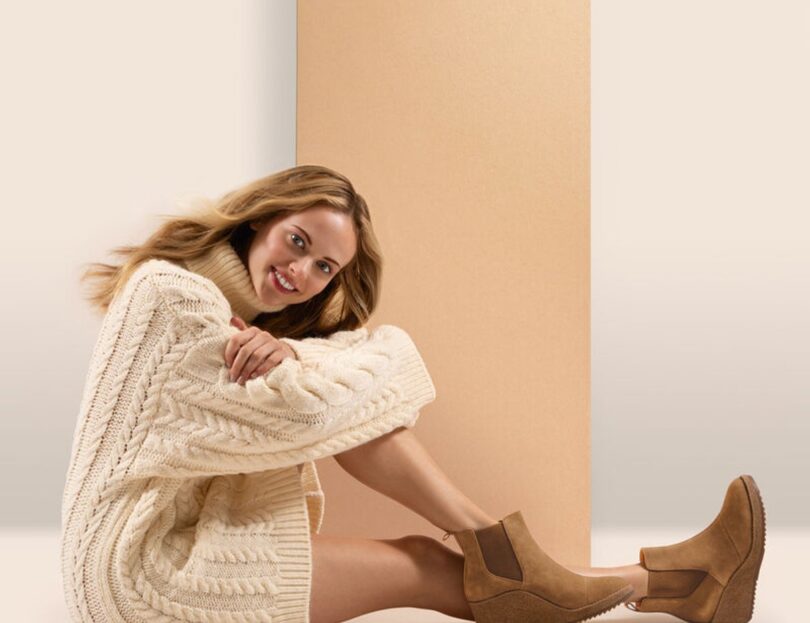
We compare four Aetrex styles by support features, construction, flexibility and everyday use so you can choose the strongest match for walking, work or warm weather.
Buying supportive footwear is rarely a simple question of whether a shoe feels comfortable in a product photo. The useful comparison is more specific: how much structure do you want, where will you wear it, how adjustable is the fit, and does the shape suit the rest of your day?
Aetrex gives shoppers several answers within one store. Its range includes sandals, loafers, heels, sneakers, clogs and orthotics, with many pages describing built-in arch support and cushioning. We have compared four representative styles to show where the range is coherent and where the trade-offs become important.
This article contains affiliate links. If you buy through them, we may earn a commission at no extra cost to you.
At a glance
- Aetrex builds its range around the Aetrex Orthotic System, cushioning and design informed by foot-scan data.
- Collette is the clearest workwear pick, while Maria is the most adaptable warm-weather choice.
- Vania brings a more fashion-led platform shape; Kristin adds a block heel with support features.
- Current store pricing varies by style, materials, season and availability, so check each live product page before deciding.
The comparison criteria that actually matter
We are treating the store as a range to compare, not as one uniform shoe. That matters because a sandal, loafer and heel can all carry the Aetrex name while creating very different experiences underfoot. The brand says its footwear is informed by more than 50 million global foot scans, and its product copy repeatedly points to arch support, memory foam or a named cushioning system. Those are useful design signals, but they are not a promise that every model will suit every foot.
For a fair choice, we would check five details on the exact product page:
- Support: Is the arch support built into the footbed, and is the footbed removable?
- Adjustment: Does the style use a hook-and-loop closure, an adjustable vamp or a less forgiving slip-on shape?
- Surface and structure: Are you choosing leather, synthetic leather, suede, EVA, cork or another material?
- Activity: Is the shoe intended for commuting, standing, occasional dressing or warm-weather errands?
- Fit: Do the width, toe shape and heel security match your own foot rather than just your usual size?
The wider alternative is a conventional fashion-first shoe with a separate insert added later. That can work, especially when a wearer already knows which orthotic shape suits them. The advantage of the Aetrex approach is convenience: the support story is part of the original construction. The limitation is that built-in support is not the same as a custom fitting.
Maria versus Vania: warm-weather comfort or statement styling?
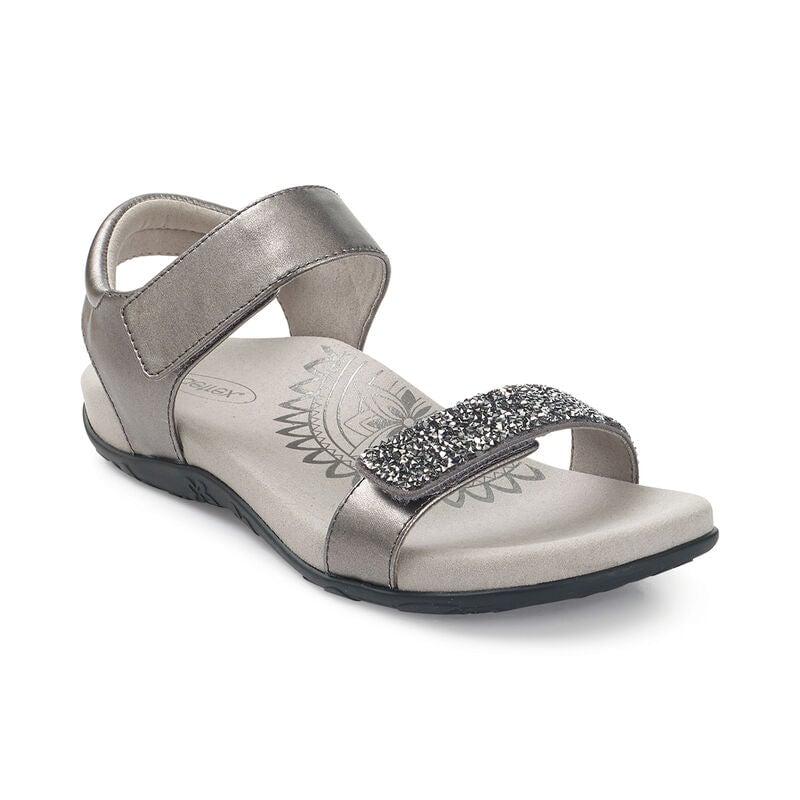
Maria is the practical sandal in this sample. Its page lists a memory foam footbed, soft microfiber lining and a synthetic leather upper, with hook-and-loop adjustment. That combination makes it the more flexible choice for readers who value easy entry, a more forgiving fit and a low-key everyday silhouette. The rubber outsole is also a more straightforward match for ordinary errands than a taller platform.
Maria is not a blank canvas, though. The jeweled gunmetal finish gives it a dressed-up edge, and the brand lists a fixed insole rather than a removable one. If you need to swap in your own orthotic, that detail deserves attention before you choose. Use the Maria product page to confirm the current size and availability information.
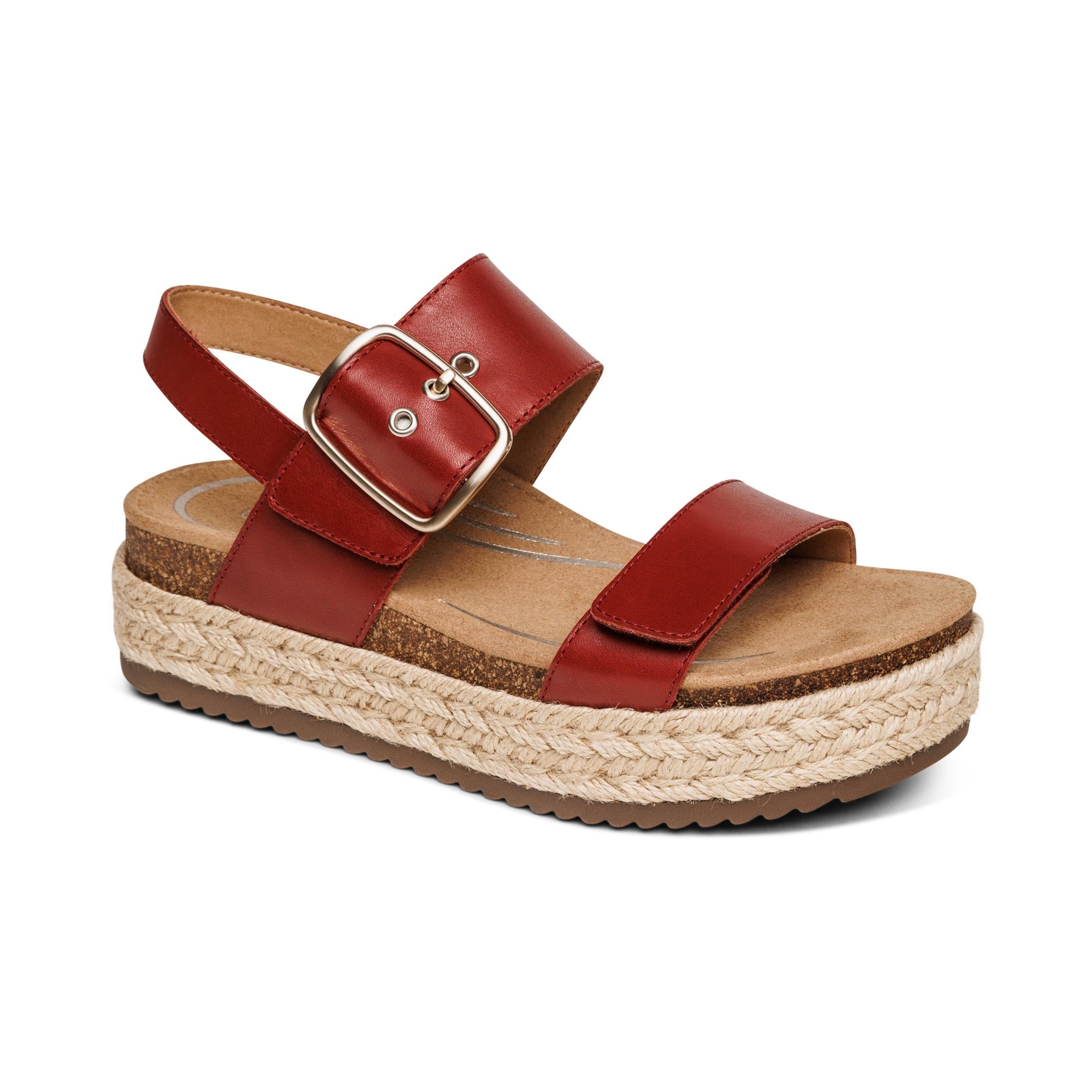
Vania makes a different argument. The red platform sandal is the more visual option, with the kind of height and presence that can carry an outfit. Aetrex describes its fashion-led sandals with leather, arch support, memory foam and platform construction, so Vania belongs in the comparison when style is not negotiable. The trade-off is predictable: a platform is not automatically the best choice for long walks, uneven ground or people who prefer a close, low-profile feel.
- Choose Maria if adjustability, cushioning and everyday versatility lead the decision.
- Choose Vania if you want a more noticeable silhouette with support features still built into the design.
- Choose a simpler flat or sneaker if your day includes substantial walking on mixed surfaces.
Against a typical flat fashion sandal, Maria has a clearer support specification. Against a high platform, Vania may look more considered for a support-conscious wardrobe, but the height still changes how the shoe behaves. That is why neither is an automatic winner: the best sandal depends on whether the day is outfit-led or movement-led.
Collette versus Kristin: which works better for dressed-up days?
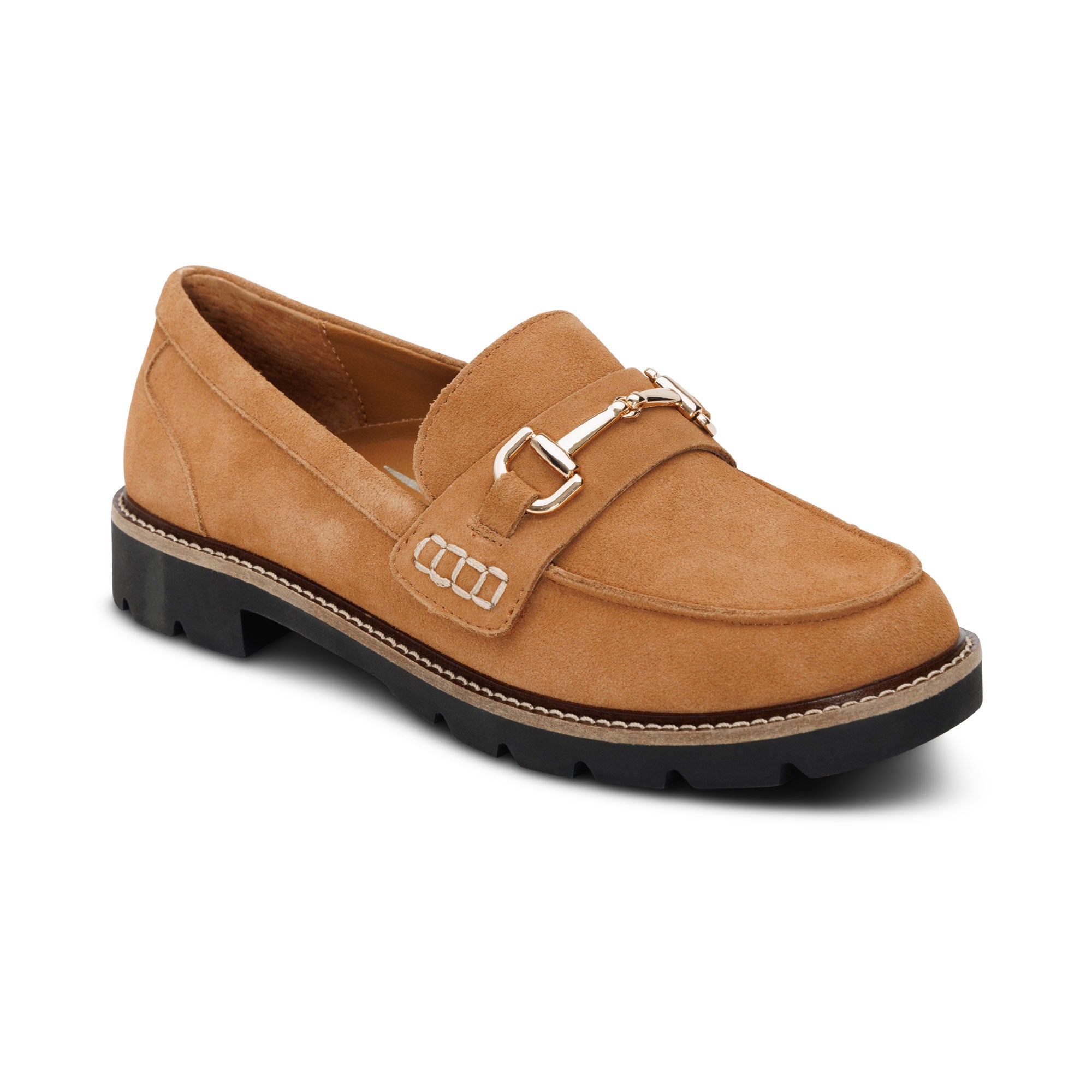
Collette is the strongest office and smart-casual contender. The tan suede loafer uses a classic shape, an adjustable vamp and a lightweight construction outsole. Its page also lists a metal shank, leather upper, lightweight EVA midsole and built-in Aetrex Orthotic System. Those are the kinds of details that make a loafer easier to compare with an ordinary work shoe: it has a recognizable wardrobe role, but the construction is more deliberately support-led.
The adjustable vamp is important. A loafer can be neat without being as secure as a lace-up sneaker, so the reader should compare instep height and heel movement rather than assuming the same fit as a favorite flat. Check Collette’s live listing for the current materials, sizes and return information before ordering.
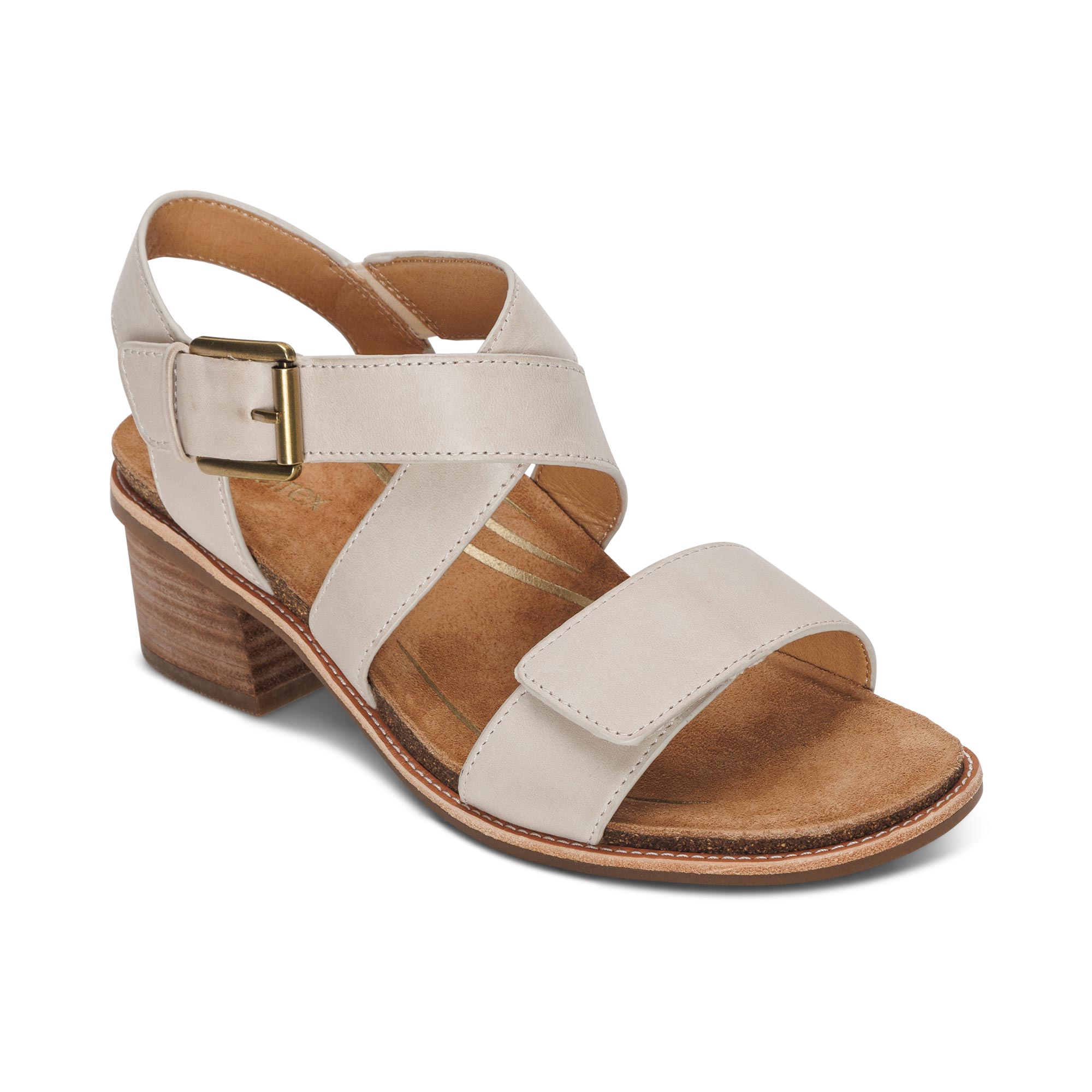
Kristin is the occasion-led alternative. The ivory block heel gives more lift and a more formal outline than Collette, while Aetrex’s product language for the style emphasizes arch support and a cushioned footbed. It is a useful middle ground for someone who wants a heel that looks intentional rather than a purely flat comfort shoe, but it remains a heel. The lower the tolerance for pressure at the forefoot or instability, the more cautious the choice should be.
- Best for work: Collette, because the loafer silhouette and adjustable vamp are easier to integrate into repeated weekday wear.
- Best for occasional dressing: Kristin, because the block-heel shape brings more height and formality.
- Best for maximum walking: neither is the obvious first pick; a low, secure sneaker or supportive flat deserves comparison.
Compared with a typical office loafer, Collette’s advantage is the amount of construction information on the store page. Compared with a conventional heel, Kristin’s advantage is the attempt to carry support features into a smarter silhouette. Neither page can tell us how a reader’s foot will respond after a full day, and neither should be treated as medical advice.
What changes across the four styles
The main difference is not simply heel height or color. It is how much the shoe asks the wearer to adapt. Maria gives you closure adjustment. Collette offers an adjustable vamp but keeps a structured loafer profile. Kristin adds height, which changes the balance of the decision. Vania makes the strongest visual statement and therefore asks the shopper to weigh appearance against walking demands.
That makes the Aetrex range more useful than a single comfort-shoe category. It also makes browsing a little less intuitive. We would avoid choosing by the broad label alone and use this sequence instead:
- Start with the hours and surfaces involved, not the color you like first.
- Shortlist two silhouettes that can realistically handle that routine.
- Compare the exact closure, footbed, outsole and upper material.
- Check sizing, width guidance, returns and current availability on the store.
- If persistent pain or a diagnosed condition is involved, seek qualified clinical advice.
Aetrex’s wider footwear selection includes more categories than the four examples here, so a reader who needs a sneaker, clog or orthotic insert should not assume one of these dressier options is the only answer. The comparison is a decision framework, not a claim that one model replaces every other category.
A compact comparison
The table below keeps the decision practical. Product pages and availability can change, so the links are best used to verify the current specification before you commit.
| Product | Best for | Key trade-off | |
|---|---|---|---|
| Maria | Adjustable warm-weather wear | Fixed insole | See price |
| Collette | Work and smart casual | Loafer fit needs checking | See price |
| Kristin | Dressed-up occasions | Heel changes walking feel | See price |
| Vania | Statement warm-weather style | Platform is less universal | See price |
Use the table as a shortlist, then open the Maria details, Collette details, Kristin details or Vania details that match your use case. Current cost is driven by the style, material, construction and live availability, so a direct store check is more useful than an old price snapshot.
Our verdict
Our winner for work and smart-casual use is Collette. Its loafer shape is easier to place in a wardrobe than a heel or platform, while the product page gives a clear account of the adjustable vamp, leather upper, EVA midsole, metal shank and built-in support. For warm weather, Maria is the better practical pick. Vania wins on statement styling, and Kristin wins when a block heel is part of the brief.
The honest limitation is fit certainty. Built-in arch support and scan-informed design can make a product easier to evaluate, but they cannot guarantee comfort, medical suitability or the right width for one individual. Compare the exact page, check the current store information and use qualified advice for ongoing foot pain. When the use case is clear, Aetrex offers a more structured comparison than a generic comfort label.


Leave a Comment