


Choosing bulbs online can feel like choosing a spring garden from a catalogue: the photographs are persuasive, but the useful questions are about timing, space and what will thrive where you live.
DutchGrown™ is a family name in flower bulbs, now represented by a UK storefront with seasonal bulbs, tubers and perennial plants. For a first-time reader, the appeal is the breadth of the range and the amount of practical detail attached to individual plants.
The brand’s own account traces the family business across four generations and more than 150 years, from its roots in the Netherlands to an online operation serving gardeners in several markets. This guide looks at what that history means for a shopper now, what the range contains, and where a sensible first browse might begin.
Some links in this article are affiliate links: if you make a purchase through them, we may receive a small commission.
Before you read on: DutchGrown™ is worth a look if you want named varieties and plant pages that explain season, form and suggested setting. Its catalogue spans spring bulbs, summer flowering choices and perennials, so the best first pick depends on your planting space and the time of year you want colour.
The range includes single named plants as well as seasonal categories, from compact border choices to taller summer flowers.
What is the story behind DutchGrown™?
On its About page, DutchGrown™ presents itself as a family business built around flower bulbs. The story describes a 150-year-plus legacy and four generations, with family members bringing different skills to the current operation: horticultural knowledge and grower relationships on one side, online retail and technology on the other. That history gives the name context, though it is not a guarantee that every plant will suit every garden.
That distinction matters. A long connection to bulb growing can explain the store’s emphasis, but gardeners still need to match a variety to soil, exposure and flowering season. Heritage alone does not tell a reader if the catalogue can turn a broad idea, such as a sunny border or a sequence of seasonal colour, into a workable selection. For that, product details matter more.
The site’s organisation suggests a clear answer: it groups plants by type and season, then gives many individual listings their own growing notes. Readers can browse the DutchGrown™ range by broad category, or follow a specific plant from its name to details about flower shape, colour and garden position. This is most helpful when you already have a rough planting goal.
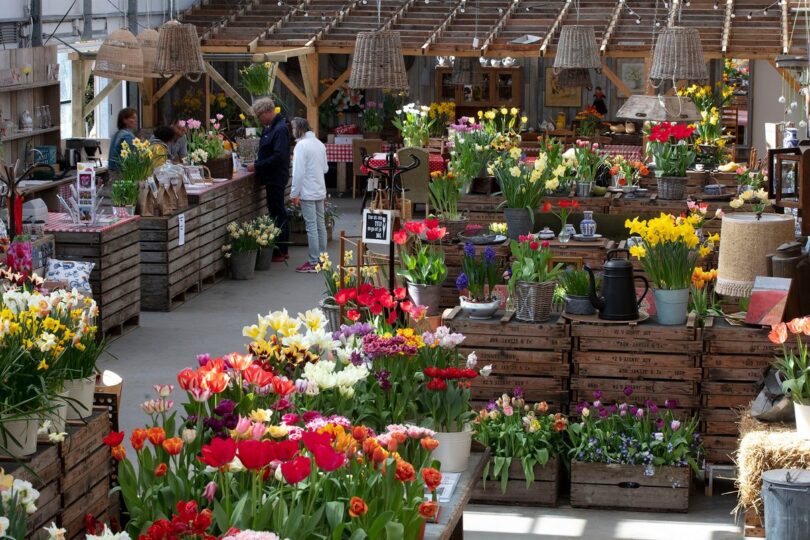
The company also describes a show garden developed with De Tulperij in the Netherlands, where visitors can see bulbs flowering together in a planted setting. That is a useful reminder of the brand’s central proposition: bulbs are not isolated objects, but ingredients in a seasonal display. For UK buyers browsing online, the product pages do more of the planning work, while the show garden provides the in-person context described by the brand.
The brand’s show-garden page also gives readers a sense of how bulbs look together in a planted setting. That context can make a seasonal collection easier to imagine than isolated product photographs.
How does the range help you plan a garden?
The UK store reaches well beyond one signature flower. Its categories include autumn-planted bulbs such as tulips, daffodils, crocus and alliums, alongside spring-planted bulbs and plants, dahlia tubers, and perennial choices. That breadth can support a garden plan that changes through the year, rather than a single short burst of spring colour.
For a new gardener, a broad catalogue can be both useful and a little overwhelming. We suggest beginning with three practical filters before looking at a specific variety:
- Season: choose a spring display, summer flowers or a mix that carries colour forward.
- Position: note sun, shade and soil moisture. The same plant family can include varieties with different preferences.
- Purpose: choose between a border feature, container planting, flowers to cut, or a naturalised look.
- Scale: check the listed height and flower size before deciding how many varieties to combine.
That framework keeps browsing purposeful. If the garden is still a blank canvas, the spring-planted selection and the collections organised around autumn planting offer different starting points. A reader interested in one particular look can instead move directly to a named plant and use the listing details to judge whether it fits.
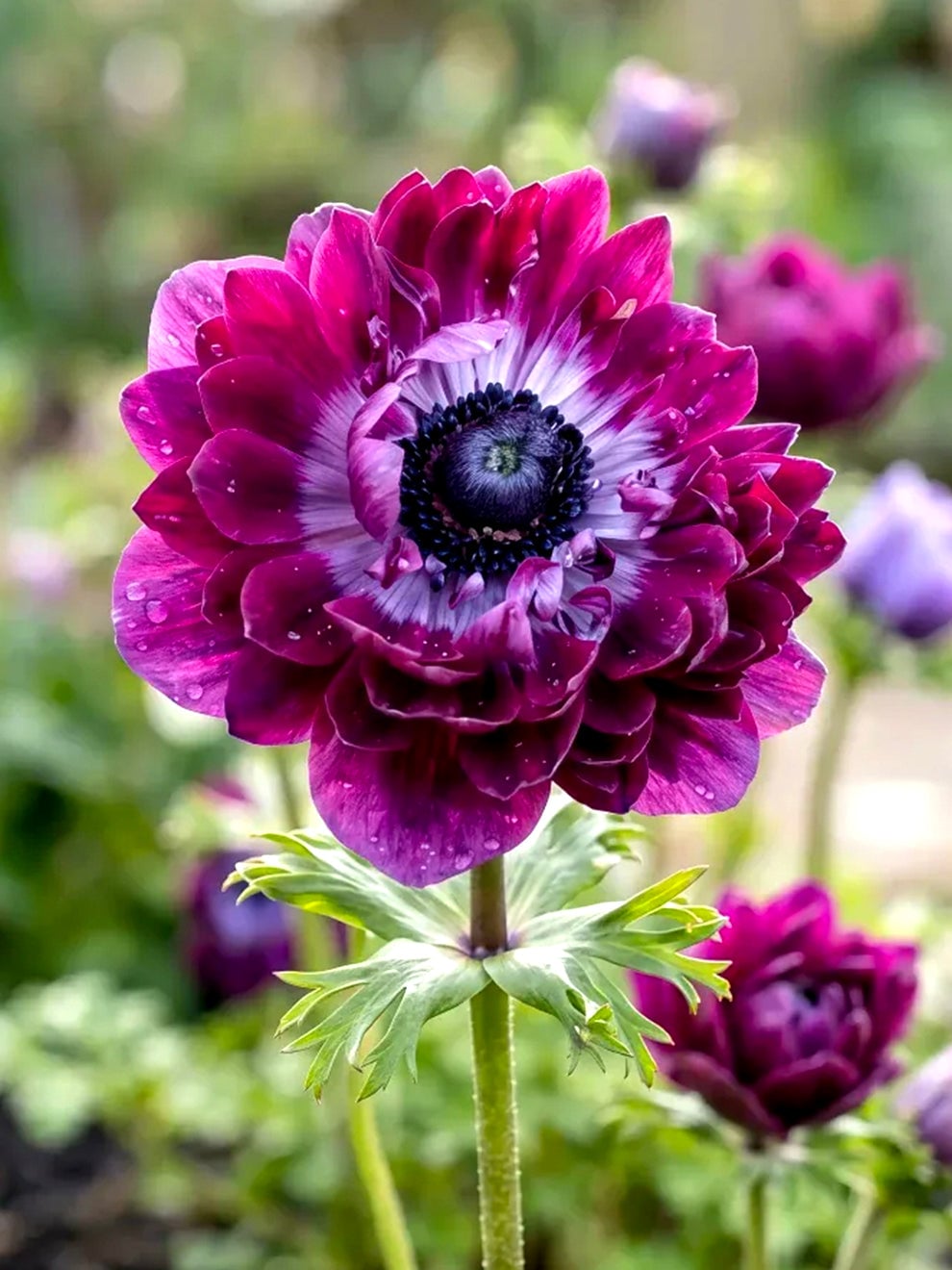
For example, the store describes Anemone Fullstar Bordeaux as a double-flowered, deep burgundy choice for borders, containers and cutting gardens. It is a spring-flowering corm, which makes it a different planning decision from a summer dahlia. That seasonal distinction is more useful than choosing by colour alone.
Which plants show the character of the catalogue?
A few named varieties illustrate how the store balances familiar garden uses with distinctive forms. They also show why it helps to read beyond the photograph: season, mature scale and position change how a plant fits into a real border.
Dahlia Wizard of Lightning is described as a creamy pink bloom on strong stems, with flowers around ten centimetres across and suitability for both garden display and arranging. The cut-flower note gives it a clear use case. A reader planning a cutting patch may find that more useful than an abstract colour label, while someone with limited space should still check the plant’s eventual height and the store’s current growing guidance.
Dahlia Kick Off is a decorative type with salmon-pink and copper-orange colouring. Its listing gives a mature height in the 90 to 110 centimetre range and describes upright stems, so it reads as a stronger mid-border presence than a low edging plant. This is the sort of detail that can prevent a good-looking choice from being placed in the wrong part of a scheme.
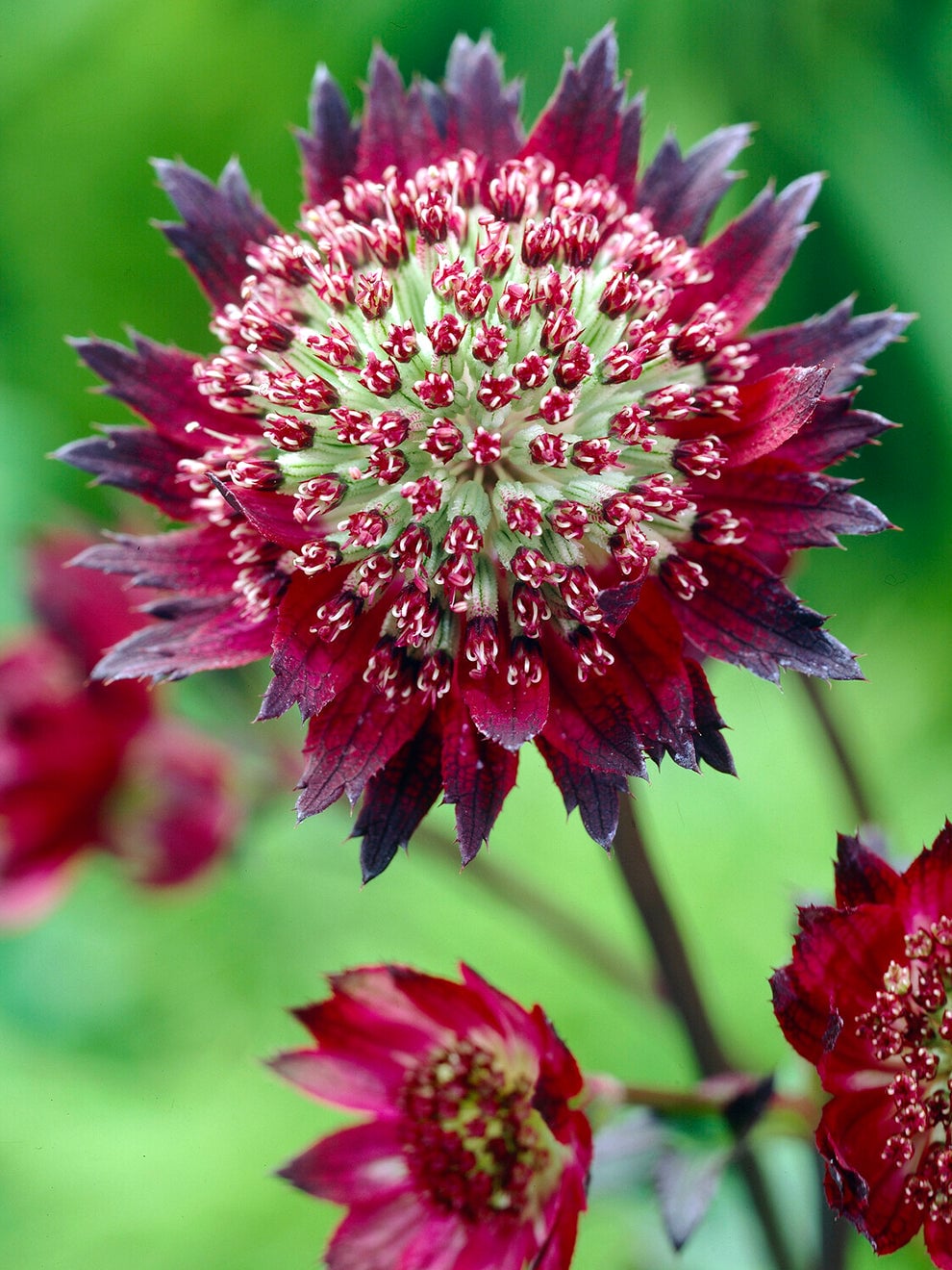
For a different texture, Astrantia Moulin Rouge has fine, pincushion-like flower centres surrounded by papery bracts, with deep crimson tones and a summer flowering period. The store positions astrantias as perennials, which makes this a longer-term border choice rather than a bulb display that is replanted each season. Its intricate form is likely to appeal to gardeners who prefer detail and movement over a large, solid flower head.
These examples cover three different garden decisions: cut flowers, a taller decorative dahlia and a perennial with a more delicate silhouette. Each page on DutchGrown™ should be treated as the current source for availability and planting instructions. We are drawing on the brand’s product information here, rather than reporting a growing trial.
In the dahlia pages, compare the stated height and flower form before choosing a position. A taller plant can anchor a border or cutting bed, while colour and bloom shape help determine which varieties work together.
What does DutchGrown™ say about bulb quality?
The brand’s quality page says it ships top-sized flower bulbs and argues that larger bulbs tend to produce larger flowers and sturdier stems. It also explains that bulb sizes are measured around the widest point, or girth, and publishes size guidance by bulb type. This is a concrete part of the brand’s point of view: it puts size and growing potential at the centre of how it talks about bulb value.
That statement is the company’s own claim, and it applies to flower bulbs rather than every item in a catalogue that also contains tubers and perennials. It gives shoppers a useful question to ask when comparing bulb listings: what size is supplied, and what does that size mean for the planting result described? It does not remove the influence of weather, soil preparation, storage or care after planting.
- Look for the bulb or corm type and its stated planting season.
- Check whether the page gives a size, height or flowering period for the particular plant.
- Match the recommended sun and soil conditions to the intended spot.
- Read the shipping schedule for the plant category, since dispatch timing can follow its planting season.
The last point is especially relevant to an online bulb specialist. The store maintains a shipping schedule page for bulbs and plants, so readers can check how fulfilment is arranged for the item they are considering. Seasonal stock and dispatch windows can change with the gardening calendar; the current UK listing is the place to confirm those details before making a plan.
How should a first-time reader choose a starting point?
We would start with the space, then choose the plant. A small patio container, a damp edge beside a pond and a sunny cutting bed ask for different things. DutchGrown’s catalogue is broad enough to support each kind of project, but that breadth is most useful when the reader arrives with a simple brief.
- For a spring focal point: browse autumn-planted bulbs and compare flowering time, height and colour.
- For summer cutting: look at dahlias such as Wizard of Lightning and check stem and bloom details.
- For a lasting border layer: consider perennials such as Astrantia Moulin Rouge and confirm the preferred conditions.
- For a container: verify mature height and planting depth before settling on a variety.
Then compare a small shortlist rather than opening dozens of tabs. Read the product page for the named plant, note what the brand says about its location and season, and decide whether that matches your garden. Pages for Wizard of Lightning, Kick Off and Fullstar Bordeaux demonstrate how different the listed use cases can be, even within a single brand.
A limitation to keep in view is that catalogue descriptions cannot tell you exactly how a plant will perform in your own microclimate. Use the store’s stated guidance as a starting point, and make the final selection with your own soil, exposure and maintenance capacity in mind. The full plant range is most valuable as a source of options and growing notes, not as a substitute for matching a plant to its site.
Which DutchGrown™ options belong on a first shortlist?
This compact shortlist shows how the catalogue’s different plant types can serve different jobs. Product descriptions and availability can change, so check the current UK product page for the details attached to each variety.
| Product | Best for | |
|---|---|---|
| Dahlia Wizard of Lightning | Creamy pink garden and cut-flower display | See price |
| Dahlia Kick Off | Taller warm-toned decorative dahlia | See price |
| Anemone Fullstar Bordeaux | Layered burgundy spring flowers | See price |
For a first purchase, one or two plants tied to a clear use are usually easier to plan around than a large assortment chosen only for its photographs. A cut-flower bed points towards the dahlias; a spring border points towards corms and autumn-planted bulbs. Explore the named varieties and check how each one fits the season and space you have.
Ready to explore the DutchGrown™ range?
DutchGrown™ makes the most sense for readers who value a wide selection of named bulbs, tubers and perennials, alongside growing notes that help narrow the choice. Its family history and bulb-quality position give the brand a clear identity, while the product pages provide the practical basis for comparing individual plants.
Our recommendation is to begin with one garden need and shortlist varieties by season, setting and scale. The honest limit is that a catalogue cannot predict local growing conditions or guarantee a particular result, so check the current plant guidance and shipping information before deciding. If that approach suits you, browse DutchGrown™ by plant type and follow the product details to a focused shortlist.





Leave a Comment