



Portable power can mean a small reserve for a weekend away or a more capable station for home interruptions. If BLUETTI is new to you, the useful question is how its product range maps onto those very different jobs.
BLUETTI is a power equipment brand whose Canadian store focuses on portable power stations, solar panels, solar generator kits, expansion batteries and accessories. The products share a battery-first approach, but their capacity, output, charging inputs and portability differ enough that choosing by model name alone can be misleading.
We reviewed the Canadian storefront as a first introduction to what the brand offers. Its range is easiest to understand as a set of trade-offs: how much energy to store, how much power a device needs, how often you can recharge, and how much equipment you are willing to carry or keep at home.
Some links in this article are affiliate links: if you make a purchase through them, we may receive a small commission.
Before you read on: BLUETTI is worth a look if you want a choice of portable stations and solar-ready configurations rather than one fixed setup. The AC70, AC180 and Elite 200 V2 illustrate the move from lighter portable use to larger energy reserves, but the right fit depends on your loads and charging plan.
What kind of power problem does BLUETTI address?
BLUETTI’s core idea is straightforward: store electricity in a battery unit, then make it available through familiar outputs such as AC outlets, USB and vehicle-style DC connections. You can recharge a station from a wall outlet, a car or compatible solar panels, depending on the model. That flexibility is relevant to camping, road trips, mobile work and selected home backup needs.
In practical terms, these are not generators that burn fuel while operating. Their quiet operation and multiple charging routes can suit places where engine noise or exhaust would be unwelcome. Solar can extend the options when there is daylight and compatible panel capacity, though it does not remove the need to plan around weather, shade and energy use.
- Portable energy: a battery station can move between a vehicle, campsite and home.
- Different output levels: smaller and larger models address different combinations of devices.
- More than one recharge route: product support varies, but wall, vehicle and solar charging feature across the range.
- Configurable kits: the store sells stations alongside panels, chargers and battery accessories.
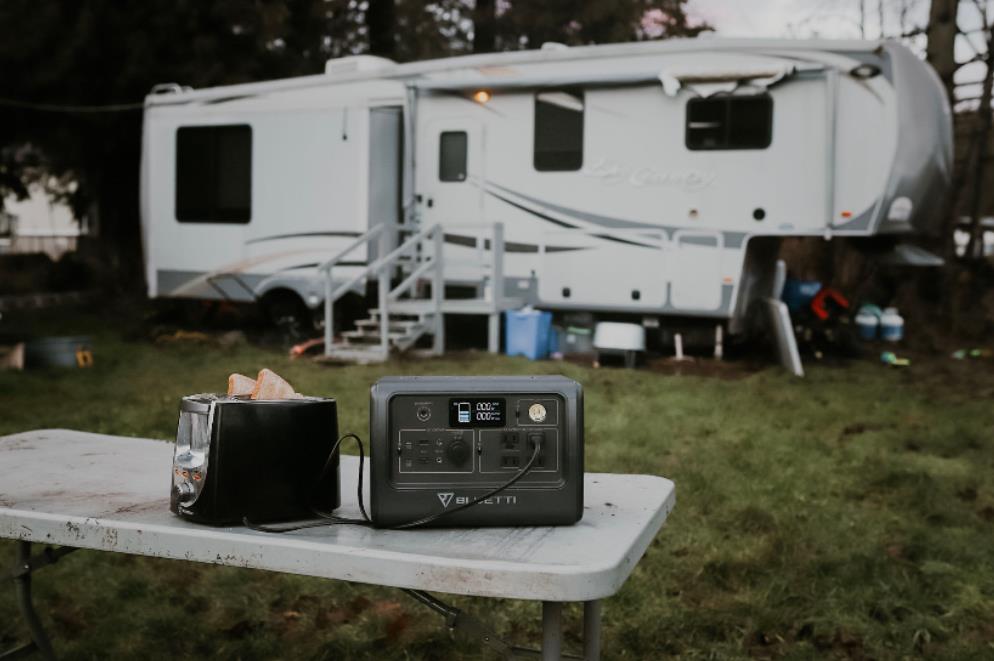
That flexibility is also where a buyer needs to do some homework. Capacity, usually stated in watt-hours, describes stored energy; output in watts describes what the inverter can deliver at once. A higher figure in one category does not automatically solve the other. BLUETTI’s product pages provide both kinds of specifications, so compare your devices against the particular listing rather than treating all stations as interchangeable.
How does the Canadian range scale from compact to capable?
The AC70 is a useful entry point for understanding the smaller portable end. BLUETTI lists it at 768Wh with 1,000W rated output, plus a higher lifting mode for certain loads. Its product page describes seven outlets, app monitoring, solar input and LiFePO₄ battery chemistry. That combination can make sense for electronics, lights and modest appliances where a lighter setup matters.
Its limit follows from its size: 768Wh is a finite reserve, and sustained high draw will use it quickly. A space heater or cooking appliance can consume energy far faster than a phone or lamp. Review the AC70 listing to check supported inputs and bundle contents, and compare that with your expected hours of use.
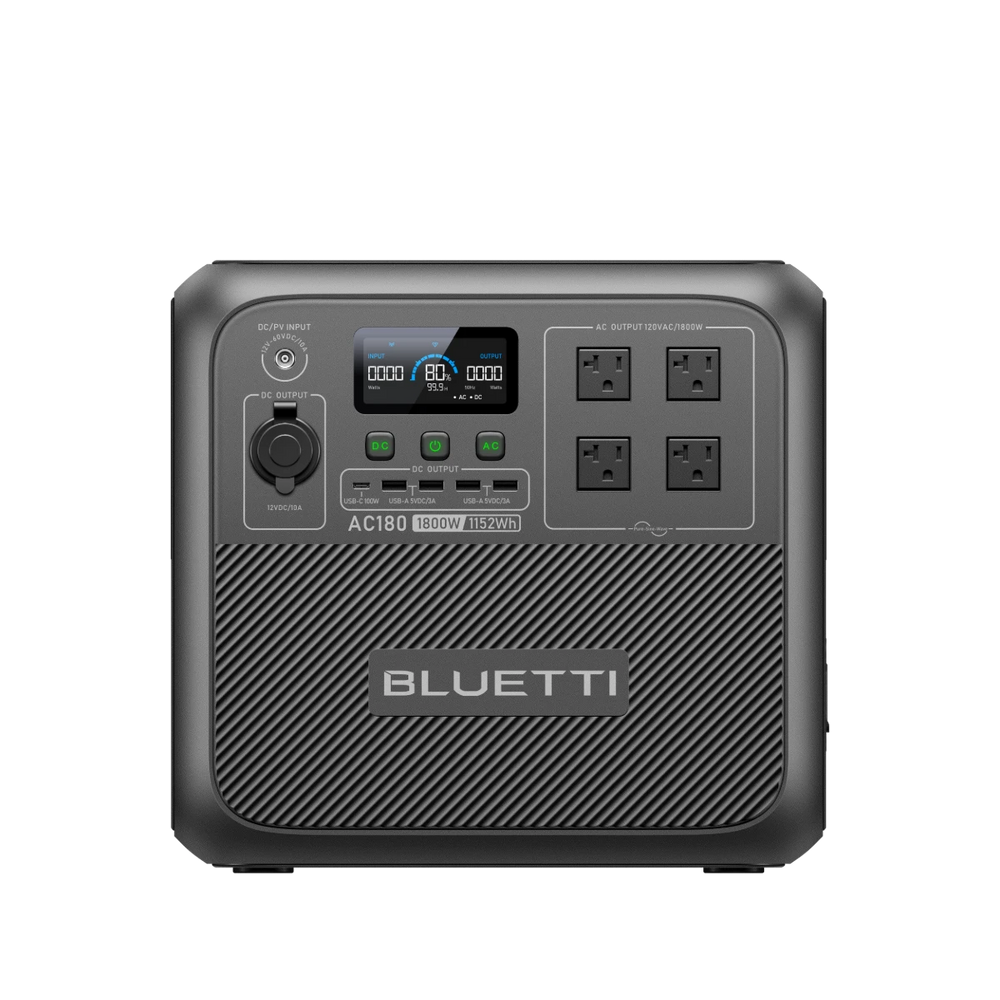
Moving up, the AC180 is listed with 1,152Wh capacity and 1,800W AC output. BLUETTI describes four recharge routes: AC, solar, car and generator. The Canadian listing also specifies a 500W maximum solar input and app control. That makes it a middle-ground model for people balancing portability with the need to run more than personal electronics.
The trade-off is weight and footprint compared with a compact station, alongside the usual runtime limits of a battery. BLUETTI’s listed weight is about 16 kilograms, so placement and lifting are part of the decision. The AC180 product page is also helpful for comparing base-unit and panel bundle configurations.
- Start with watt-hours: estimate how long essential devices need to run.
- Check running and startup demand: appliances with motors may draw more when starting.
- Count simultaneous devices: confirm both the station’s output ceiling and its available ports.
- Choose a recharge route: consider wall access, driving time, panel space and typical sun exposure.
For a larger reserve, BLUETTI’s Elite 200 V2 is listed at 2,073.6Wh and 2,600W output. Its Canadian product information describes four AC outlets, two USB-C ports, USB-A connections and a vehicle outlet. The store also highlights LiFePO₄ cells, app management and solar charging, with compatible accessories sold in separate or bundled configurations.
This is the more substantial choice of these three, aimed at broader use or longer intervals between recharges. The extra energy comes with a larger unit to store and transport, and a higher-capacity station still cannot power every household circuit or appliance. Check the Elite 200 V2 page against the devices you actually intend to connect. For home backup, confirm what can be powered, for how long, and whether the use requires a transfer switch or electrician.
What does BLUETTI emphasize beyond capacity?
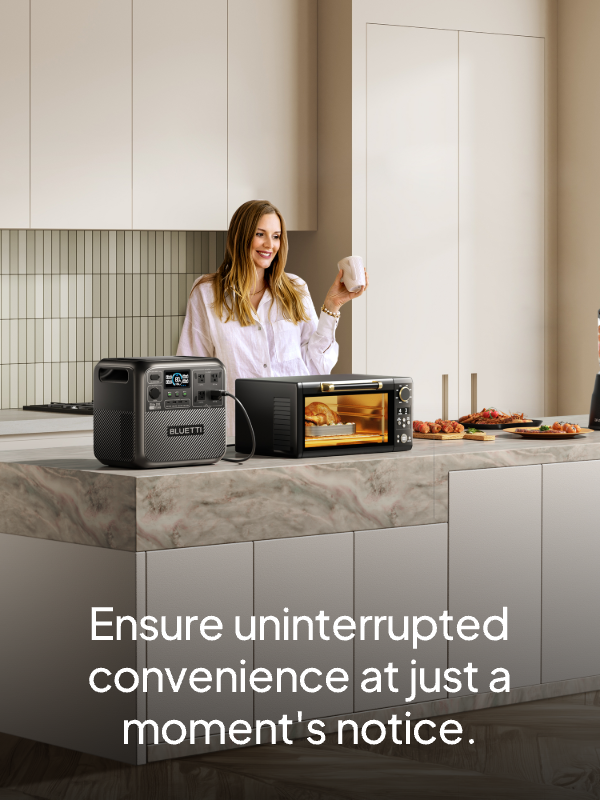
For a first-time reader, a few recurring design choices help explain the brand’s range. Look at them as product cues rather than blanket promises: individual models and kits still differ, and the Canadian listing is the source to consult for the exact configuration.
- Recharge flexibility: compatible products can accept power from more than one source.
- Portable formats: the catalogue spans smaller units through higher-capacity stations.
- Solar compatibility: panels and kits are available for users who can plan for sunlight and placement.
- Battery management: BLUETTI describes monitoring and protection features on compatible models.
Battery chemistry is one part of the brand’s pitch. Many current Canadian listings specify LiFePO₄, also called lithium iron phosphate, and describe cycle-life figures for particular models. Cycle ratings are useful for comparing products, but they are manufacturer specifications under stated test conditions, not a promise that every user will get the same service life. Temperature, storage and charge habits matter.
The second theme is a choice of ways to recharge. Solar panels let a compatible station collect energy away from the grid, and BLUETTI sells panels as standalone products and as parts of kits. Kit contents matter: a station-only listing, a station-plus-panel bundle and a larger solar package are different purchases even when they share a model name.
Finally, app features can make monitoring easier. BLUETTI says compatible models support functions such as checking battery status and controlling settings through its app. That convenience is useful, but it should not obscure the central fit questions: how much power your equipment draws, how much reserve you need, and whether the unit’s size is manageable.
Which BLUETTI products make a useful starting shortlist?
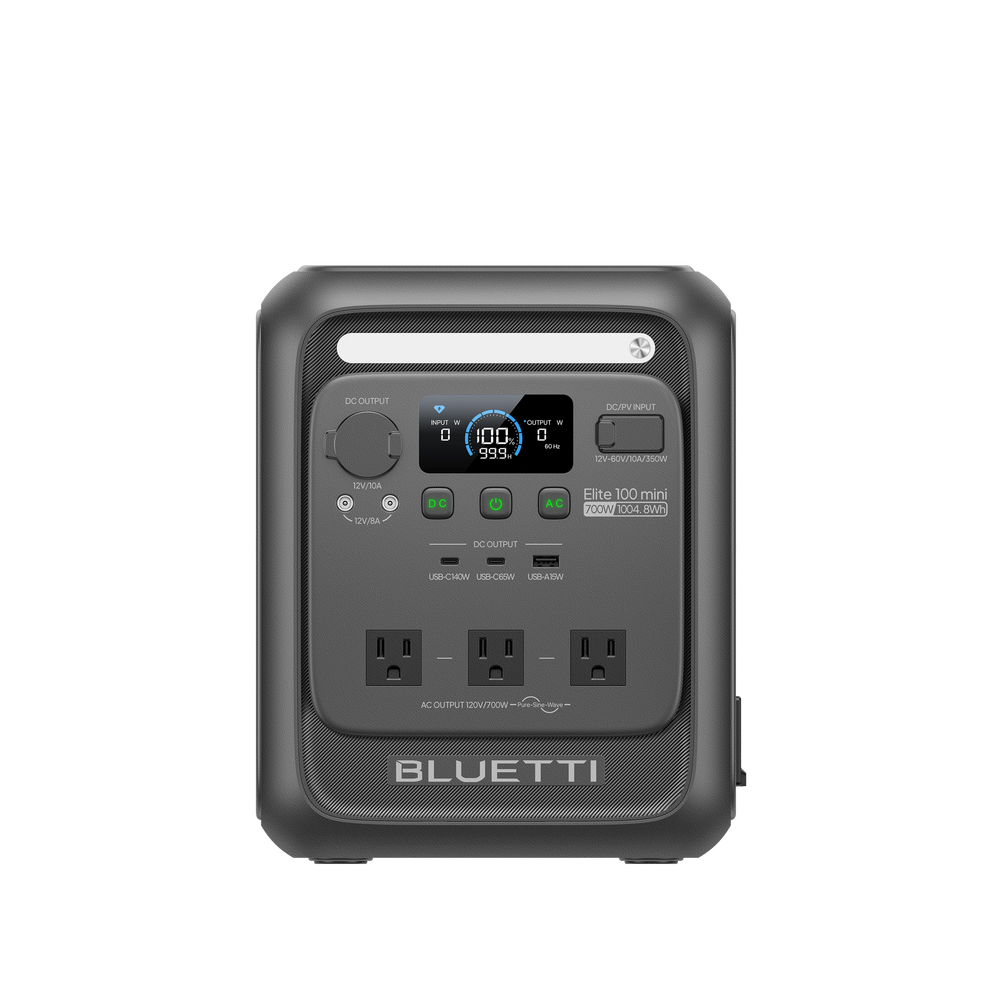
These three listings show the range more clearly than a long catalogue. The specifications below are the store’s stated figures; compare current product pages for available bundles, warranty terms and current pricing before deciding.
| Product | Capacity and rated output | Best for | |
|---|---|---|---|
| AC70 | 768Wh / 1,000W | Portable essentials and lighter loads | Check AC70 details |
| AC180 | 1,152Wh / 1,800W | More capacity for trips and selected backup | See AC180 options |
| Elite 200 V2 | 2,073.6Wh / 2,600W | Higher reserve for longer or broader use | Check Elite 200 V2 details |
The table is a starting point, not a universal ranking. A smaller station can be the better tool if it covers the actual load and makes regular use easier. A larger unit can offer more reserve, but only if its extra capacity and output matter enough to justify its bulk and the cost difference listed by the store. Solar bundles may reduce the friction of getting started, but panel compatibility, placement and storage still need attention.
What should a first-time reader check before choosing?
We suggest building the decision around a real use case. Write down the devices, their wattage and the hours you want them available. For intermittent loads, estimate how often they run; for continuous equipment, account for the full duration. Then compare the total energy need with the station’s capacity and check that the inverter can support the highest simultaneous draw.
- Decide whether the priority is camping, vehicle travel, backup at home or more than one of these.
- Check appliance labels and manufacturer guidance, especially for heating or motor-driven equipment.
- Compare the station’s weight and dimensions with your storage and lifting limits.
- Confirm whether panels, cables, chargers or expansion batteries are included or sold separately.
- Read the Canadian listing for current price, availability, warranty and shipping details.
For camping and mobile work, carrying convenience can matter as much as a larger capacity number. For home backup, define the essentials first: a router and phones have a different profile from refrigeration, sump equipment or heating. No portable station should be assumed to run a whole home without checking appliance demands, connection requirements and the manufacturer’s instructions.
Buyers should also distinguish product marketing from the details that shape their own result. Published runtime examples are estimates tied to specific loads and conditions. Real use changes with temperature, conversion losses, battery age and device behavior. For products such as the AC180 or Elite 200 V2, read the manual and product specifications before connecting high-demand equipment.
Ready to explore BLUETTI Canada?
BLUETTI’s range is most compelling for readers who value portable stored energy and want to choose among different capacity tiers, charging options and bundles. The AC70 provides a more compact entry, the AC180 adds useful reserve and output, and the Elite 200 V2 is aimed at heavier or longer-running needs.
Our recommendation is to shortlist by the devices you need to power, then verify output, energy capacity, charging inputs and included accessories on the Canadian store. The honest limitation is that no single model is an all-purpose answer: larger capacity also means added bulk, and solar performance depends on conditions and setup.




Leave a Comment